
Not Iran, Drone from a Gulf State Attacks Arab Nuclear Centre
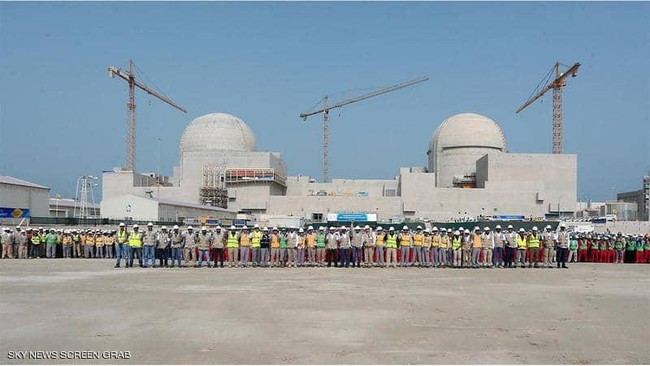
Jakarta, CNBC Indonesia - The security situation in the Middle East has once again heated up after the United Arab Emirates (UAE) announced that its territory had come under a wave of massive drone strikes launched from Iraqi territory in the last 48 hours. The UAE’s armed forces reported that one drone even managed to breach the air defence system and sparked a fierce blaze near the world’s first commercial nuclear power plant in the Arab world. Citing Reuters on Wednesday (20/05/2026), the UAE Ministry of Defence said that a total of six drones were directed at its territory, three of which specifically targeted the Barakah Nuclear Power Plant. Although the UAE military claimed to have intercepted five other drones, one drone apparently escaped interception and struck a power generator located outside the perimeter of the plant. In the wake of the air strike, the UAE’s Federal Authority for Nuclear Regulation swiftly began comprehensive radiation monitoring around the site of the explosion. Authorities stated that the main reactor structure did not suffer fatal damage from the impact. ‘The power plant remains safe and no radioactive material has been released as a result of the attack,’ read the official statement from the UAE Federal Authority for Nuclear Regulation. Nevertheless, the incident has sparked deep global concerns about the potential for a large-scale humanitarian disaster, given that Iraq is home to militias fully supported by Iran. In response to the tense situation, UAE Ambassador to the United Nations Mohamed Abushahab immediately lodged a strong protest at an emergency session of the UN Security Council in New York. ‘This is not an isolated incident. It occurs within a broader regional context in which cross-border attacks by one country and its proxies have driven the region towards escalating confrontation and dangerous confrontation,’ Abushahab told the Security Council. Hearing the report, Iran’s main allies such as Russia and China unexpectedly turned to harshly criticise the actor behind the bombing of the nuclear facility. The head of the International Atomic Energy Agency (IAEA), Rafael Grossi, who attended the meeting, warned of the horrific consequences if the main reactor were to suffer a direct hit in the future. ‘In the case of an attack on the Barakah Nuclear Power Plant, a direct strike could release very high levels of radioactivity into the environment,’ Grossi warned. Grossi added that a scenario in which the power supply to the plant is knocked out could increase the probability of a core meltdown, ultimately triggering a massive nuclear radiation disaster across the Gulf region. On the other hand, the escalation of drone use from Iraqi airspace has reportedly continued to spread, threatening the sovereignty of neighbouring states such as Saudi Arabia and Kuwait, even as a formal ceasefire in the Iran war has been in effect since April. The Saudi government even confirmed that it had intercepted three similar drones from Iraq on Sunday, while the Iraqi military itself insisted that its air defence system did not detect any drone launch activity from within its territory.