
Not Imports: This Native Indonesian Plant Could Be a Lifesaver from Fuel Crisis!
Jakarta — Amid global geopolitical uncertainty, particularly escalating tensions in the Middle East, the world faces a looming oil crisis. Middle Eastern conflicts have disrupted major oil logistics distribution routes through the Strait of Hormuz, which handles approximately 20% of global oil supplies, with the majority destined for Asian markets.
The disruption in global oil supply has directly driven oil price increases. On Monday trading (9 March 2026), Brent crude briefly reached US$113.68 per barrel, whilst West Texas Intermediate (WTI) stood at US$113.25 per barrel, extending an extreme rally underway since late February. Although prices subsequently dropped to around US$86 per barrel, on Thursday (12 March 2026), oil prices surged again to US$110 per barrel.
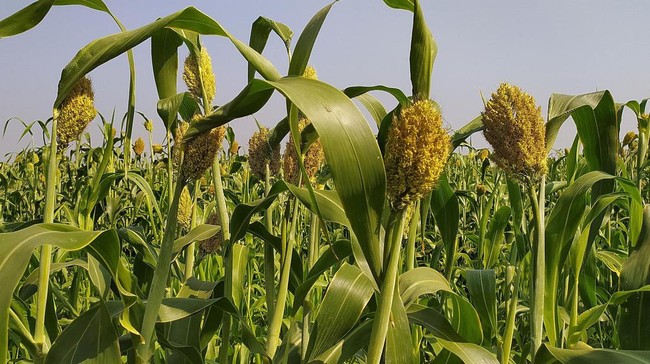
In response to global uncertainty and potential fuel crises, Indonesia must harness all domestic energy sources. This can be achieved through green energy derived from plants native to Indonesian territory. Several plant varieties could serve as “lifesavers” for Indonesia amid fuel pressures, including crude palm oil (CPO), sugarcane, corn, sorghum and cassava.
Indonesia has long optimised palm oil for diesel fuel blending through a mandatory biodiesel policy of up to 40% (B40). This year, the government plans to implement 50% biodiesel blending (B50). Minister of Energy and Mineral Resources Bahlil Lahadalia stated that the government is currently testing a 50% mandatory biodiesel blending programme (B50) for diesel fuel, with trials targeted for completion in the second semester. Indonesia benefits from abundant CPO resources, reducing dependence on imported energy. Should global geopolitical conditions continue disrupting energy supplies, the government could increase biodiesel blending further, from B50 to B60.
Sugarcane, cassava, sorghum and corn can be leveraged to replace petrol-type fuel through bioethanol blending programmes, at either 5% (E5) or 20% (E20) levels. President Prabowo Subianto expressed optimism that Indonesia can produce fuel from plants. Indonesia possesses substantial natural resources to achieve energy self-sufficiency through biofuel development. Palm oil and cassava, for example, can be processed into alternative energy sources reducing reliance on imported fuel.
Prabowo reminded that governments have long pursued national energy independence, and Indonesia is blessed with resources enabling domestic fuel production. “We have great blessings from the Almighty, that later we are able to meet our fuel needs from our own plants. From palm oil, from cassava,” Prabowo stated during a virtual press conference on 10 March 2026.
Oil prices remain volatile with potential increases ahead. US President Donald Trump has threatened further attacks on Iran’s oil export facilities on Kharg Island, to which Tehran responded with threats of retaliation. This escalation has driven both Brent and WTI crude prices up sharply, having risen over 40% this month to their highest levels since 2022.
The price increases followed US and Israeli attacks on Iran, prompting Tehran to halt shipping activities through the Strait of Hormuz, a strategically critical route through which approximately one-fifth of global oil supplies pass. Trump has urged nations including China, France, Japan, South Korea and the United Kingdom to deploy warships to secure this shipping route and restore disrupted global energy access.
The US military reportedly attacked military targets on Kharg Island on Saturday, prompting Iran to launch drones targeting major oil terminals in the United Arab Emirates. JP Morgan analysts led by Natasha Kaneva called this a new escalation in Middle Eastern conflict, as oil infrastructure in the region had previously largely escaped direct attack.
Beyond Fujairah terminal in the UAE, analysts highlighted Saudi Arabia’s Ras Tanura export terminal and the Abqaiq oil processing facility as particularly crucial and vulnerable Gulf energy points, playing major roles in maintaining global oil supply stability. Nevertheless, loading operations continued.