
Not an Arab Country, Iran Is Persia: Its History and Explanation
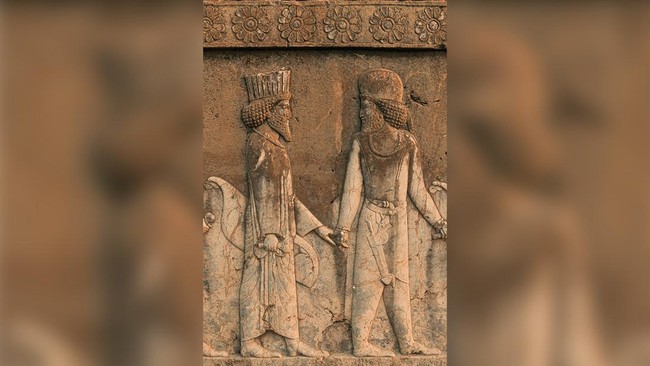
Many people know Iran by two different names: Persia and Iran. Although often treated as different, the two actually refer to the same region, differing only in naming conventions.
Historically, the term Persia has been more popular in the Western world. The name derives from the word Pars or Persis, the region in southern Iran that became the centre of power of the Persian people in ancient times.
Ancient Greek writers later used the term Persia to refer to the entire empire ruled by the Persian people, especially when writing about the Greco-Persian conflicts around 2,500 years ago. From there, the name Persia became widely known in the Western world.
Ethnically and historically, the Persian people form part of the Indo-Iranian group, a branch of the Indo-European family originating from Central Asia.
This group is believed to have migrated to the Iranian plateau around 1000–700 BCE, possibly via Sogdiana and Transoxiana. The migration occurred during a period of large-scale population movements in the Near East around 1200–900 BCE.
In ancient civilisational records, they were known as Parsua, Parsu, or Parsumash. These names later evolved into Pars or Persis, which is now known as the Fars Province in modern Iran.
Some early Persian groups settled in the Zagros Mountains with the Medes, while other groups moved south and settled in Persis. Pasargadae (in what is now southern Iran) then became the early seat of Persian power before the empire’s expansion moved the administrative centre to Susa (now Shush).
Persian civilisation also inherited and blended elements from the Elamite civilisation, while bringing their own language and cultural identity. Elam is one of the oldest civilisations in the Middle East, developing in south-western Iran long before the rise of the Persian Empire.
Origin of the name Iran
Meanwhile, in the West the name Persia remained common, while local people had long referred to their land as Iran.
The term derives from the word Arya, which generally means “the noble one” or “the Aryan nation.” In linguistic development, the term became Iran or Iran-Shahr, meaning “land of the Aryan people.”
The usage of this name can be traced back at least to the 3rd century CE, when the Sassanian Dynasty king Ardashir I described himself as ruler of “Eran and An-Eran” in royal inscriptions.
The name Iran also appears in various historical and Persian literary sources, including the epic Shahnameh.
From Persia to Iran
For centuries, these two names were used differently. Locals used the name Iran, while the Western world continued to refer to the region as Persia.
The official change occurred on 21 March 1935, when Shah Reza Pahlavi asked other countries to use the name Iran in diplomatic correspondence and international relations.
The decision was taken to assert national identity, link the modern state with Iran’s ancient historical heritage, and support modernisation and nationalism during the Pahlavi era.
Nevertheless, in 1959 the Iranian authorities stated that both terms, Persia and Iran, could be used. In practice, however, Iran has been the official name most commonly used in political and international contexts to this day.
Put simply, Persia is more often used in historical and cultural contexts, while Iran is the official name of the modern state.
Not an Arab Country
While there are several other minority ethnic groups in Iran such as Azerbaijani, Kurdish, Luri, Baluchi, and Arab, the Persian ethnic group has historically been the dominant group in the country.
By contrast, Arab peoples primarily inhabit the Arabian Peninsula and North Africa and the Levant. The majority of people in states such as Saudi Arabia, Iraq, Jordan, Egypt, and Syria identify as Arab. Arabs share similar cultural traits and strong linguistic ties due to the use of the Arabic language.
Persian Language (Farsi)
A key linguistic difference separates Iran from Arab nations. The official language of Iran is Persian or Farsi, which is part of the Indo-Iranian branch of the Indo-European language family.
Persian has its own writing system that is indeed adapted from the Arabic alphabet, but its vocabulary, grammar, and linguistic roots are entirely different from Arabic.
Arabia, on the other hand, is a Semitic language and is the official language in more than 20 countries in the Middle East and North Africa.
Structurally in grammar, root-and-pattern morphology, and historical development, Farsi and Arabic have significant differences.
Although Iran uses the modified Arabic script and a majority of its population is Muslim, as in many Arab countries, this similarity does not make Iran part of the Arab world.
Although Persian absorbs some Arabic vocabulary, especially due to Islamic influence, the language remains distinct and not mutually intelligible with Arabic.
Historical Differences
Iran’s history is also a key aspect that sets it apart from Arab nations. The ancient Persian Empire, founded by Cyrus the Great in 550 BCE, was one of the largest empires in history and known for its rich cultural achievements and advanced system of governance.
The Persian people built a civilisation of their own, with magnificent architecture, art, literature, and advances in science and philosophy.
The Achaemenid, Parthian, and Sassanian empires are among the most influential Persian empires that shaped Iran’s culture and identity.
By contrast, Arab history is closely tied to the emergence of Islam in the 7th century CE.
The Prophet Muhammad united the tribes of the Arabian Peninsula, which then motivated expansion.