
Not a Monkey, This Creature Will Rule the Earth After Humans Die Out
Not a Monkey, This Creature Will Rule the Earth After Humans Die Out
Jakarta, CNBC Indonesia — A professor from the University of Oxford has speculated about the creature that would rule the Earth after humans die out. Rather than selecting a primate ‘brother’ of humans such as orangutans or chimpanzees, the next ruler of Earth would be a marine creature.
Tim Coulson, a biologist from Oxford, stated that primates would struggle to replace humans as rulers on Earth. Primates, whether monkeys or apes, possess one of humanity’s key assets: an opposable thumb. The shape of the human hand enables us to use tools for daily life, which in turn spurred the creation of a wide range of technologies.
However, he notes that primates rely heavily on strong social networks in activities such as hunting, grooming, and defence. This reliance makes primates difficult to adapt to a world that is changing drastically.
Moreover, primates are relatively few in number, with low reproductive rates and habitats confined to particular regions. This makes it difficult for them to ‘fill’ the entire Earth.
By contrast, birds can be present across all parts of the world. They are also intelligent and capable of maintaining long-term community bonds. The problem is that birds lack the motor capabilities to ‘build’ civilizations.
The ability to construct lies with insects. Insects are known to build structures with highly complex architectures through collective effort. Yet, according to Coulson, this ability is genetic rather than a product of intelligence.
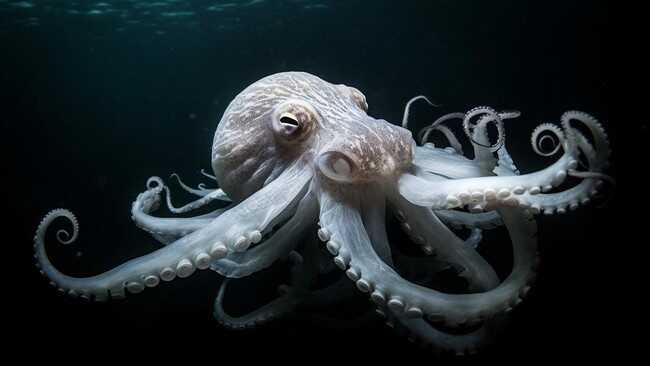
Therefore, he selects the octopus as the potential replacement for humans who will perish. The sea creature possesses the ability to solve complex problems, and can communicate using colour. Octopuses can manipulate objects and even conceal themselves through accurate camouflage.
‘This shows that, under the right environmental conditions, they could evolve into a civilisation-building species after humans die out,’ Coulson said.
Another remarkable aspect of the octopus is its nervous system. The octopus nervous system is not centralised like that of other animals, but decentralised. About two-thirds of octopus neurons are in its arms rather than in the brain.
Research indicates that this neural architecture underpins adaptability and cognition, allowing each arm to move with a degree of independence without signals from the brain.
A study in Nature Scientific Reports in 2022 also showed that octopuses can use tools, complete stepwise tasks, and navigate unfamiliar environments.
‘T Some individuals have even been able to escape from their tanks at night, visiting their neighbours,’ Coulson said.