
North Sumatra Floods Accelerate Ecological Crisis for World's Most Vulnerable Orangutan Population
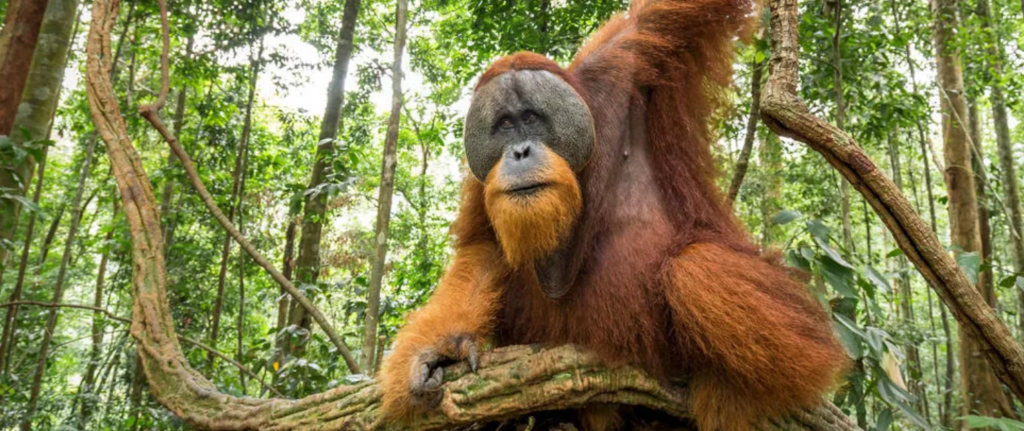
The recent disaster in North Sumatra left villages in ruins, but it also unsettled something quieter: the forests that shelter the Tapanuli orangutans. In the hills around Sipirok, rangers who usually spot the apes feeding near fruit trees say the slopes have fallen silent. Trails they once followed are gone, buried under mud. The animals that depended on those routes seem to have slipped deeper into the forest. Why the Tapanuli Orangutans Were Already at Risk Among Indonesia’s great ape populations, the Tapanuli group has always been the most vulnerable. There are thought to be roughly 760 individuals left, the smallest known orangutan population in the world. For comparison, WWF estimates around 119,000 orangutans remain across Indonesia and Malaysia combined. This number includes both Bornean and Sumatran species. The Tapanuli group is a tiny fraction of that total, limited to a single mountainous patch in South Tapanuli. Rangers from the Orangutan Information Center (OIC) say that even before the floods, the apes were losing ground. Some fruiting trees had vanished as smallholders expanded fields step by step. Logging camps pushed further upstream, and new access roads carved through forest that used to be unreachable. In several places, the canopy had thinned so much that the apes were forced to climb down to cross open gaps, a risky behavior that rarely occurred a generation ago. The Floods Exposed the Pressure Points The storms that hit Sipirok did not create these problems, but they exposed them sharply. Hillsides stripped of large trees collapsed easily, turning riverbeds into churning channels filled with uprooted trunks. Rangers say the orangutans likely moved uphill in search of stable ground and quiet feeding spots, but that also means they may now be in unfamiliar zones where competition for fruit is stronger. This is not just a local concern. Conservation groups, including OIC and several international partners, have warned for years that disruptions in the Batang Toru landscape risk isolating the remaining subgroups. Their reports often point to the same issues: plantation expansion, timber extraction and infrastructure development tightening the ring around the habitat. The floods simply accelerated the fragmentation. A Landscape Shaped by More Than Weather One of the clearest examples of long-term ecological pressure sits in the upper watershed: the North Sumatera Hydro Energy project. Built in the heart of Batang Toru, it has drawn criticism for the way access roads and construction activity break up forest corridors used by the apes. Even small interruptions can divide an already fragile population. Scientists tracking these patterns warn that once corridors are severed, the apes retreat into smaller pockets, become genetically isolated and eventually decline. The new landslides added another obstacle. Sediment now covers several fruiting zones, and some of the steep ridges the orangutans once used as natural bridges have collapsed. These are changes that cannot be undone quickly. Recovery in human settlements may take months; recovery for wildlife in a fragmented forest may take years. What Comes Next Environmental agencies are quietly urging the government to treat the ecological fallout as part of the broader disaster response. That means replanting canopy-forming trees, stabilizing slopes and limiting new development in zones already under pressure. Local groups say that without active restoration, the remaining Tapanuli orangutans may be forced into even smaller ranges. This pattern has led to population crashes in other ape species. The floods reshaped the physical landscape, but they also revealed how little buffer remained. The forests that once protected wildlife, and in many ways protected the villages below, have thinned to the point where both humans and animals feel the consequences. Whether the species can survive another shock like this depends on decisions made long after the water recedes.