
North Sumatra DPRD visits DKI Information Commission to discuss member selection
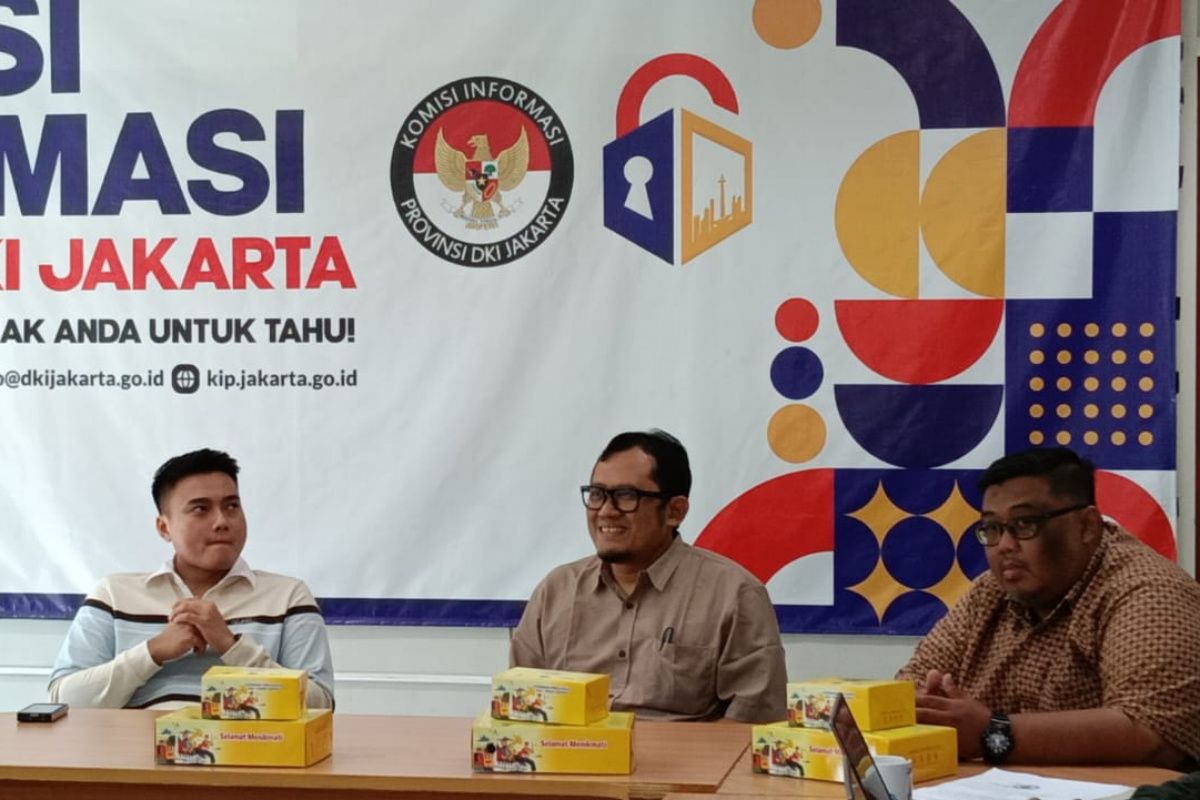
Jakarta (ANTARA) - The DKI Jakarta Provincial Information Commission received a working visit from the North Sumatra Provincial Legislative Council for study and discussions on the mechanism for selecting information commission members and strengthening public information openness.
Commissioner for Information Dispute Resolution at the DKI Jakarta Information Commission, Agus Wijayanto, explained that the selection process for regional information commission members can refer to Information Commission Regulation (PerKI) Number 4 of 2026 on guidelines for selecting information commission members.
“The most important thing is that candidate members are not affiliated with political parties. In addition, experience and competence in public bodies are also important considerations,” said Agus in Jakarta in his statement on Wednesday.
According to Agus, the selection process in DKI Jakarta was conducted in collaboration with an institution from Unpad and the State Civil Service Agency (BKN) in 2025.
One of the competencies required for the Information Commission is a legal education background from selected members.
The meeting proceeded interactively through discussions and sharing experiences regarding the mechanism for selecting information commission members, strengthening regulations, and challenges to public information openness in the digital era and artificial intelligence.
Therefore, they wanted to learn about the selection mechanism applied in DKI Jakarta.
“We continue to learn from Jakarta. Currently, the KI selection process in North Sumatra has entered the psychological test stage. We want to know how the selection mechanism that complies with the rules,” he said.
Meanwhile, Deputy Chair of the DKI Jakarta Provincial Information Commission, Luqman Hakim Arifin, expressed appreciation for the presence of the North Sumatra DPRD delegation who wanted to learn about public information openness governance in DKI Jakarta.
In his presentation, Luqman explained that one of the main agendas of the DKI Jakarta KI, besides information dispute resolution, is the implementation of Electronic Monitoring and Evaluation (E-Monev) of public information openness that touches nearly 900 public bodies in Jakarta.
“Last year, there were 189 public bodies that achieved the informative predicate. In E-Monev, there are assessment categories ranging from informative, heading towards informative, quite informative, less informative, to not informative,” said Luqman.
Each public body will receive an E-Monev result report at the end of the year as a form of evaluation as well as encouragement to improve the quality of public information services. Even information disputes have now developed to the level of neighbourhood units (RT and RW).
Luqman also highlighted the importance of updating public information openness governance amid digital technology developments and artificial intelligence (AI).
According to him, the Public Information Openness Law was born before the era of social media, cloud computing, and artificial intelligence (AI) developed rapidly as it is today.
“In the future, there needs to be AI-based e-government governance. The state must be present in regulating AI use to provide benefits and be able to adapt to the times,” he said.
He hopes that information commission institutions can develop more adaptively, preventively, and sustainably in safeguarding the public’s right to public information.