
North Korea revises constitution, removes references to reunification with South Korea
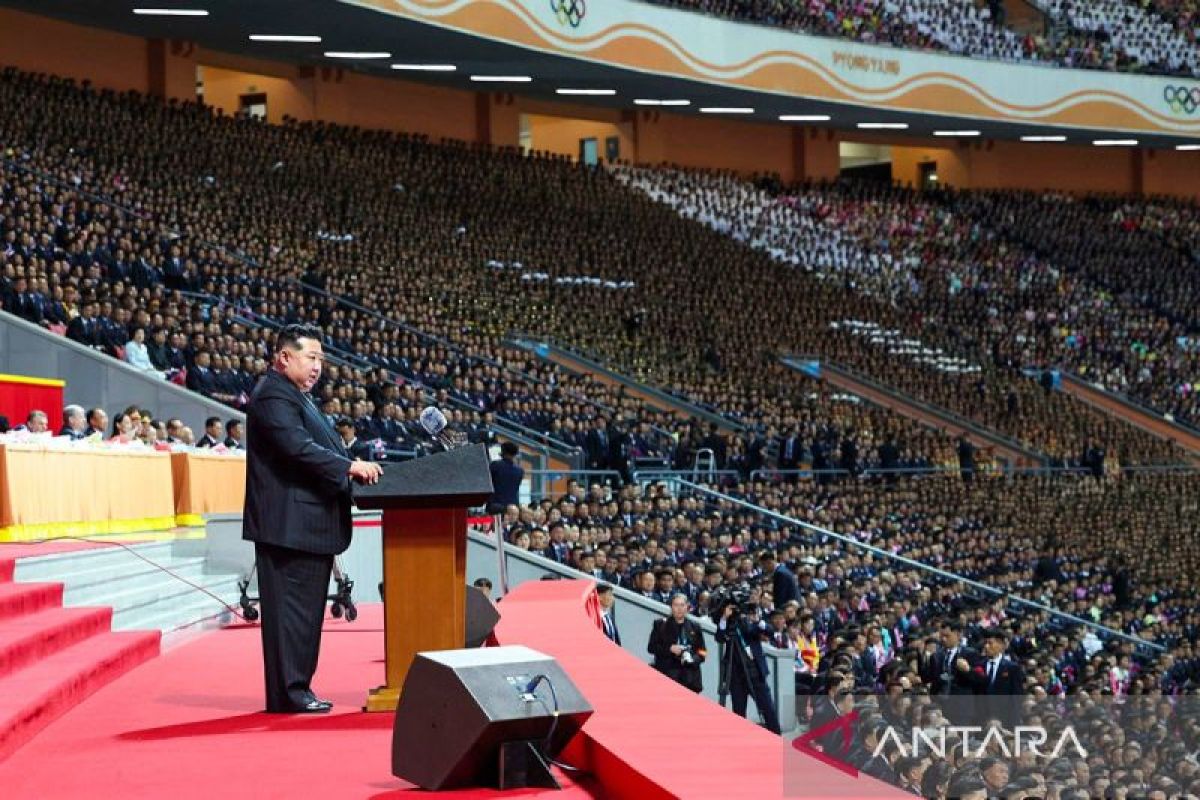
Seoul (ANTARA) - North Korea has added a clause on the country’s territory and removed all references to reunification with South Korea in its revised constitution, according to a document reviewed by Yonhap on Wednesday (6/5).
This move is seen as affirming North Korea’s policy direction towards the concept of “two hostile states.”
The document shows that North Korea defines its territory as the land bordering China and Russia to the north and South Korea to the south, including its territorial waters and surrounding airspace.
However, the constitution does not specify the disputed maritime boundaries between the two Koreas in the Yellow Sea, particularly around the Northern Limit Line, which serves as a de facto maritime border.
In line with North Korean leader Kim Jong Un’s policy, all references to reunification have been removed from the constitution.
Several terms such as “peaceful unification” and “great national unity” have also been eliminated.
The new constitution also does not refer to South Korea as the “principal enemy,” contrary to earlier expectations following Kim Jong Un’s description of South Korea as an enemy.
The document also removes mentions of the achievements of the state’s founders, Kim Il Sung and Kim Jong Il.
After 12 further amendments, the country revised the document again in March by removing the word “socialist” from its title.
Professor Lee Jung Chul, a North Korea expert from Seoul National University, stated that the constitution demonstrates the isolated state’s desire to present itself as a “normal” country.
He assessed the revision as positive because it provides a foundation for peaceful coexistence between the two Koreas and does not include hostile language towards South Korea.
The new constitution also elevates the status and powers of the state leader, namely the president of the State Affairs Commission.
For the first time, this position is designated as the head of state and placed above the Supreme People’s Assembly.
A new clause also grants the president of the State Affairs Commission the authority to lead North Korea’s nuclear forces, including delegating that authority.
The revision also revokes the Supreme People’s Assembly’s power to dismiss the president of the State Affairs Commission, thereby eliminating the formal oversight role of that body.