
Norad Director Explores Gulf State Partnerships Amid Massive Global Aid Cuts
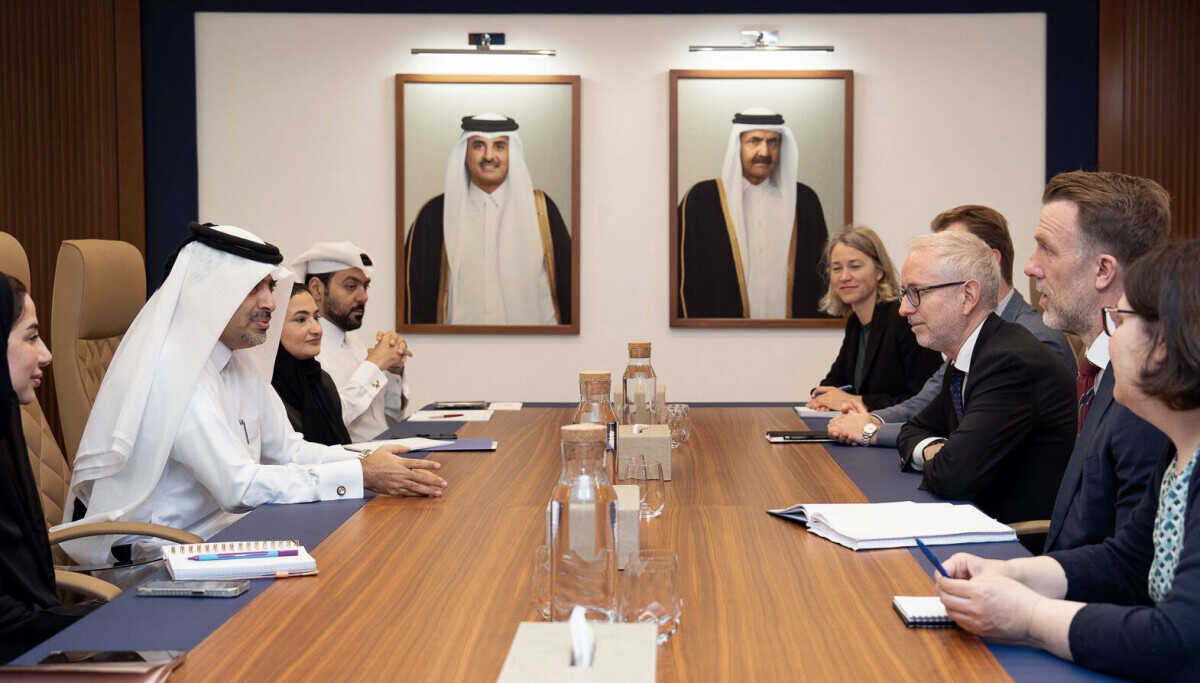
The backdrop to Norad Director Bård Vegar Solhjell’s journey is enormous global aid cuts and what Development Minister Åsmund Aukrust (Labour Party) describes as a new aid landscape. But did Solhjell actually travel to the three Gulf states to seek new partners for Norwegian aid?
“Yes,” Solhjell replies. He explains that Norad has, over time, sought cooperation with so-called emerging donors, for example through Rethinking Development Cooperation, a professional collaboration between Sweden’s Sida and Norad involving Colombia, South Africa, Indonesia, South Korea and Mexico.
“Here we have learned about how large countries, which are often small donors, think differently and perhaps more freely about aid than we do. The Gulf visit was an extension of this,” he says.
But the trip was also about the international situation, announced cuts to US aid and quite substantial cuts from donors such as the United Kingdom and the Netherlands, Solhjell points out.
“Because in the world we are now entering, more wealthy countries must contribute,” he says.
A Major Donor
The Emirates gave 1.68 billion dollars in aid in 2024, whilst Qatar gave approximately 660 million dollars, according to fresh figures from the OECD Development Assistance Committee. By comparison, Norwegian authorities spent 5.18 billion dollars — or 55.7 billion kroner — on aid last year. As a percentage of GNI (both gave 0.32 per cent), these are countries that give less than Norway, but more than the US and a number of European countries — and Solhjell believes they can contribute more.
“We know less about Saudi Arabia. I don’t have good figures for how much they give,” he says.
The actors Solhjell met on his trip to the Gulf expressed a desire to cooperate with knowledge-based aid actors.
Following meetings in the kingdom, Solhjell wrote on LinkedIn about Saudi Arabia’s desire to open up more, and that development cooperation is an important part of that: “Saudi Arabia is a substantial donor, disbursing big funds to both development and humanitarian aid in the region and beyond. King Salman Humanitarian Aid and Relief Center and Norad agreed to screen our work to look for potential cooperation.”
When asked which initiatives Norad sees potential in for cooperation with Saudi Arabia, Solhjell responds: “Difficult to say. I think what we do on long-term development is quite different. Whilst some of what we do in the humanitarian sphere probably has quite a few common features.”
Saudi Arabia has been a “participant”, not a member, of the OECD Development Assistance Committee since 2018, and last year a memorandum of intent was signed to expand cooperation with the OECD. A note from King Salman Humanitarian Aid and Relief Centre (KSRelief) “seeking to shed light on aid from Saudi Arabia” suggests why it is challenging to establish how much the country gives: “For many years, Saudi Arabia did not publish data or reports on foreign aid. The kingdom kept a low profile, in line with Saudi culture and the teachings of the Prophet Muhammad (peace be upon him): ‘Do not let your right hand know what your left hand is doing.’”
This may be changing.
“We Are Interesting to Them, They to Us”
In the KSRelief note, reference is made to the Saudi Aid Platform, where one can read that Yemen, Iraq and Palestine are among those that have received the most aid — and recently the UN Development Programme (UNDP) and the kingdom signed an agreement on the reconstruction of Gaza.
Solhjell says that one example can provide insight into how much the Gulf country actually gives. “UNDP told us that Saudi Arabia, in Yemen alone, spent around four billion dollars over one year, which is an enormous sum.”
Solhjell’s impression is that the Saudis were curious about how Norwegian bureaucrats work.
“We are interesting to them because we are so professional, whilst they are interesting to us because they obviously spend quite substantial resources on humanitarian work. And I think perhaps we can play a positive role so that they can use money in a way that yields greater impact, and becomes more integrated into the international donor system.”
“In addition to meetings in Saudi Arabia, you visited the Abu Dhabi Fund for Development, the newly established UAE Aid Agency and Qatar Fund For Development — do you think these actors and countries can help offset the massive US cuts?”
“No one can offset the US cuts,” Solhjell says, pausing to reflect. “I also don’t think one should think that way. Just as it’s not reasonable to ask Norway to offset the US cuts, it’s not reasonable to ask Qatar to do so either.”
The West Versus the Rest?
Solhjell believes there are major differences between the three countries and says the Emirates and Qatar would be easier to start a cooperation with, because they have more transparency, participate in work Norwegian bureaucrats are familiar with and already contribute money to the multilateral system.
“They support the Global Partnership for Education, for example, as we do,” he says.
Solhjell points out that there is a long history of aid in the region. “Abu Dhabi Fund is 50 years old, hardly a newcomer. But I think it is important that large, professional donors like Norway cooperate with ‘new donors’, also to break out of the pattern of the West versus the rest,” Solhjell says.
“There must be some challenges here too, for example related to certain value issues? In Norway we are relatively concerned about rights — women’s rights, LGBTQ rights and workers’ rights — are these countries really natural partners?”
“If a partner must resemble us, try Sweden,” Solhjell says with a smile. “But, yes, these are countries that are quite far from us in terms of values, with entirely different views on human rights and democracy as a form of governance. This means that there are parts of what we do in aid that are not natural to do together with them. But the first impression is that our views on providing humanitarian assistance are not so very different; that neutrality applies, that it is about alleviating suffering regardless of politics and religion,” he says.
We also have differing values with countries we know better, such as the USA, Solhjell maintains. “The Gulf countries know that we have different values from them, and I don’t think they are so concerned about our democracy. But I think they are curious about our knowledge of what works and what doesn’t, and that is a good starting point,” says the Norad director.
“Good Reasons to Be Critical”
Solhjell explains that cooperation on humanitarian matters is relevant to all three, but that the Emirates and Qatar were also curious about Norway’s investments in education and health.
“We have not signed any concrete agreements — that is also a political question — but I believe there are good reasons to explore the possibilities for cooperation.”
Solhjell notes that any partnership must begin with a screening, where the countries tell each other how they work. “Implicit in that is also that I am not certain it is a good idea to cooperate,” he says.
“China’s role in Africa has long been a hot topic, how the Chinese work and prioritise differently from, for example, Norway. What motives do the Gulf countries have for their aid?”
“Like most countries outside Europe, aid is often linked to foreign policy interests. In Saudi Arabia, this is probably most evident. But what all three have in common is that they provide substantial humanitarian support, and a good deal of emergency aid goes through well-known channels, such as the Norwegian Refugee Council — which has received money from several of these without having to compromise on its own values,” Solhjell says.
He believes more Western countries will now turn their gaze towards the Gulf region. “These are countries there are good reasons to be critical of, especially on human rights, but if through cooperation with three wealthy countries we can help unlock more money, that is very important for international aid,” Solhjell says.
“Good That the System Is Being Shaken”
Last year there was a seven per cent decline in global aid, and when the world’s largest donor has now announced further cuts, it will hit the poorest hardest. The OECD Development Assistance Committee fears that 30 per cent of aid could disappear before 2030, and the Norad director says what we are witnessing are the largest changes in international aid anyone has ever seen.
“And in many ways there are good reasons for this,” Solhjell says. “When aid was started, there existed a world with some rich countries and many poor ones. That world no longer exists. But there are large new global challenges that do not fit into the established aid architecture. So in many ways I think it is good that the system is being shaken, but it is unfortunate that it happens through such massive cuts.”
The Norad director says it is serious that cuts are being made whilst needs are growing. “But aid needs reform, and a discussion is long overdue. The UN must look at itself, and we must all think differently about who gives and how we spend money. But if the result of the crisis is that we create more effective channels and mobilise new donors, this could also prove to be important,” Solhjell says.