
Non-Parliamentary Parties Object to Proposal for DPRD Threshold
Several non-parliamentary parties have responded to the proposal by the Chairman of DPR Commission II, Rifqinizamy Karsayuda, regarding the introduction of a parliamentary threshold at the provincial, regency, or municipal levels. Parties that failed to pass in the 2024 elections disagree with the proposal.
For context, the proposal was put forward by Rifqinizamy last Friday (24/4). He believes the current national threshold of 4% should be maintained or even raised to 7% without issue.
Rifqinizamy then proposed a threshold at the level of provincial DPRDs, regencies, and municipalities. It should be noted that hitherto, DPRD seat calculations have been conducted without a threshold; parties with national votes below 4% can still obtain legislative seats in regions.
Here are the responses from parties that failed the threshold in the 2024 elections:
Partai Ummat
One of those objecting is Partai Ummat. Deputy General Chairman of Partai Ummat, Buni Yani, stated that they see no urgency in raising the parliamentary threshold at the national or DPR level.
“We do not see any pressing reason to raise the parliamentary threshold. In fact, making political representation in parliament more difficult contradicts the spirit of democracy,” said Buni Yani when contacted on Monday (27/4/2026).
She believes the parliamentary threshold should be lowered to 2%. According to her, a low parliamentary threshold is aimed at creating democratisation in Indonesia.
“The current rules under Law No. 7 of 2017 on Elections set the parliamentary threshold at 4%, which is already quite good. But if possible, this rule should be revised again, lowered to 2% for example, to create democratisation in Indonesian politics,” she said.
She stated that no matter how small the people’s votes are, they should be accommodated in parliament. According to her, parliament should avoid political cartels.
“Parliament must ensure the accommodation of all political interests, no matter how small their numbers. Because Indonesia is indeed very vast. Parliament must avoid political cartels that marginalise the political interests of small parties,” she said.
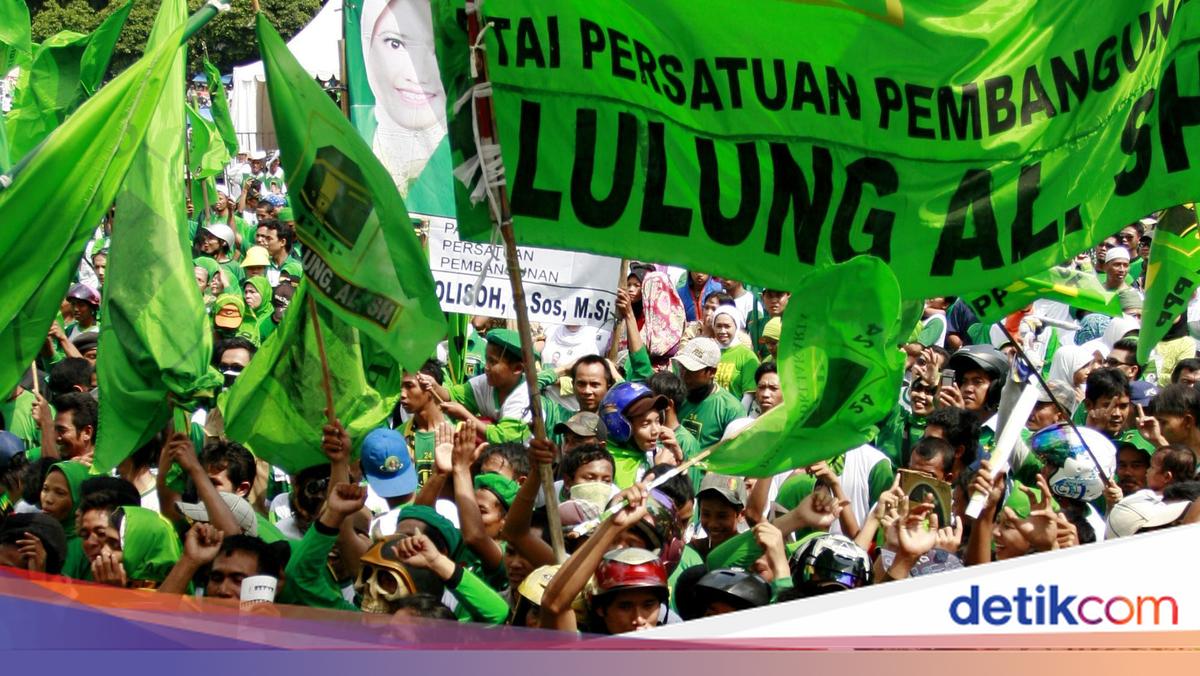
Then, Partai Persatuan Pembangunan (PPP) also voiced its opinion. PPP cadre and former Deputy Chairman of the Election Special Committee, Arwani Thomafi, said that the proposal to raise the threshold amount would potentially eliminate even more voter voices in elections.
“We must learn from the 2024 elections, where a 4% threshold has already eliminated 17 million voter voices,” said Arwani.
This former PPP Secretary General reminded that Constitutional Court Decision No. 116/PUU-XXI/2023 must also serve as a guide in discussing the Election Bill. According to him, the MK decision affirms the principle of proportionality in elections.
“The principle of proportionality in elections must be considered in designing the Election Law. Do not let voter voices be wasted in vain due to the implementation of a threshold size that actually gives birth to disproportionality,” Arwani emphasised.
Regarding the proposal to implement a threshold up to provincial DPRDs and regency/municipal DPRDs, Arwani reminded that the plan should be synchronised with the MK decision, which emphasises proportionality. “Whatever the policy choice, it should not contradict the spirit of proportionality as per the MK decision,” he added.
“The practice at the regional level so far has been good, with no parliamentary threshold but the implementation of a minimum seat limit for forming factions in DPRDs. This proportional system practice is already in line with the spirit of our nation’s diversity,” he continued.
Partai Perindo also voiced its opinion on the proposal. Deputy Chairman of Perindo, Ferry Kurnia Rizkiansyah, views that many votes would be wasted if the threshold is too high.
“The most essential issue is the disproportionality of election results. The number of wasted votes that cannot be converted into seats has increased from election to election. In 2019, wasted votes were 13.5 million, and in 2024, it was 17.3 million. Thus, we are ignoring the people’s voices that have the authority and mandate of popular sovereignty in elections,” said Ferry.
He believes the parliamentary threshold must be reviewed again. He referred to MK Decision No. 116.
“Regarding the threshold, it needs to be reviewed again post-MK Decision 116, by creating an effective threshold that considers the proportional election system, without ignoring wasted people’s voices and based on the size of seat allocation per electoral district,” he stated.
“So that there is no neglect, all DPR members and political parties must uphold the Erga Omnes principle, namely that Constitutional Court decisions are final and binding on all parties. Ignoring MK decisions is a serious violation of the Supremacy of the Constitution Principle (Article 1 Paragraph 3 of the 1945 Constitution) and directly damages the foundation of the rule of law,” he continued.
On that basis, he views that an effective threshold is needed. According to him, the dimension of representation must be prioritised to maintain the proportionality of election results.
“Therefore, the proposal for a 1% threshold is an aspect that needs to be considered on the grounds that in the democratic principle that places the people as the owners of sovereignty, what is important is that there should be no neglect of the people’s voices. The implementation of the threshold should not result in many wasted people’s voices, especially since we use a proportional system,” he added.