
Non-Muslim Man Breaks Through to Makkah and Returns as Convert
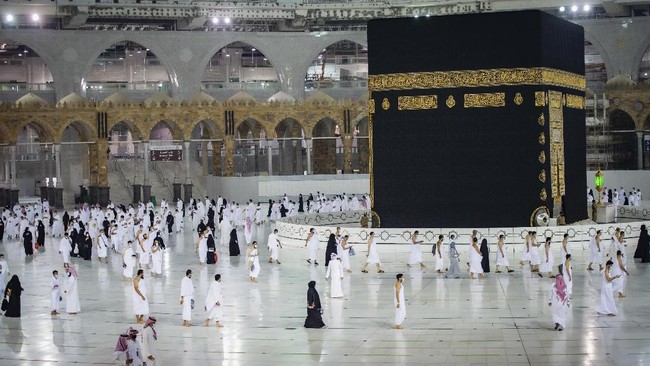
Makkah and Madinah are the two holiest cities in Islam. The Saudi Arabian government designated both of these regions as sacred territories, meaning they cannot be visited except by Muslims, in accordance with Surah At-Taubah verse 28.
The Saudi Kingdom strictly enforces this policy. If a non-Muslim attempts to enter either of these sacred lands, they will be arrested.
However, throughout history, there have been several non-Muslims who have nevertheless dared to breach Makkah, such as one man named Snouck Hurgronje.
Snouck Hurgronje was born into a devout Christian family. His father was a pastor in the Netherlands. However, from his teenage years, Snouck held different views. He chose to become an atheist (other sources refer to him as agnostic) and preferred to study Islam.
He spent almost every day in the library reading numerous texts about the Islamic world. He also studied Islamic language and culture. It is unsurprising, then, that he became reasonably fluent and possessed considerable understanding of Islam compared to other European youths.
His interest in the Islamic world led him to write research at Leiden University in 1880, titled “Het Mekkaacnshe Feest” (The Makkah Festival). According to Hamid Algadri in “Dutch Politics Towards Islam and Arab Descendants in Indonesia” (1988), the research was conducted without him ever having visited Makkah and was based solely on reading various sources.
The desire of this man, born on 8 February 1857, to travel to Makkah was finally realised in December 1884. With funding from the Dutch government, he eventually arrived in Saudi Arabia. He then stayed in Jeddah at a friend’s residence.
In his memoir, Snouck acknowledged the difficulty of entering Makkah given his non-Muslim status, especially if he wished to conduct research on Islam. Therefore, he altered his image by creating a new name from Snouck Hurgronje to Abdul Ghaffar.
He also decided to convert to Islam. Around 1885, he recited the shahada. However, the decision to change religion sparked debate. In “Snouck: Biography of Scholar Christiaan Snouck Hurgronje” (2023), Wim Van Den Doel states that many people did not believe Snouck’s conversion to Islam was genuine.
This was because he appeared to view Islam merely as an identity to facilitate entry into Makkah. Furthermore, some people considered the religious conversion a means for Snouck to discover weaknesses in Islam.
Regardless of the controversy, Snouck was officially registered as a Muslim and fulfilled the obligation of an adult Muslim man: circumcision. On 21 February 1885, Snouck was circumcised by a circumciser. Later, circumcision would ease his path to Makkah.
Upon arrival in the Holy Land, Snouck was initially refused entry by Arab police, who suspected he was non-Muslim because of his European physical appearance. It was also difficult to verify directly from his identification whether he was Muslim or not. The only way was to show his circumcised penis.
As a result, Snouck lowered his trousers and showed the police officer his circumcised penis. From this, they believed that Snouck was Muslim. Thus, he entered Makkah, becoming the first European scientist to arrive in the Holy Land.
During his time in Makkah, Snouck successfully disguised himself as a Muslim scholar. He gathered considerable research material related to Islam, including performing the umrah pilgrimage. However, his time in Makkah lasted only six months. He was expelled by the relevant authorities after they received a report that he was operating under false pretences, that is, fabricating his Islamic status despite having shown evidence of circumcision.
Nevertheless, Snouck completed his research. Subsequently, he became a special adviser to the Dutch government to study the lives of Muslim communities in Indonesia. In the 1890s, he resided in Indonesian cities, from Aceh to Jakarta, to advise on “managing” Indonesian Muslim communities.