
Non-ASN Teachers Can Only Teach Until the End of 2026, Mendikdasmen Responds
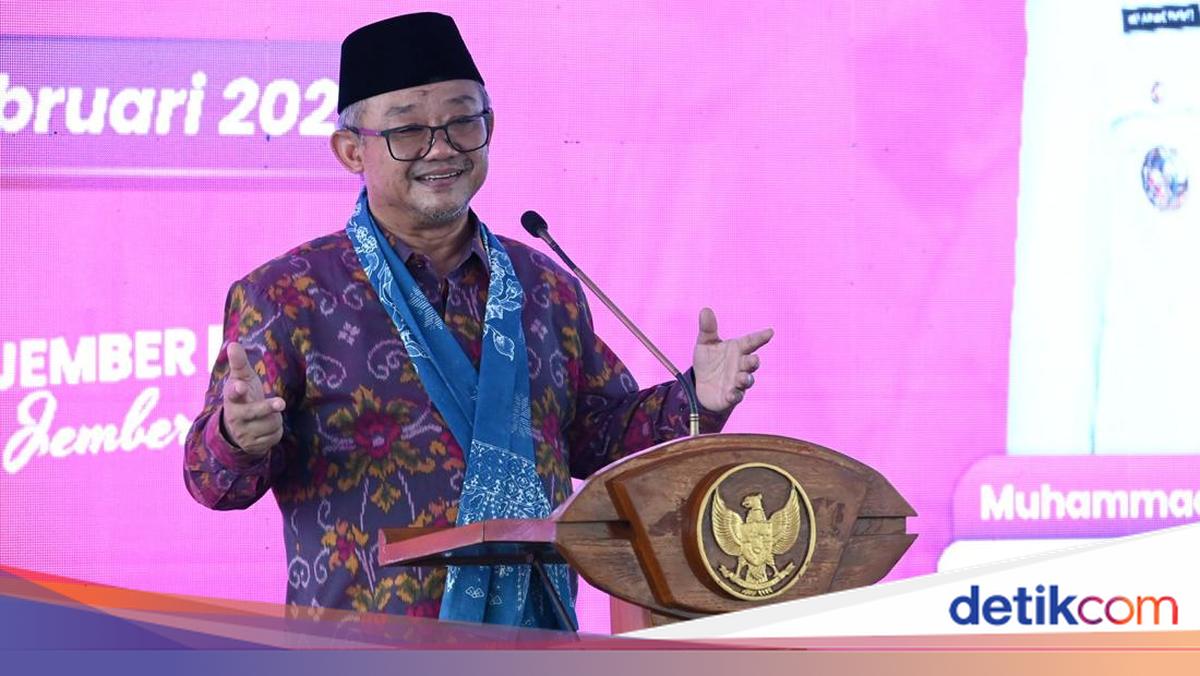
Non-ASN teachers are only permitted to teach in public schools until 31 December 2026. This provision is outlined in Circular Letter from the Minister of Basic and Secondary Education (Mendikdasmen) Number 7 of 2026.
According to detikEdu, this regulation has raised concerns among non-ASN teachers regarding the continuity of their employment status starting from 2027.
In response, Mendikdasmen Abdul Mu’ti explained that the policy is part of the implementation of the Civil Service Apparatus (ASN) Law.
“Regarding the widespread issue of non-ASN teachers not being assigned after 31 December, referring to the ASN Law, which states that the term ‘honorary’ will no longer exist,” Mu’ti said during a press conference at the Communication Agency Office in Central Jakarta on Wednesday (6/5/2026).
He added that the provision should have been fully effective in 2024. However, its implementation will only take effect in 2027.
“So, this is actually a consequence of implementing the ASN Law, which should have applied in 2024, fully in 2024. But then, with various considerations, it will only be implemented, effective from 2027. In short, that’s it,” he continued.
There Are Part-Time PPPK Teachers
Mu’ti also explained that there is currently a scheme for ASN teachers with part-time PPPK status. This scheme is provided to teachers who have participated in the PPPK selection but have not yet been declared fully passed.
“So as not to cause problems in terms of civil service or in the context of education delivery, they continue teaching with the status of part-time PPPK teachers,” he said.
Meanwhile, he did not deny that several regional governments are facing difficulties in paying part-time PPPK teachers.
“Now, there are many who are applying and it continues to increase, regions that are applying for policies from the Ministry of Education regarding part-time PPPK teachers,” he said.
Regarding this situation, he emphasised that further explanations on this civil service policy fall under the authority of the Ministry of State Apparatus Utilisation and Bureaucratic Reform (PANRB).
“It will be more clean and clear,” he said.
“Because it concerns the implementation of the ASN Law and also the authority of the Minister of PANRB regarding whether the employee is a civil servant or PPPK,” Mu’ti continued.
Previously, Mu’ti stated that his ministry is working with the Ministry of PANRB and other related ministries to meet teacher needs in 2026 and subsequent years.
He added that the government is also formulating strategic steps regarding the opening and determination of teacher formation needs so that non-ASN teachers can participate in selections and become ASN teachers.
“Thus, non-ASN teachers have the opportunity to follow the selection process in accordance with applicable provisions. For those who pass the selection, their status will transform into Civil Service Apparatus (ASN), thus providing a clearer and more sustainable career path,” he said in an official statement on Tuesday (5/5/2026).
Word from Dirjen GTK
Separately, the Director General of Teachers and Education Personnel (Dirjen GTK) of the Ministry of Education, Nunuk Suryani, said that this circular was issued due to the need for an official reference for regional governments.
“We issued this circular because regional governments need a circular reference to still be able to extend non-ASN teachers,” Nunuk said, quoted from Antara on Tuesday (5/5/2026).
“Meanwhile, for non-ASN teachers, the important thing is to work first until this year, because there will definitely be no termination of employment. We continue to fight for non-ASN teachers,” she continued.
New Scheme for Non-ASN Teachers
Nunuk added that the Ministry of Education has formulated a new scheme regarding the assignment of non-ASN teachers. She emphasised that the existence of non-ASN teachers will not be eliminated outright, but reorganised.
This is considering that non-ASN teachers are still very much needed to fill teacher requirements, especially in the outermost, frontier, and underdeveloped (3T) areas.
Content of Mendikdasmen Circular Letter Number 7 of 2026
The Mendikdasmen Circular Letter Number 7 of 2026 states that 237,196 non-ASN teachers can carry out their duties as usual by meeting the following requirements:
Registered as non-ASN teachers in the Education Data up to 31 December 2024
Actively carrying out duties at education units managed by regional governments.
The assignment of non-ASN teachers will be carried out until 31 December 2026. During their assignment, they will receive income under the following provisions:
Teachers who have an education certificate and meet the workload receive a teacher professional allowance in accordance with the provisions.
Teachers who have an educator certificate but do not meet the workload will receive incentives from the Ministry of Education.
Teachers who do not yet have an education certificate will receive incentives from the Ministry of Education.
Regional governments may provide other income to non-ASN teachers according to the regional budget capacity.