
No Need to Worry, Purbaya Confident APBN Deficit Will Remain Controlled Until End of 2026
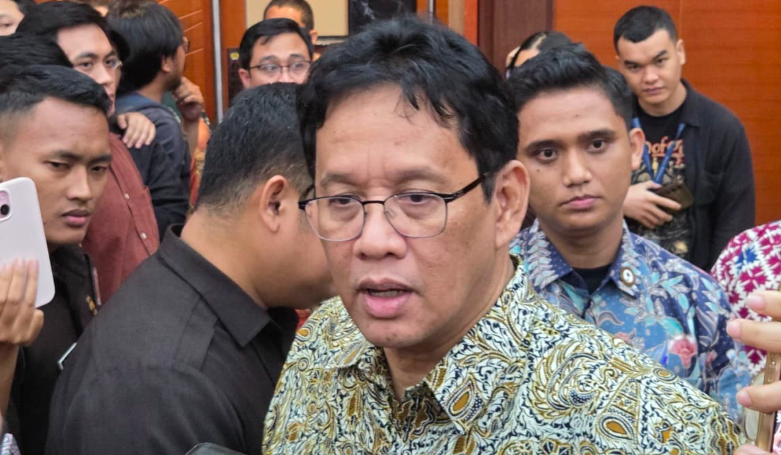
Finance Minister Purbaya Yudhi Sadewa has guaranteed that the state budget (APBN) deficit will remain controlled until the end of the year. Speaking at a press conference monitored online in Jakarta on Tuesday, Purbaya stated that budget management continues to be maintained consistently, providing the APBN with room to cushion against global economic fluctuations. “Our calculations now, even with an average of US$100 until the end of the year, the budget remains sustainable and the deficit is still controlled,” Purbaya said. Therefore, he urged the public not to worry about the potential widening of the APBN deficit. “So, the public doesn’t need to worry that the deficit is uncontrolled and the budget is haphazard. We control everything well and have calculated it through to the end of the year,” Purbaya added. Previously, the government outlined several scenarios on the impact of rising global oil prices on the APBN. In the first scenario, the Indonesian Crude Price (ICP) is estimated at around US$86 per barrel, with the rupiah exchange rate at about Rp17,000 per US dollar, weaker than the APBN assumption of Rp16,500 per US dollar. With economic growth of 5.3% and government securities yields around 6.8%, the APBN deficit is projected to reach 3.18%. In the moderate scenario, oil prices are projected at about US$97 per barrel with the rupiah weakening to Rp17,300 per US dollar. Economic growth is estimated at 5.2% and government securities yields at 7.2%, potentially increasing the deficit to 3.53%. In the pessimistic scenario, oil prices are estimated at US$115 per barrel, with the rupiah weakening to Rp17,500 per US dollar. With economic growth around 5.2% and government securities yields at 7.2%, the APBN deficit is projected to widen to 4.06%. To maintain budget management, the government has prepared several policies under the banner of “8 Pillars of National Work Culture Transformation.” Budget optimisation is one of them, achieved through work-from-home (WFH) policies with potential savings of Rp6.2 trillion from fuel compensation. Meanwhile, total potential savings from public fuel consumption are estimated at Rp59 trillion. The government is also implementing Biodiesel 50 (B50), a 50% blend of crude palm oil with diesel, to save Rp48 trillion in subsidies. Additionally, there is optimisation of the Free Nutritious Meals (MBG) programme to five days, potentially saving up to Rp20 trillion.