
No Kings Protests Draw Spotlight, Between Public Criticism and Government Stability
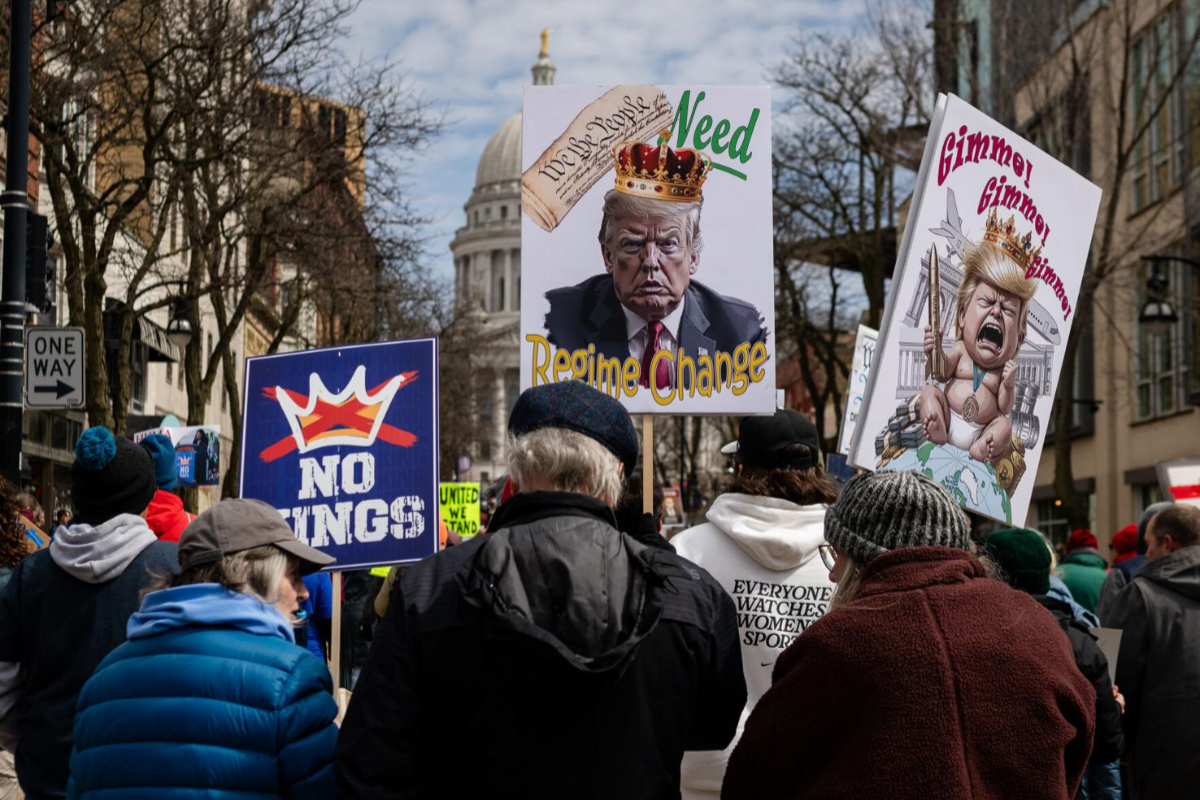
Political dynamics in the United States ahead of the 2026 midterm elections are heating up, with the emergence of the No Kings protest wave and growing discourse on the legitimacy of President Donald Trump’s leadership.
Responding to the current wave of public protests that reflect a crisis of legitimacy in leadership, Chairman of the University of Indonesia’s Centre for American Studies, Prof. Suzie Sudarman, assesses that the phenomenon needs to be viewed in a broader context.
She explains that the third and largest No Kings action took place on 28 March 2026 in the United States. According to her, the demonstrators view the Trump administration’s policies as showing authoritarian tendencies.
“The protesters argue that the Trump administration’s actions exhibit characteristics of monarchical behaviour in governance, and the demonstrations are an effort to challenge the legitimacy of the Trump government,” said Prof. Suzie when contacted by Media Indonesia on Sunday (29/3).
In terms of scale, this action has seen a significant increase. In March 2025, the number of participants was estimated at 5 million people. Meanwhile, in 2026, around 3,000 actions are planned nationwide, making the movement appear increasingly large and widespread.
According to her, the main issues raised in the demonstrations include criticism of immigration policies, particularly harsh actions against undocumented immigrants, and opposition to the war in Iran.
The organisers of the action, including the Indivisible coalition and the 50501 movement, state that the protests aim to expose policies deemed authoritarian and corruption practices within the government.
“They also emphasise that power should be in the hands of the people,” she said.
The movement is even being pushed to have an international reach, with the echoes of the action spreading to Europe, Latin America, and Asia. The narratives promoted include rejection of dictatorship and tyranny, as a form of resistance against authoritarian tendencies.
However, the White House has responded with a harsh tone. Trump calls the actions “Trump Derangement Therapy Sessions” and deems the protests supported by left-wing group networks.
This statement is seen as an attempt to delegitimise the demonstrators as concerned citizens.
“Trump’s efforts to invalidate the protesters so they are no longer seen as citizens voicing concerns,” she stressed.
In the political context, Prof. Suzie assesses that this action reflects high polarisation in American society, while also serving as a proactive effort by civil society to limit executive power ahead of the 2026 midterm elections, which are also marked by a decline in Trump’s approval ratings.
On the other hand, the government tends to view the actions as partisan obstacles, while the demonstrators see them as efforts to maintain a balance of power.
Nevertheless, Prof. Suzie reminds that the US political system has characteristics of an Imperial Presidency, which allows executive power to remain strong despite public pressure.
Given this condition, the No Kings actions are seen as an important indicator of political dynamics and public participation, but not necessarily directly changing policy direction or government stability in the short term.