
No Diplomatic Relations With Indonesia, Israeli Company Granted Licence to Manage Geothermal Energy in Halmahera
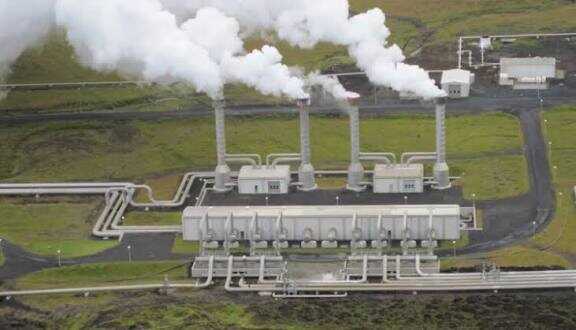
The Indonesian government, through the Ministry of Energy and Mineral Resources (ESDM), has reportedly granted a geothermal project management licence to a company with Israeli business networks in the West Halmahera area of North Maluku. The policy has attracted public attention as Indonesia to this day maintains no diplomatic relations with Israel.
The project in question is the Telaga Ranu Geothermal Working Area (WKP), which was won by PT Ormat Geothermal Indonesia, a subsidiary of Ormat Technologies. The renewable energy company, headquartered in the United States, won the project tender through decision number 1.Pm/EK.04/DJE.P/2026.
News of the project winner was also circulated through a post on the Instagram account @middleeastmonitor. The Telaga Ranu project is described as part of the government’s efforts to drive clean energy transition and achieve its Net Zero Emission target by 2060.
However, amidst these green energy ambitions, the ecological condition of Halmahera Island has come under scrutiny. The island, which still possesses extensive forest areas, currently faces significant pressure due to growing global demand for natural resources.
Beyond geothermal development, Halmahera has already experienced large-scale nickel industry expansion. The area has developed into a processing hub connected to the global electric vehicle battery supply chain. Investment from various countries including China, Japan, and South Korea has driven the construction of smelters, power plants, and logistics infrastructure.
As a result, the rate of forest loss in several industrial zones has increased, whilst coastal areas face mounting environmental pressure. Local communities have had to adapt to rapidly changing economic conditions.
A number of analysts have also assessed that the decision to grant a concession to a company linked to the Israeli economic system carries political implications.
In an opinion piece by Muhammad Zulfikar Rakhmat and Wishnu Try Utomo, the move was deemed to potentially pose two simultaneous risks: weakening Indonesia’s political position on the Palestine issue and adding industrial pressure on a vulnerable ecosystem.
According to them, this geothermal project is not merely an energy development issue but also a policy choice with long-term ecological and geopolitical consequences.
Politically, Indonesia has long been known for consistently supporting the Palestinian cause and not maintaining diplomatic relations with Israel. Consequently, economic engagement with a company rooted in Israeli networks is seen as potentially creating a gap between foreign policy stance and economic practice.
The divergence between diplomatic messaging and economic policy is feared to potentially affect the credibility of Indonesia’s position at the international level, whilst adding complexity to maintaining the balance between development interests, the environment, and foreign policy.