
No Day Without SPHP Rice
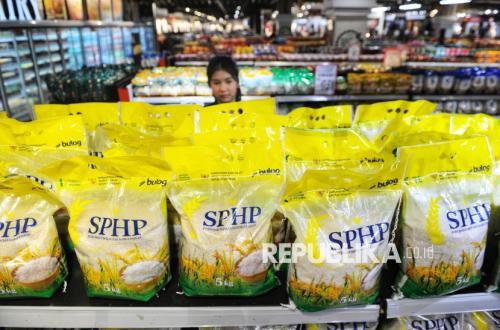
REPUBLIKA.CO.ID, JAKARTA – The Stabilisation of Food Supply and Price (SPHP) rice programme has been rolling out since July 2025 and will continue until December 2025 with an allocation of 1.318 million tonnes. Unfortunately, in its implementation, the target was not achieved. By the end of 2025, the distribution of SPHP rice was only around 820,000 tonnes. This programme aims to dampen fluctuations in rice prices in the market and improve public access to quality rice at affordable prices. Recently, there was interesting news voiced by the government. Many social media outlets reported that the Minister of Agriculture (Mentan)/Head of the National Food Agency (Bapanas) Andi Amran Sulaiman has assured that the distribution of SPHP programme rice will continue to be rolled out across Indonesia, including during the peak harvest season. According to Minister Amran, the SPHP programme has proven effective in maintaining rice price stability in the market while curbing food inflation. The results are also evident from the latest data from the Central Statistics Agency (BPS), which records that rice has once again become one of the national inflation-dampening commodities in October 2025. BPS data indicates that the national inflation rate in October 2025 was recorded at 0.27% on a monthly basis. Rice contributed to a deflation of -0.08%. This trend demonstrates the success of rice price stabilisation by injecting SPHP rice into the consumer market. SPHP rice is one of the Stabilisation of Food Supply and Price (SPHP) programmes carried out by the government to maintain price stability and availability of rice in the market. This programme is intended to enhance food security and public welfare, especially for vulnerable groups such as the poor and underprivileged. In the SPHP programme, the government conducts market interventions by purchasing rice from farmers and reselling it in the market at lower prices, so that rice prices in the market remain stable and affordable for the public. That is why the SPHP rice programme will be implemented every day. “No Day Without SPHP Rice” is the government’s slogan to emphasise the importance of the SPHP programme in maintaining the availability and price stability of rice in the market. This slogan means that the government is committed to ensuring that every day the public can obtain rice at stable and affordable prices. With this commitment, the public does not need to worry about rice availability and can more easily meet their food needs. This slogan also emphasises the importance of maintaining food security and improving public welfare. Therefore, to ensure that the SPHP rice programme runs every day, the government pursues several strategies. Among them, the government procures rice from farmers or producers in sufficient quantities to meet public needs. In this regard, the presence of Perum Bulog as the government’s food operator determines the success of SPHP rice procurement. Furthermore, the government builds an effective and efficient distribution network to channel SPHP rice to all regions, especially food-vulnerable areas. Here too, the role of Perum Bulog is greatly needed, particularly to reach remote locations. Then, strengthening synergy, collaboration, and cooperation with state-owned enterprises (BUMNs). The government partners with BUMNs such as Perum Bulog and ID Food. This step is clearly not just rhetoric but demands real implementation in the field. The government also conducts strict supervision and monitoring of the SPHP programme implementation to ensure that SPHP rice is distributed properly and on target. Another strategy could be price setting. The government sets affordable selling prices for SPHP rice so that the public obtains rice at stable and affordable prices. On the other hand, the government conducts socialisation and promotion of the SPHP programme to the public. Thus, the public understands the benefits and objectives of this programme. It could also collaborate with local governments (pemda) to implement the SPHP programme at the regional level, making the programme more effective and efficient. Based on this overview, the government can ensure that the SPHP rice programme runs every day and the public has the opportunity to obtain rice at stable and affordable prices.