
Nickel Becomes National Downstream Priority, Boosting Trillions of Rupiah in Investment
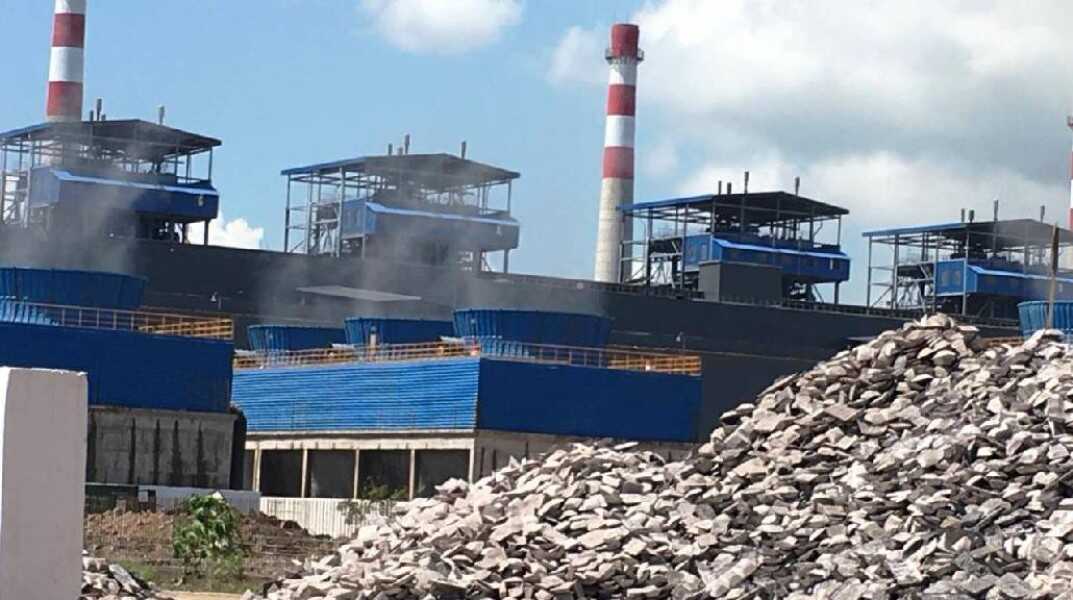
JAKARTA - Driving sustainable national economic growth requires a long-term strategy anchored in strategic sectors. The Indonesian government is now paying serious attention to its downstream processing programme, making it a key pillar in industrial transformation. Among various commodities, nickel has emerged as the primary backbone of the downstream roadmap designed for the 2025–2029 period.
The Ministry of Investment and Downstream Processing/BKPM has set an ambitious target of Rp3,839 trillion in downstream investment, with the largest share coming from the nickel sector. This strategy aims not only to increase the added value of natural resources but also to reduce dependence on raw material exports whilst creating a stronger and more self-reliant economic structure.
Director of Mineral and Coal Downstream Processing at the Ministry of Investment and Downstream Processing/BKPM, Rizwan Aryadi Ramdhan, speaking at the Indonesia Smart Mining Conference 2025 in Jakarta, stated that downstream processing would be a key element of President Prabowo’s administration over the next five years.
“Economic transformation must be anchored in downstream processing, and nickel is the primary key because Indonesia holds 42% of the world’s nickel reserves,” he said at the forum held at the Shangri-La Hotel.
In his presentation, Rizwan explained that the government is targeting average economic growth of 8% per year. To achieve this, total investment from foreign direct investment (PMA) and domestic investment (PMDN) of up to Rp13,032.8 trillion is needed during the 2025–2029 period. Of that figure, Rp3,839 trillion is allocated specifically for the downstream sector. Nickel is the largest contributor, accounting for Rp365 trillion, surpassing other commodities such as copper, petroleum, gas and bauxite.
Downstream processing performance in the previous year provided positive signals. In 2024, realised investment in the downstream sector reached Rp407.8 trillion, with the majority coming from the mineral sector, particularly nickel. Nickel’s strategic role is further strengthened as it supports the growth of the national electric vehicle (EV) industry, which is a priority in the energy transition roadmap.
Although the national downstream roadmap covers 28 commodities across eight priority sectors, the government has narrowed its focus to 15 strategic commodities included in the National Medium-Term Development Plan (RPJMN) 2025–2029. Among all of these, nickel is positioned at the top due to its readiness in terms of reserves, downstream infrastructure and high global demand.
Other commodities that are also part of the government’s strategic focus include copper, oil and gas, bauxite, tin, iron and steel, silica sand, as well as marine and fisheries products such as prawns and tilapia. However, nickel is considered the most ready to support the government’s major targets because its supply chain is already established, and several large projects such as smelter construction and battery factories are already under way.
The downstream plan developed since 2022 projects potential investment of up to US$618 billion by 2040. Furthermore, the government estimates that downstream processing’s contribution to Gross Domestic Product (GDP) could reach US$235.9 billion. Beyond macroeconomic aspects, the programme is projected to create more than 3 million new jobs and drive national exports to US$857.9 billion.
The government recognises that Indonesia’s strength lies in its natural resources. However, this advantage must be maximised through downstream processing to avoid relying solely on low-value raw material exports. The transformation being carried out through downstream processing aims to shift the national economic structure towards manufacturing and technology.
Massive investment in the nickel sector is also closely linked to the global agenda on clean energy and carbon neutrality. As a key component in electric vehicle batteries, nickel plays an important role in supporting the transition to green energy. The government sees this as a golden opportunity to position Indonesia as a key player in the global electric vehicle industry supply chain.
Moreover, the presence of an integrated nickel industry from upstream to downstream is projected to create broad social and economic impacts, including the development of mineral-based industrial zones and driving economic growth in nickel-producing regions. This creates a multiplier effect on SME growth, employment absorption and supporting infrastructure development.
Amid ever-changing global market dynamics, the government’s nickel-based downstream strategy represents an adaptive and progressive response. By setting realistic targets and strong policy support, the government hopes this programme will become an engine of inclusive, competitive and sustainable long-term economic growth.
The government’s move to position nickel as the flagship commodity in the downstream era represents a comprehensive effort to ensure that Indonesia’s natural wealth potential can be converted into tangible economic strength. With synergy between the government, business operators and the public, nickel downstream processing is believed capable of bringing Indonesia to a new and more advanced industrial level.