
NIB Reaches 15.8 Million, Business World Continues to Thrive
The government has noted a significant surge in the issuance of Business Identification Numbers (NIB) as a strong indicator of growing domestic economic activity. As of early April 2026, the total NIBs issued through the risk-based business licensing system has reached 15.8 million units since its initial launch.
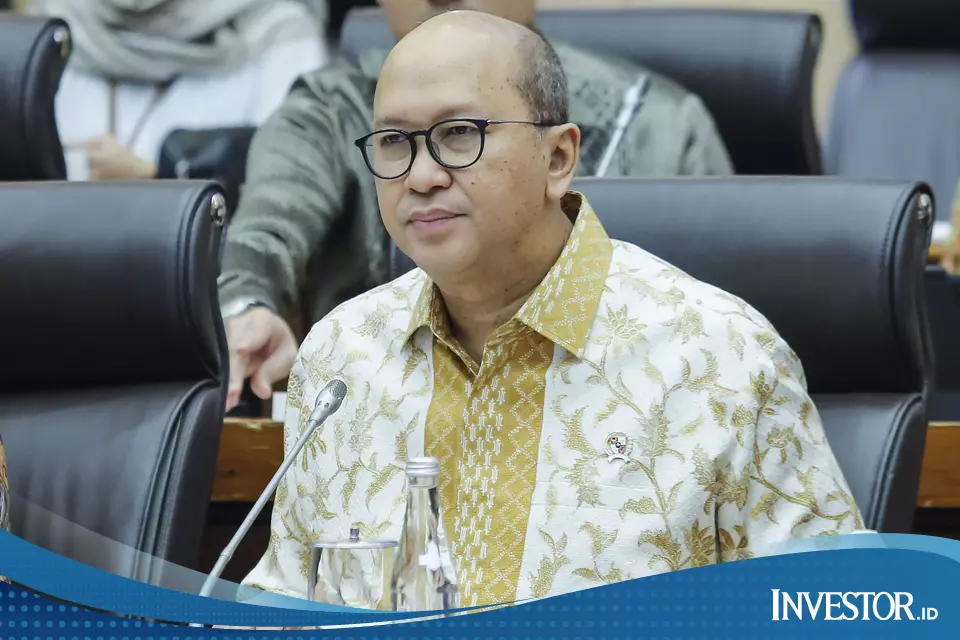
Investment Minister and Downstreaming/Head of the Investment Coordinating Board (BKPM), Rosan Roeslani, stated that this positive trend reflects high public interest in starting businesses despite global economic dynamics. In a short period, from October 2025 to 8 April 2026, approximately 1.8 million new NIBs were recorded.
“I report briefly that NIBs from 2021 to April 2026 have now totalled 15.8 million. This shows that our business world continues to operate and move forward,” said Rosan during a working meeting with Commission XII of the House of Representatives (DPR RI) in Jakarta on Monday (13/4/2026).
The sharp rise in licensing figures is inseparable from policy reforms, one of which is through Government Regulation (PP) No. 28 of 2025. This regulation introduces a “fictive positive” mechanism, where business permits are automatically issued if the relevant agencies do not respond within the specified timeframe.
This policy is seen as a crucial breakthrough in providing legal certainty and cutting prolonged bureaucracy. With these facilitations, the government is optimistic that the investment climate will become increasingly competitive and able to drive sustainable national economic growth.
On the same occasion, Rosan also stated that geopolitical tensions in the Middle East have not deterred global investors’ interest in Indonesia. On the contrary, uncertainty in that region is pushing investors to seek more stable markets, with Indonesia emerging as one of the primary destinations.
Rosan revealed that a number of Middle Eastern investors are now more intensively exploring investment opportunities in Indonesia. Domestic political stability and security have become crucial factors positioning Indonesia as a “safe harbour” for long-term investments.
“We see that with the tensions, especially in Middle Eastern countries, investors from that region are speaking intensively with us. We are also actively meeting with prospective investors,” said Rosan.
This global investor confidence, according to Rosan, is further strengthened by the economic diplomacy conducted by President Prabowo Subianto. The President’s visits to major countries such as the United States, China, Russia, and the United Kingdom demonstrate Indonesia’s position, which is openly accepted by various economic blocs.
In his most recent visits to Japan, South Korea, and China, Rosan also disclosed that there are no indications of declining investment interest. The government continues to conduct direct (one-on-one) approaches with business actors to provide regulatory certainty and reduce bureaucratic barriers.
This optimism is reflected in the first-quarter 2026 investment realisation, estimated to reach Rp 497 trillion, or a 7% year-on-year (yoy) growth. This achievement is projected to create jobs for 627,000 new workers, an increase of 5.5% compared to the same period last year.
“Insyaallah, the target set for the first quarter can be achieved, namely Rp 497 trillion,” Rosan concluded.