
Nezar Highlights Cyber Threats from Quantum Computing
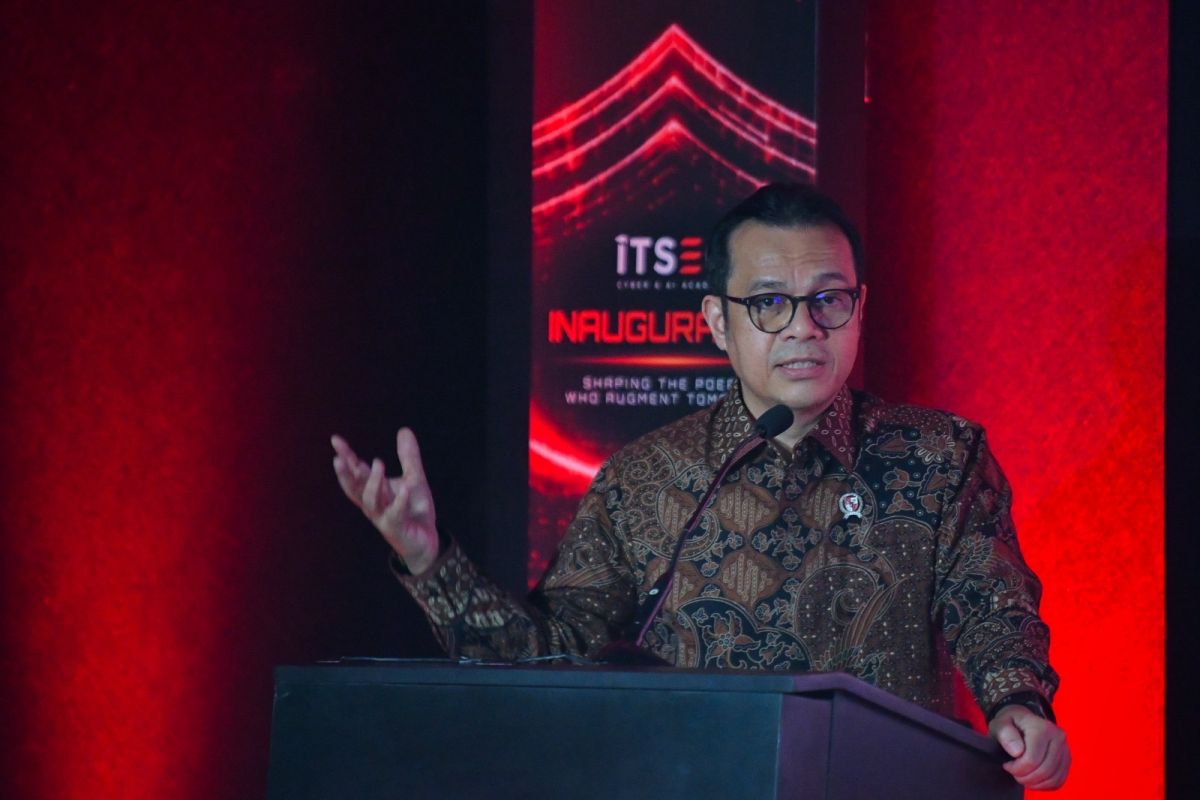
Deputy Minister of Communication and Digital Affairs Nezar Patria has highlighted a new cyber threat arising from advances in quantum computing, including the practice of harvest now, decrypt later.
Under this pattern, perpetrators do not need to immediately open stolen data, but instead store it until technology capable of decrypting the data becomes available.
“There is data they have already stolen that they cannot open because it is encrypted. But they keep the data, they take it,” Nezar said in an official statement received in Jakarta on Monday.
Nezar made the remarks at the ITSEC Cyber & AI Academy Grand Launching in South Jakarta on Monday (10/8). According to him, cyber actors can steal and store encrypted data to be opened in the future once quantum computing capabilities are able to break the encryption systems currently in use.
He therefore believes Indonesia needs to begin preparing security systems capable of facing developments in quantum technology.
“We also have to prepare ourselves, especially for our data security, for our cryptographic systems — that is post-quantum cryptography,” he stressed.
Nezar said such preparations need to be made now because data stolen and stored by perpetrators can retain value in the future.
The ransomware attack on the Temporary National Data Centre (PDNS) 2 in June 2024 served as a lesson for the government in evaluating its cyber security architecture.
One change in approach is to embed security from the earliest stage of system development, or security by design.
Nezar emphasised that security aspects must be included in the planning stage because threats are becoming increasingly complex alongside the development of artificial intelligence (AI).
The development of agentic AI even allows attacks to be carried out automatically without fully relying on human hackers.
“What is working is no longer hackers, but agentic AI carrying out these cyber attacks,” he said.
In facing these changes, Nezar said Indonesia also needs talent capable of understanding developments in cyber security and new technologies.
Nezar assessed that the presence of the ITSEC Cyber & AI Academy can serve as a bridge between technological developments in industry and the competencies taught in higher education.
“Without strong talent, I think our data wealth will ultimately be scattered everywhere and will be stolen, read and captured by those who are more powerful,” he said.