
New War Shakes Asia: Military Comparison Pakistan vs Afghanistan
Tension between Pakistan and Afghanistan has entered a critical phase after Islamabad declared open war against the Taliban government. The declaration emerged amid a series of border clashes resulting in mutual attacks.
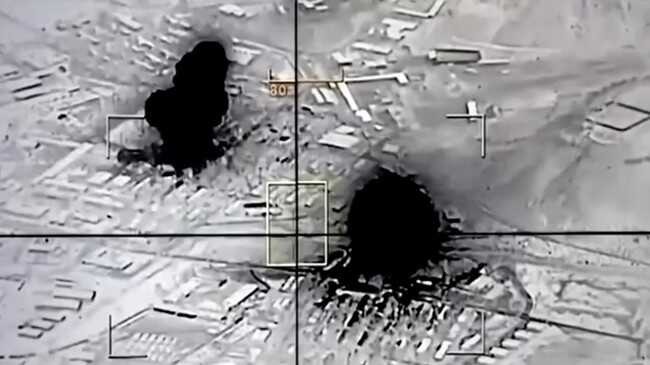
Pakistan bombarded Afghan cities Kabul and Kandahar on Friday, 27 February 2026. Hours earlier, Afghan forces had attacked Pakistan’s border forces.
Pakistan’s Defence Minister Khawaja Asif stated that his country was engaged in “open war” with Afghanistan. “This is now open war between us and you,” he said on X, Friday, 27 February 2026.
Simultaneously, the Taliban government stated it was launching retaliatory operations against Pakistani military positions along the border, including in the Kandahar and Helmand regions.
Amid this escalating military tension, a comparison of the two nations’ military capabilities offers significant insight into Pakistan and Afghanistan’s respective military capacities.
Military Strength Comparison: Pakistan versus Afghanistan
Global Firepower data reveals a substantial military gap between Pakistan and Afghanistan.
Pakistan ranks 14th out of 145 countries with a Power Index of 0.2626. Afghanistan, by contrast, ranks 121st with a Power Index of 2.7342. A lower Power Index figure indicates stronger military capability.
The GFP index considers more than 60 factors, including active military personnel, land, air and naval forces, defence budgets, logistics, and geographical conditions.
Pakistan holds a decisive advantage across nearly every dimension. Of eight key indicators compared, Pakistan prevails on seven major factors including active personnel numbers, air and land capabilities, and naval strength. Afghanistan’s only advantage lies in geography.
The most obvious differences appear in personnel numbers and defence budgets. Pakistan maintains 660,000 active troops, whilst Afghanistan has 75,000. In defence spending, Pakistan allocates approximately US$9.1 billion, far exceeding Afghanistan’s US$145 million budget.
In the air sector, Pakistan operates 331 fighter aircraft and 55 attack helicopters. Afghanistan possesses no combat aircraft or attack helicopters. Similar disparities exist in ground capabilities. Pakistan operates 2,677 tanks and 59,044 armoured vehicles, whilst Afghanistan has no tanks and only 3,902 armoured vehicles.
Regarding fire support, Pakistan has 662 self-propelled artillery units and 652 mobile rocket launchers, whilst Afghanistan has none.
Pakistan’s naval advantage is equally pronounced. Pakistan commands a 120-strong naval fleet, including 8 submarines, 9 frigates, 6 corvettes, and 79 patrol vessels. Afghanistan, as a landlocked nation, maintains no naval forces.
Pakistan Possesses Nuclear Weapons
Beyond its conventional military superiority, Pakistan ranks among the world’s nuclear-armed nations. According to Visual Capitalist’s summary of SIPRI data, Pakistan is estimated to possess 170 nuclear warheads as of 2025.
This places Pakistan alongside Russia, the United States, China, France, the United Kingdom, India, Israel, and North Korea as nuclear-capable states.
Should nuclear weapons be deployed in this conflict, the consequences would be catastrophic. Civilian populations, not merely military targets, could face destruction. Casualties would be enormous, environmental damage long-term, and the conflict could expand beyond either nation’s borders.
Consequently, even minor escalations in this conflict warrant serious international attention.