
New Tobacco Excise Tax Layer Proposal Criticised as Failing to Address Illicit Cigarettes, Say Academics
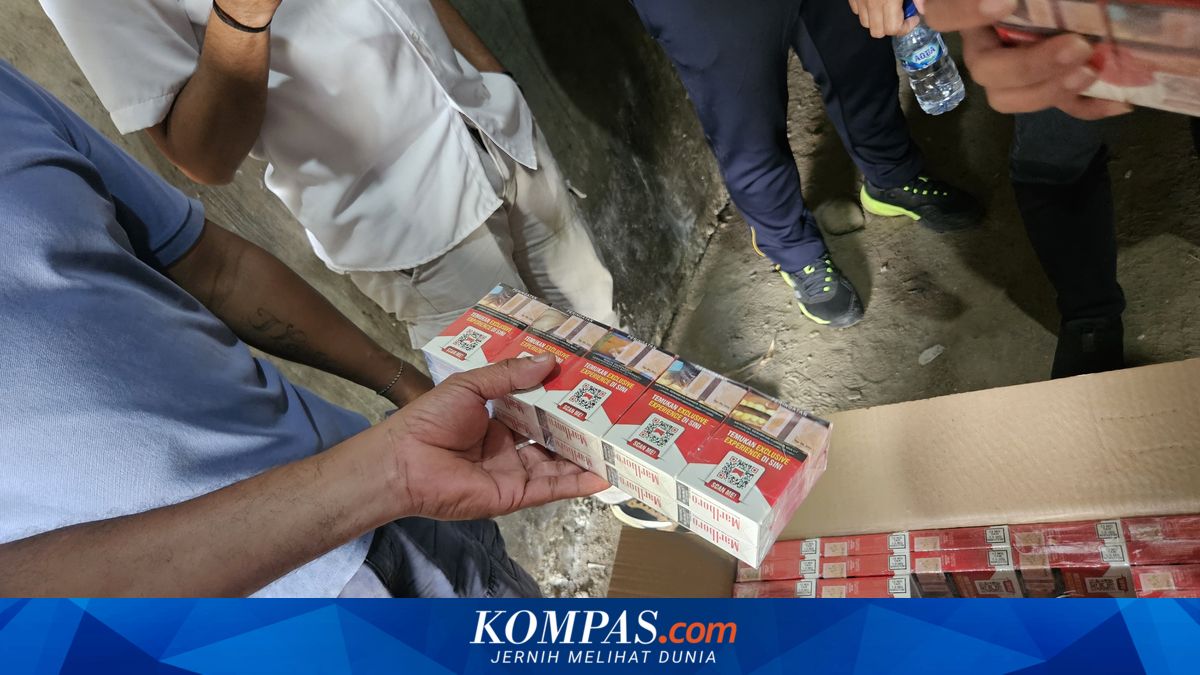
JAKARTA — The proposal by Indonesia’s Finance Ministry under Finance Minister Purbaya Yudhi Sadewa to add a new tariff tier for Group III machine-rolled clove cigarettes (SKM) within the tobacco excise tax (CHT) structure has drawn criticism from legal academics.
The policy has raised questions about consistency in law enforcement, particularly amid intensified efforts to combat illicit cigarettes and recent allegations of corruption within the Directorate General of Customs and Excise related to excise stamp manipulation.
Ali Rido, a legal expert from Trisakti University, argued that fiscal approaches cannot replace law enforcement functions against illicit tobacco practices.
According to Rido, fiscal policies such as excise tariff adjustments should focus on regulating legal economic activities rather than serving as instruments to resolve criminal or administrative violations.
He also cautioned against weakening the deterrent effect if legal violations are perceived as resolvable through tariff policies.
“This naturally risks being contradictory because combating illicit cigarettes is part of law enforcement,” Rido stated.
“If legal violations are then ‘accommodated’ through excise tariff policies without clear separation of accountability for previous violations, such policies risk being perceived as weakening the deterrent effect and inconsistent with the spirit of law enforcement,” he added.
He also highlighted the moral hazard risk if violations are considered negotiable through policy changes. “The moral hazard risk is very real. If business actors see that violations can be ‘negotiated’ through new policies, expectations will emerge that non-compliance today could be negotiated in the future,” he said.
Rido also noted that state losses resulting from illicit tobacco could fall within corruption offences if certain elements are met.
“If it involves misuse of authority, position, or unlawful acts by state administrators or officials, then state losses from illicit tobacco can be classified as corruption,” he said.
“State losses from tax evasion meet the element of ‘harming state finances’ if illicit tobacco practices occur due to negligence, protection, administrative manipulation, or cooperation between business actors and officials,” he added.
Similar criticism came from Muhammadiyah economist Mukhaer Pakkana, who argued that the primary approach to curbing illicit cigarette distribution should focus on strengthening supervision and law enforcement.
“The main measure to curb illicit cigarette distribution is to strengthen supervision and law enforcement, transparency in tackling the illegal tobacco industry. So rather than adding a new layer to legalise what is illegal,” Pakkana said.
Pakkana also noted that within the four-pillar CHT policy framework, consumption control must be balanced with strong supervision of illicit cigarette distribution.
“Consumption control efforts must be a top priority, balanced with strong supervision and enforcement against illicit cigarettes to close the gap for cheap cigarette options — illicit cigarettes tend to be cheaper — this will also prevent the leakage of state revenue from the uncontrolled proliferation of illicit cigarettes,” Pakkana stressed.
Earlier, Purbaya explained that the policy of adding a cigarette excise tax layer aims to control illicit cigarette distribution whilst strengthening state revenue from the excise tax sector.
“We will ensure one new layer, and it is still being discussed to provide space for those illegal operations to enter the legal market. So they will pay taxes as well,” Purbaya said previously.
The Corruption Eradication Commission (KPK) is currently investigating alleged corruption within the Directorate General of Customs and Excise allegedly related to the widespread distribution of illicit cigarettes in Indonesia.