
New State-Owned Enterprise for Natural Resource Exports Hailed as Measure to Prevent Foreign Exchange Leakage
REPUBLIKA.CO.ID, JAKARTA – Deputy Chairman of Commission VI of the House of Representatives Nurdin Halid has backed the establishment of a specialised state-owned enterprise (SOE) to manage strategic natural resources, set to commence operations in 2027. The move is expected to strengthen export oversight, curb foreign exchange leakage, and accelerate downstream processing of national commodities.
Nurdin stated that the creation of the export SOE is a continuation of the government’s strategy to improve the governance of strategic commodity trade and boost state revenue. He added that the policy aligns with Article 33 of the 1945 Constitution, which mandates natural resource management for the greatest prosperity of the people.
“This policy is a continuation of the downstream processing programme, securing national foreign exchange, and preventing the leakage of strategic commodity export values. All of this embodies economic sovereignty for the maximum benefit of the people’s prosperity,” Nurdin said in a statement on Saturday, 30 May 2026.
The statement responds to the government’s decision to appoint PT Danantara Sumber Daya Strategis (PT DSI) as the SOE responsible for managing strategic commodity exports from 1 January 2027.
According to Nurdin, PT DSI’s presence will strengthen Indonesia’s bargaining position in global markets and improve the national export structure, which has long been dominated by raw material sales.
“The establishment of a specialised SOE for strategic natural resource management must be viewed within a broader context: the nation’s effort to strengthen natural resource governance and improve the national export structure,” he said.
Nurdin hopes PT DSI will not merely act as an export executor but also serve as an orchestrator and aggregator, uniting the national supply chain from production, financing, logistics, quality standardisation, downstream processing to global market penetration.
“This is crucial for Indonesia to move beyond being merely a commodity exporter and instead ascend as a key player in global value chains,” he said.
Beyond strengthening downstream processing, Nurdin believes the export SOE will serve as a tool to curb trade practices detrimental to the nation, including under-invoicing and transfer pricing, which are suspected to cause export value leakage.
“The presence of a specialised export SOE will spur other state-owned enterprises and domestic private companies to pursue natural resource downstream processing. Thus, the government will accelerate the industrialisation of the country’s abundant natural resource sectors,” Nurdin said.
Previously, President Prabowo Subianto outlined plans for a specialised export SOE to handle strategic commodities during a DPR RI plenary session on 20 May 2026. The policy is claimed to be part of the government’s efforts to address under-invoicing practices suspected of causing long-term national losses.
In practice, PT DSI will oversee export monitoring, improve trade data validity, and combat trade mis-invoicing arising from discrepancies between Indonesia’s export data and importing countries’ import records.
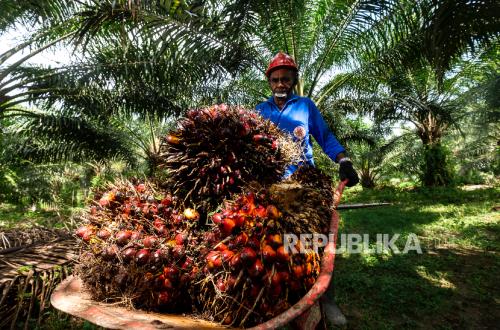
During the transition period from 1 June to 31 December 2026, exporters can still transact directly with foreign buyers. However, export documents for three strategic commodities—palm oil, coal, and iron alloys—will be processed through the export SOE.
From 1 January 2027, the government aims for all strategic commodity export transactions to be conducted via the export SOE. The policy is reinforced by Government Regulation No. 21 of 2026, mandating 100% of natural resource export foreign exchange to be held within Indonesia’s financial system through Himbara banks.