
New Maize Farming in East Sumba Covers 8,000 Hectares, Young Farmers Push for Land Optimisation
As the largest district in East Nusa Tenggara (NTT) with an area of around 7,000 square kilometres, the land potential in East Sumba Regency has not yet been maximally developed. Of around 15,876 hectares of potential maize land that has been newly identified, only about 8,000 hectares are being utilised.
This figure indicates that the real potential for maize agricultural development can still be greater, considering that the 15,876 hectares itself does not yet cover all the existing land potential.
This condition is seen as contrasting with the issues of poverty and unemployment that remain classic problems in East Sumba, amid limited formal employment opportunities and the agricultural sector not yet optimal as a pillar of the community’s economy.
Data from the East Sumba Regency Agriculture Service shows that average maize productivity ranges from 4 tons per hectare, which is considered not yet commensurate with the region’s needs, both for consumption and livestock feed, especially with the development of large-scale shrimp ponds.
“If we look at the extent of potential land available for planting maize, it hasn’t reached fifty percent yet planted with maize,” said the Head of the East Sumba Regency Agriculture Service, Nicolas Pandarangga, when interviewed by MetroTVNews.com in his office on Wednesday, 25 March 2026.
Nicolas mentioned that maize development still faces constraints of limited regional fiscal space as well as low interest from the community, especially the younger generation who tend to choose the formal sector.
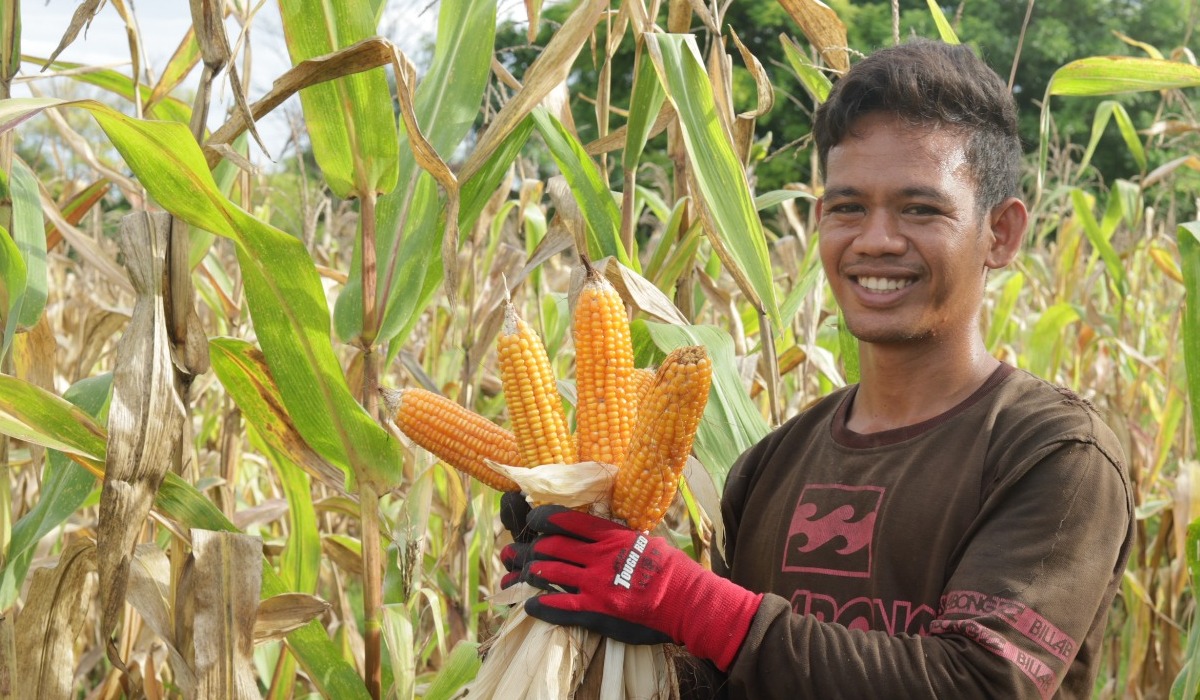
Amid these conditions, Marten, a resident of Kuta Village, Kanatang Subdistrict, has chosen to pursue maize cultivation for the past three years despite his background as an informatics graduate and learning it autodidactically.
“My land is almost one hectare. The results are quite good to help the family economy and save as well as start other businesses like raising chickens and ducks. I see that maize actually has good potential but it needs serious attention from the government down to the village level,” he said.
He assessed that there is still a lot of land that has not been optimally utilised and urged the government to process fallow land into productive land, considering that maize development in East Sumba still has great room for improvement.