
New Leadership, Old Conflicts: Why Indonesia Must Lead Iran Peace Diplomacy
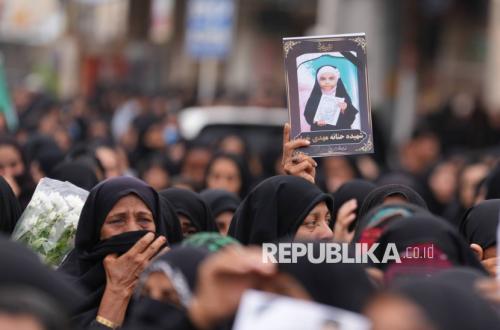
The international community has been rocked by a geopolitical shock that transcends regional boundaries. In late February 2026, a combined military strike by the United States and Israel on Iran not only destroyed nuclear facilities and military infrastructure, but also claimed the life of Iran’s supreme leader, Ayatollah Ali Khamenei — a figure who for over three decades had been the principal architect of Iran’s revolutionary power.
Khamenei’s dramatic death initially sparked speculation that the Tehran regime would collapse from within. However, this assumption was quickly disproven.
Iran demonstrated its resilience: within days, the Assembly of Experts appointed Mojtaba Khamenei, the late supreme leader’s biological son, as his successor in both spiritual and political authority.
This leadership transition is far more than a domestic Iranian affair. It sends a stark signal to Washington and Tel Aviv that the “beheading” strategy — targeting the head of a power system — does not automatically collapse a nation-state that has built ideological institutions over nearly half a century.
In this context, Indonesia as the world’s largest Muslim-majority nation and heir to the Non-Aligned Movement (NAM) tradition bears a moral and strategic responsibility to do more than observe. The situation demands concrete active diplomatic initiatives, not merely expressions of concern at international forums.
Escalation Towards Open War
The conflict now reaching its peak was not born suddenly. It represents an accumulation of escalation moving gradually yet steadily. On 13 June 2025, Israel launched a massive air strike against Iran’s nuclear and military facilities, which Tehran retaliated within hours with missile and drone attacks on Israeli cities.
Only weeks later, on 22 June 2025, the US struck nuclear facilities at Natanz, Fordow, and Isfahan — an action Trump described as an attempt to “permanently weaken Iran’s nuclear capacity”.
The climax came on 28 February 2026, when President Donald Trump officially announced the beginning of “major combat operation” against Iran, with B-2 stealth bombers dropping 2,000-pound bombs on Iran’s ballistic missile facilities.
The strike reportedly destroyed Iran’s naval command headquarters and killed several senior Iranian leaders, including Ali Khamenei.
Facing this devastation, Iran moved swiftly on an institutional level.
Foreign Minister Abbas Araghchi, just days after Khamenei’s death, announced that the constitutional process for replacing the supreme leader was already underway, even stating that a candidate could be selected within one to two days.
Indeed, on 7-8 March 2026, Mojtaba Khamenei was formally appointed as Iran’s new supreme leader by the Assembly of Experts.
Unlike his father, who was known as a public figure, Mojtaba has long been known as someone working behind the scenes, but with strong networks within the Islamic Revolutionary Guard Corps (IRGC).
Mojtaba’s appointment in the midst of active war demonstrates two crucial points: first, Iran possesses institutional resilience that must not be underestimated; second, this conflict will not end simply because one leader falls.
As long as the underlying issues — Iran’s nuclear ambitions, Israel’s security, and US hegemony in the Middle East — remain unresolved through negotiation, cycles of violence will continue.
Ali Larijani, a senior Iranian security official, even stated bluntly on social media: “We will not negotiate with the United States” — a declaration reflecting the depth of the trust deficit between the two sides.
Indonesia’s Responsibility as a Non-Aligned Nation
In a geopolitical landscape increasingly polarised between West and East, Indonesia possesses a rare diplomatic asset: trust from both worlds.
As one of NAM’s founders emerging from the 1955 Bandung Asia-Africa Conference, Indonesia has historically built an identity as a nation rejecting imperialism, upholding sovereignty, and pursuing conflict resolution through dialogue.
The “free and active” foreign policy is not merely a slogan, but rather the foundation of a diplomatic doctrine proving relevant precisely when the world needs a bridge between hostile parties.
The Prabowo Subianto administration has sent appropriate signals. Following the 28 February 2026 strike, Indonesia’s Foreign Ministry under Minister Sugiono immediately contacted Iran’s Foreign Minister Araghchi, offering Indonesia as a peace dialogue facilitator.
Furthermore, in a bold step rarely undertaken by heads of state, Prabowo openly stated his readiness to fly directly to Tehran should all conflicting parties consent to the mediation initiative.
Sugiono’s offer to serve as mediator was welcomed by some circles as a reflection of proactive diplomacy. However, an undeniable reality is that formal mediation has not yet occurred. The initiative already announced has progressed little beyond bilateral telephone calls and public statements.
The urgency for Indonesia to move further is not merely a matter of international image, but of very real national interest. Iran’s closure of the Strait of Hormuz has directly disrupted global energy supply chains.
The impact is felt directly by Indonesia: crude oil prices of the Brent variety jumped from 72.48 US dollars per barrel on 27 February 2026 to 100 US dollars per barrel within just days of trading. This figure far exceeds the 2026 state budget assumption which set Indonesian Crude Price (ICP) at 70 US dollars per barrel.
The implications are highly significant for state finances. Economist Noviardi Ferzi calculates that each one-dollar increase above the budget assumption has the potential to increase the energy subsidy burden by approximately [text cut off in original]