
New Iranian Leader Mojtaba Khamenei Delivers Defiant First Address, Directly Challenges the United States
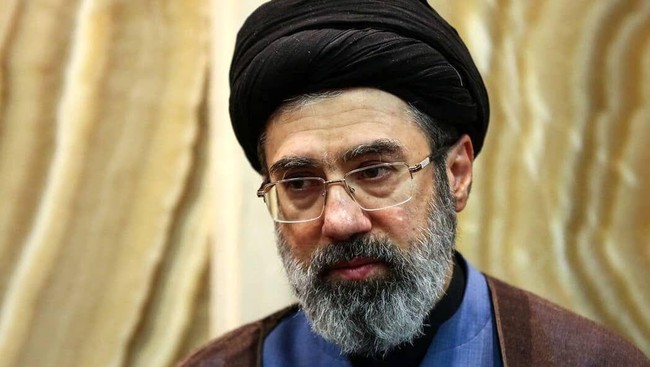
Iran’s new Supreme Leader, Mojtaba Khamenei, has issued his first public statement since formally succeeding his father, Ali Khamenei, who was killed in attacks by the United States and Israel during the escalating conflict that has engulfed much of the Middle East.
The statement was read by a Press TV news anchor on Thursday, 12 March 2026, local time. In the message, Mojtaba Khamenei called for national unity among Iran whilst reaffirming that the Strait of Hormuz would remain closed as a form of pressure against Tehran’s enemies.
Khamenei also issued direct threats to US military presence in the region, stating that all American military bases in the area must be immediately closed or risk becoming targets of attack. “All US bases in the region must be closed immediately or they will be attacked,” Khamenei said in the statement, according to Al Jazeera.
Although emphasising Iran’s commitment to friendly relations with neighbouring countries, Khamenei asserted that attacks on US military installations would continue. He also referenced armed groups in the region as partners in resisting pressure against Iran, highlighting the role of armed groups in Yemen and readiness of militias in Iraq to assist.
In his remarks, Khamenei expressed appreciation for the Iranian military, crediting them with keeping the nation intact amid external attacks. He stated that the military had prevented the country from being dominated or divided whilst facing military pressure.
His father, Ali Khamenei, who led Iran for 37 years, died in Tehran on 28 February in a series of attacks carried out by the United States and Israel during the early stages of the expanding regional conflict. Several members of Khamenei’s family were also reported killed in the assault.
Following the death of the Supreme Leader, the Assembly of Experts reached consensus on Sunday to appoint Mojtaba Khamenei as his successor.
Middle East analyst Zeidon Alkinani assessed that Khamenei’s focus on armed resistance left many domestic issues unaddressed. According to him, this approach allowed the Supreme Leader to avoid discussing fundamental issues crucial to the Iranian public. “The focus on armed resistance allows the Supreme Leader to avoid discussion about economic reform, state development, and many other fundamental issues important to the Iranian people,” Alkinani told Al Jazeera.
Alkinani also noted that the statement’s content contradicts remarks made by Iranian President Masoud Pezeshkian the previous day, when he indicated that Iran might consider ending the conflict if certain conditions were met.
Furthermore, Alkinani highlighted that the message was not delivered directly by Mojtaba Khamenei himself but read by a television presenter, which does little to quell rumours circulating that the new Supreme Leader may be injured or even killed in the ongoing conflict with the United States and Israel. “This creates considerable uncertainty about the new Supreme Leader’s legitimacy and ability to remain strong in the face of major challenges,” Alkinani said.
Khamenei’s forceful statement is expected to be poorly received by US President Donald Trump, who in recent days has emphasised that Iran will follow a path similar to Venezuela by choosing leaders willing to meet Washington’s demands.
Rob Geist Pinfold, an international security lecturer at King’s College London, assessed that Mojtaba Khamenei’s first statement indicates Iran has not shifted its fundamental stance. “Rather than the kind of change in rhetoric from a new Supreme Leader that the Trump administration might have hoped for, what we actually hear here is more of the same,” Pinfold said.
Despite drawing criticism from several analysts, some circles within Iran have responded positively to Khamenei’s message. Zohreh Kharazmi, an academic at the University of Tehran, stated that many Iranian citizens appreciate the firm stance amid US threats. According to her, the message is viewed as a bold position from Iran’s new leader. “Lasting security is the most basic right of a nation,” Kharazmi said. “Khamenei conveyed a very legitimate position supported by millions of Iranians here.”