
New Fossil Reveals First Mass Extinction of Animals 550 Million Years Ago
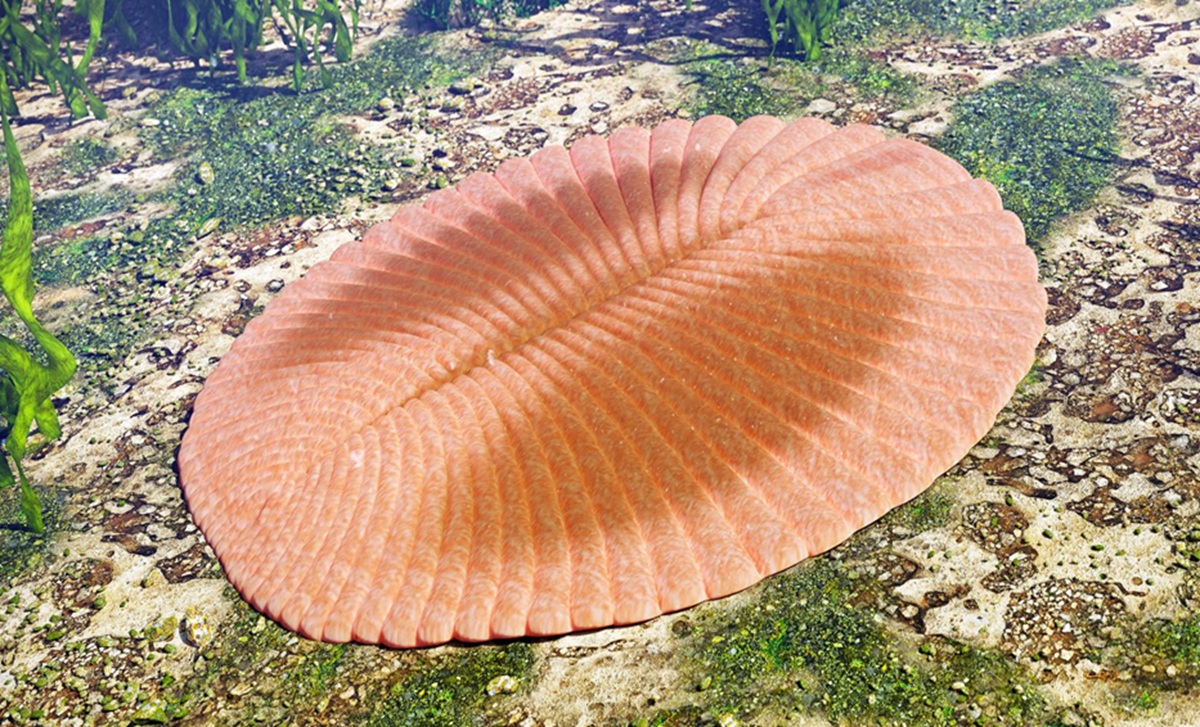
For decades, scientists believed the first marine creatures on Earth disappeared gradually before the occurrence of a great extinction event. However, a recent fossil discovery at Inner Meadow in eastern Canada has overturned this theory and revealed the truth about the first mass extinction in animal history, known as the Kotlin Crisis.
This discovery has shifted scientific understanding from what was previously considered a typical species decline into a catastrophic disaster that occurred approximately 550 million years ago.
On a fossil-rich rock surface, dozens of leaf-shaped marine organisms have been preserved in extraordinary detail. Dr Duncan McIlroy from Memorial University of Newfoundland identified these Avalon-type fossils in a rock layer dating to approximately 551 million years old.
This was surprising because these organisms had previously only been found in much older layers. The Inner Meadow discovery reveals that these creatures remained alive until just before extinction occurred, forcing experts to reassess how suddenly this ancient ecosystem collapsed.
Previously, scientists believed early complex life appeared in three waves that successively replaced one another. However, dating data shows the Inner Meadow fossils are 13 million years younger than similar sites elsewhere. This proves that old and new groups of organisms actually lived side by side in different environments, such as deep and shallow seas.
This discovery disproves the idea that one group of species merely replaced another. Instead, they developed together until disaster struck at the peak of their diversity.
With these ancient life forms discovered right at the threshold of extinction, the scale of damage from the Kotlin Crisis was far greater than originally estimated. “The severity of the Kotlin Crisis extinction event was far more profound,” McIlroy stated.
The extinction estimate has now surged to 80 per cent of all macroorganisms (large fossils visible without a microscope) that perished in a single wave. Previously, extinction rates in the Ediacaran period appeared extremely low, but the Kotlin Crisis transformed this stability into a catastrophe within a brief timeframe.
Although the Inner Meadow site cannot definitively prove a single cause, chemical evidence in the rock layers indicates declining oxygen levels in the ancient ocean. This condition likely forced animals into increasingly narrow habitable zones until the ecosystem ultimately collapsed.
These fossils were preserved perfectly because volcanic ash deposited on the sea floor sealed the organisms from decay, making it a Lagerstätte site or site of exceptional preservation.
This study confirms that early complex life on Earth did not evolve peacefully towards the Cambrian explosion. Rather, they had to endure a devastating period of loss. The Kotlin Crisis is no longer merely a slow evolutionary transition but tangible evidence that environmental disasters can sweep away the splendour of biological diversity in an instant.