
New Formula Officially in Effect, Nickel Prices Could Rise by 100%
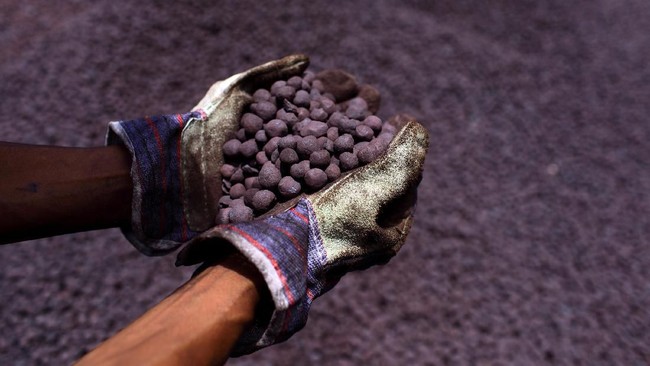
Jakarta, CNBC Indonesia - The government has officially implemented a new formula for the Mineral Reference Price (HPM) for nickel ore starting 15 April 2026. The regulation is outlined in Ministerial Decree of Energy and Mineral Resources Number 144.K/MB.01/MEM.B/2026, which revises Ministerial Decree Number 266 of 2025 on guidelines for determining reference prices for metallic minerals and coal.
Chairman of the Indonesian Mining Experts Association (Perhapi) Sudirman Widhy Hartono assesses that the HPM formula change brings significant impacts, particularly on limonite nickel ore.
According to him, the latest formula now accounts for cobalt content in limonite in price determination. This in turn drives the potential for limonite prices to rise by more than 100%.
“Even for limonite, the increase reaches more than 100%, because the cobalt content in limonite is now factored into the formula. This means that the profits obtained by miners will experience a significant rise,” Widhy told CNBC Indonesia on Wednesday (15/4/2026).
Nevertheless, he warns that this policy could become a heavy burden for the nickel processing industry (smelters). The HPM increase will raise production cost burdens amid global nickel prices that have not fully recovered.
“Even without the HPM increase, the operational cost burden for nickel processing plants is already high, while world nickel prices have not yet returned to their best levels,” he said.
For example, for smelters based on Rotary Kiln Electric Furnace (RKEF) producing Nickel Pig Iron (NPI) and ferronickel, cost pressures mainly come from rising energy prices, in line with increases in coal and fuel oil prices. Meanwhile, NPI prices in the global market remain pressured due to weak demand and overproduction conditions.
Meanwhile, smelters based on High Pressure Acid Leaching (HPAL) that process limonite into Mixed Hydroxide Precipitate (MHP) face even greater pressures. This is triggered by the surge in sulphuric acid prices as the main material in the leaching process.
“Sulphuric acid, which is the main material for the leaching process, has experienced a significant increase over the last three years, from a previous price below US$100/ton to now reaching US$250/ton,” he said.
According to him, with the limonite price increase of more than 100%, this will certainly cause HPAL plants to face the greatest pressure.
Based on Perhapi’s calculations, the combination of the HPM increase and the sulphuric acid price surge could push nickel production costs in the form of MHP above US$17,000 per ton. This figure is almost equivalent to the current nickel price in the global market, referencing the London Metal Exchange.
His side understands the background and objectives of this nickel HPM change, one of which is to raise nickel royalties. However, PERHAPI emphasises that the policy should also consider the sustainability of the downstream nickel industry.
“Because if the economics of nickel processing plants become unattractive again, the dominant impacts and effects will be long-term, as it will cause nickel processing plants to cease operations,” he said.