
New Fed Boss Speaks Out, Time for BI to Decide Interest Rates' Fate Today
US stock markets weakened during Tuesday’s trading, or early Wednesday Indonesian time. Shares fell due to investor concerns that a peace agreement between the US and Iran might not be reached before the ceasefire expires on Wednesday. The S&P 500 closed down 0.63% at 7,064.01, while the Nasdaq Composite weakened 0.59% to 24,259.96. The Dow Jones Industrial Average slipped 293.18 points or 0.59% to 49,149.38.
Towards market close, anxiety mounted on Wall Street after reports emerged that Vice President JD Vance’s trip to join negotiations with Iran was delayed due to a lack of commitment from Tehran. This was reported by The New York Times and Axios, citing US officials.
Shortly after markets closed, President Donald Trump stated that the ceasefire would be extended until Iran submits its proposal.
Earlier, Trump had said he expected the US and Iran to reach a great deal. However, he also emphasised that the US military was ready to bomb Iran if no agreement was signed before the ceasefire deadline, and he did not wish to extend it.
Those comments came after Trump posted on Truth Social that Iran had repeatedly violated the ceasefire.
Oil prices reversed course and rose after a sharp decline in recent days due to hopes of an agreement. West Texas Intermediate futures rose 2.81% to US$92.13 per barrel, while Brent Crude climbed 3.14% to US$98.48 per barrel.
“It’s hard to build trust in this situation,” said Brian Mulberry, a market analyst, to CNBC International.
He assessed that the long history of relations with Iran raises doubts about whether any deal would last long.
Nevertheless, he still predicted that the issue of control over the Strait of Hormuz would be resolved by the end of the weekend.
Major indices had also weakened on Monday as market participants remained cautious ahead of the ceasefire’s expiry. The Nasdaq ended its 13-day winning streak, the longest rally since 1992.
In the previous week, the S&P 500 and Nasdaq had hit several intraday and all-time closing highs thanks to expectations that the Iran war would soon end. The S&P 500 even closed above the 7,100 level for the first time.
Despite this, several Wall Street players remain optimistic about share prospects going forward.
“What we’re seeing now is very strong first-quarter earnings,” said Mulberry, highlighting double-digit profit growth and solid corporate revenues.
On Tuesday, UnitedHealth Group’s first-quarter results exceeded market expectations, sending its shares surging about 7%. The company also raised its profit forecast.
Meanwhile, Amazon shares rose 0.7% after the company agreed to invest up to US$25 billion in AI startup Anthropic.
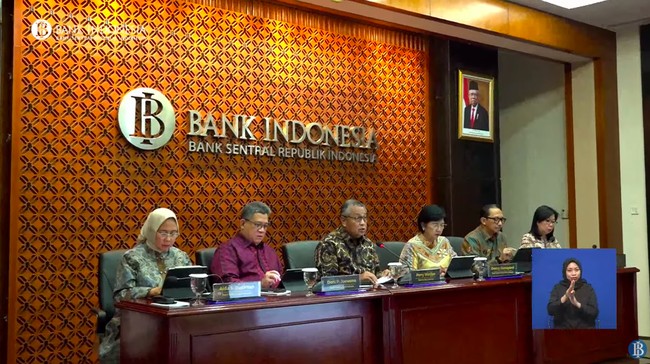
Market participants will monitor several market sentiments today, both domestic and international.
Interest rate policy and the impact of the MSCI decision are expected to be the biggest domestic sentiments, while the hearing for the new Fed Chairman nominee, Kevin Warsh, and war developments will drive markets from abroad.
War Developments, Trump Extends Ceasefire
President Donald Trump officially extended the ceasefire between the United States and Iran on Tuesday local time. Trump reasoned that the Tehran government is now seriously divided, requiring additional time to formulate a peace proposal.
Trump said the ceasefire, originally set to end on Wednesday, would remain in effect until Iranian leaders submit a unified proposal to end the conflict with the US and Israel.
This move comes amid stalled diplomatic channels. Plans for Vice President JD Vance’s visit to Pakistan for the second round of peace talks were reportedly delayed.
Iran’s state media Tasnim News Agency also stated that the Tehran delegation refused to attend further negotiations, deeming the US as obstructing the agreement.
Tensions have not eased. Adviser to Iran’s Parliament Speaker Mohammad Baqer Qalibaf viewed Trump’s decision as a ploy to buy time before launching a new attack. He also asserted that the US Navy’s blockade of Iranian ports equates to bombing and warrants a military response.
In a previous CNBC interview, Trump had said he did not want to extend the ceasefire.
However, a few hours later, he changed his stance and said the decision was made at the request of Pakistan’s Army Chief Asim Munir and Prime Minister Shehbaz Sharif.
Trump also emphasised that the US military remains fully on alert and the blockade against Iran continues during the negotiation process.
For global markets, the main focus is now on the Strait of Hormuz, a vital route for world oil trade. Iran had previously closed access to the strait at the start of the war. Trump stated that the ceasefire can only hold if that shipping lane is fully opened.
Although the war has not ended, Trump’s decision to extend the ceasefire temporarily eases the risk of new energy price spikes and global financial market volatility.
Fed Nominee Warsh Promises Independence
Kevin Warsh underwent confirmation hearings in the US Senate as the nominee for the new Chairman of the US central bank, the Federal Reserve (Fed). He affirmed that the Fed would remain independent from the White House if selected.
Warsh faced questions on monetary policy, his personal wealth, and his closeness to President Donald Trump. If confirmed, he would be the richest Fed Chairman in history.
Warsh stressed that he never promised President Trump to cut interest rates if he officially leads the central bank. That statement was made during the Senate confirmation hearing, as global markets focus on the future direction of US monetary policy.
Warsh said Trump never requested a commitment on interest rate levels, even though Trump had repeatedly expressed hope that Warsh would lower rates if appointed.