
New Ebola Outbreak Could Become the Worst Crisis of the Decade
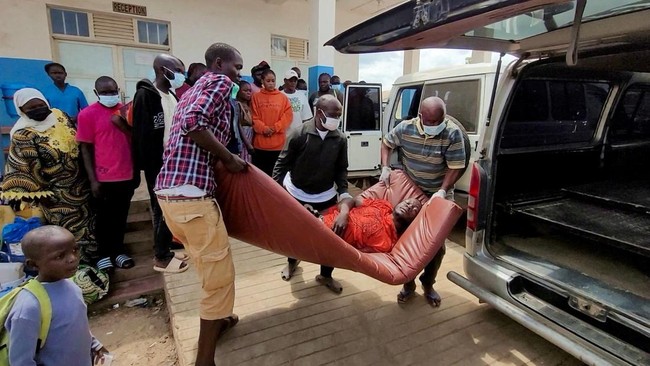
A new Ebola outbreak in the eastern region of the Democratic Republic of the Congo is moving rapidly across mining towns, border towns, and refugee routes caused by conflict. The World Health Organisation (WHO) on 17 May classified the situation as a public health emergency of international concern, the highest level of health emergency, rarely used. The situation recalls the nightmare of West Africa in 2014-2016, when Ebola killed more than 11,000 people. According to The Economist, this outbreak’s threat comes from a complex mix: a harder-to-detect virus, war-torn areas with little state control, and a global health aid cut at a time of tightened budgets. In Mongbwalu, a mining town in Ituri Province, residents began reporting mysterious deaths in April. Sylvie Kabuo-Kinyoma, a vegetable seller there, initially thought the deaths related to witchcraft. The suspicion changed after a nurse found patients with high fever and nosebleeds—classic Ebola symptoms. Fear spread quickly through markets, churches, and mining routes; many families began avoiding physical contact. By 19 May, Congo had reported over 500 suspected cases and 130 deaths. The real number is likely higher. A modelling analysis from the MRC Centre for Global Infectious Disease Analysis at Imperial College London estimated that the virus had already spread weeks before it was officially detected on 24 April. Cases have now been detected in Kampala, Uganda. An American doctor working in the outbreak area was also diagnosed with infection and evacuated to Germany. The spread to Goma raised international concerns. Goma is a regional economic and logistical hub in eastern Congo, and a gateway for trade to Rwanda, Burundi, and South Sudan. Rwanda has begun closing some border crossings to limit population movement. In theory, the world is better prepared for Ebola now than a decade ago. After the Africa-wide tragedy, the global health response system underwent many changes. A vaccine for the Zaire strain was developed, diagnostics were accelerated, and local health workers trained to build community trust so patients would isolate sooner. The current outbreak is not caused by the Zaire strain but by the Bundibugyo strain, a rarer type with no widely available vaccine or rapid tests. Samples from Ituri must be flown roughly 2,000 kilometres to Kinshasa for laboratory testing, a process that can take days. In a fast-moving outbreak, such delays make it harder to interrupt transmission chains. Bob Kitchen of the International Rescue Committee described the situation as a return to Ebola’s early days before vaccines; medical staff are working with limited tools while communities continue to move between mining areas and refugee camps. The war makes the situation more fragile. More than 100 armed groups operate in Ituri and North Kivu. During the 2018 outbreak, MSF clinics were burned by militias. Security concerns prevent health workers from reaching remote villages. Many areas are accessible only by rutted dirt roads that turn to mud in rain. In North Kivu, the M23 armed group, backed by Rwanda, controls parts of the administrative area. Many humanitarian workers have left in the last two years. Goma Airport has not yet reopened, forcing relief to move via Rwanda and Uganda. Humanitarian organisations complain of medical supplies held up at checkpoints. Local government weakness compounds the problem. In Bunia, the capital of Ituri, Machozi Mwanamolo, a university lecturer, criticised authorities for slow mobility-restriction actions. Residents of Mongbwalu still travel freely though their area is a primary outbreak zone. Amid limited official information, traditional practices have emerged: some residents brew ginger, lemon, and garlic drinks to “boost the immune system” and many academics have stopped shaking hands. The biggest challenge next is funding. Before 2025, outbreak surveillance programs in Congo depended heavily on U.S. aid to fund community health workers, public education, personal protective equipment, and contact-tracing systems. Over the past year, much of this funding has been cut. The International Rescue Committee has reduced its operations in Ituri from five districts to two since March 2025. The U.S. government on 18 May pledged US$13 million for the Ebola response, though this is far below the expenditure seen during the 2014-2016 outbreak. The UK and Germany have also cut foreign aid. Africa CDC Chief Jean Kaseya argues that border-shutdown measures alone are not enough to stop the outbreak. He says global health security depends on rapid investment, cross-border cooperation, and local response capacity. His remarks followed U.S. travel restrictions on people who have been in Congo, Uganda, or South Sudan. Lessons from past epidemics show that Ebola is hard to halt even with substantial funding and vaccines. The 2018 Congo outbreak took nearly two years to contain, with around 300,000 doses of vaccine and large-scale humanitarian operations. This time, a vaccine is not yet available, aid is thinner, and public trust wavers.