
New Crisis in the Strait of Hormuz: Iran Plants Cheap Traps Against America
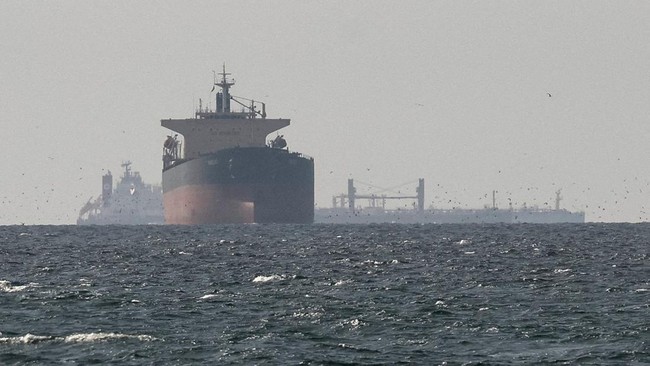
Iran has reportedly begun placing naval mines in the Strait of Hormuz, the world’s most vital energy shipping route through which approximately one-fifth of global oil supply passes.
The information emerged from US intelligence reports according to two sources with direct knowledge of developments. They stated that Iran has scattered dozens of mines in the strategic waterway over recent days.
Although the number remains modest, the threat posed by these mines remains high. Iran retains approximately 80 to 90 per cent of its small ship fleet and mine-laying vessels, which theoretically enables them to place hundreds of additional mines along the shipping lane.
According to reports, the situation has become more serious due to the role of Iran’s Islamic Revolutionary Guard Corps (IRGC), which now effectively controls the Strait of Hormuz alongside Iran’s navy.
The elite force possesses the capability to deploy scattered mine-laying vessels, explosives-laden ships, and land-based missile batteries along the coastline.
US President Donald Trump reacted strongly to the reports. In a post on Truth Social, he warned Tehran to immediately remove the mines if they had indeed been placed.
“If Iran has placed mines in the Strait of Hormuz, and we haven’t received reports that they’ve done so, we want those mines removed IMMEDIATELY!” Trump wrote.
Meanwhile, US Defence Secretary Pete Hegseth stated that American forces have moved in the region. He said US Central Command has destroyed Iran’s mine-laying vessels.
“Under President Trump’s direction, US Central Command has destroyed inactive mine-laying vessels in the Strait of Hormuz, destroying them with ruthless precision. We will not allow terrorists to hold the Strait of Hormuz hostage,” he wrote on platform X.
Naval Mines as Weaponry
Naval mines represent a flexible, relatively inexpensive weapon that has historically proven effective. Militaries can place mines at various sea depths for both defensive and offensive purposes.
In a defensive context, mines are placed to prevent unwanted parties from entering territorial waters. Meanwhile, in offensive operations, mines are used to disable enemy naval assets or force enemies to traverse designated routes designed to make subsequent attacks more effective.
Mines would prove highly valuable if placed along the Strait of Hormuz shipping route, both as a direct ship-damaging tool and as a deterrent. With mines in place, ships can be forced to travel along specific routes more advantageous to Iran.
Compared with other weapons, naval mines are relatively inexpensive. Simple contact mines can cost as little as approximately US$1,500. More than 30 countries produce mines and more than 20 export them. Since 1950, naval mines have caused approximately 77 per cent of casualties on US Navy vessels.
Naval mines generally contain explosive material with power ranging from approximately 45 kilogrammes to over 910 kilogrammes. Beyond explosive force, mines can also be classified according to placement method, activation method, and position in the water.
Mines can be placed using various types of vehicles or platforms. Some conventional surface vessels, such as warships or patrol boats, possess the capability to lay mines.
Furthermore, mines can be dropped from aircraft or helicopters. Submarines can also place certain types of mines through their torpedo tubes.
The simplest type of mine is the contact mine. This mine activates or detonates when a ship physically touches it or comes very close to it in the water.
More complex and sophisticated mines are known as influence mines. These mines do not require direct contact to detonate. Instead, they employ various sensors capable of detecting certain characteristics or “signatures” of target vessels.