
New Criminal Code hailed as modern face of Indonesian criminal law
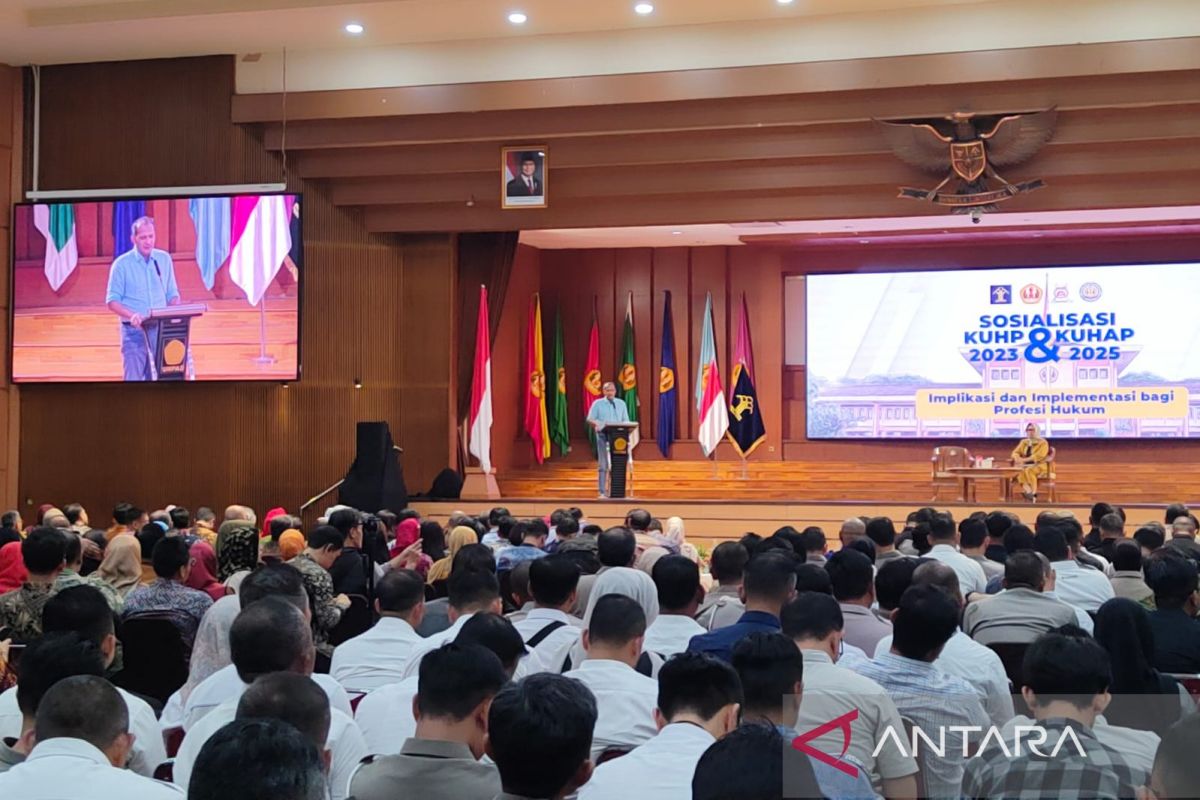
Indonesia’s new Criminal Code is the new face of criminal law that is more relevant to contemporary developments, including addressing information technology dynamics and the needs of modern society,” Deputy Minister of Law Edward Omar Sharif Hiariej stated.
At a socialisation event titled “New KUHP & KUHAP Socialisation: Implications and Implementation for Legal Professionals” held at Graha Sanusi Hardjadinata, Padjadjaran University, Bandung on Thursday, Hiariej described the 2023 Criminal Code (KUHP) and amendments to the Criminal Procedure Code (KUHAP) as a transformation delivering a more humanistic and modern system of criminal justice in Indonesia. He referred to the update as a historic milestone in national legal reform.
The new legal text is designed to replace Dutch colonial-era legislation deemed no longer relevant to contemporary justice needs. Hiariej emphasised that the change is not merely a matter of revising individual articles, but represents a paradigm shift towards higher-quality justice.
The event drew approximately 1,200 participants, exceeding the initial target of 1,000, reflecting strong enthusiasm for the new regulations. According to Ranti Fauza Mayana, Chair of the Padjadjaran University Notary Alumni Association (IKANO), the high turnout demonstrated widespread recognition of the need for such socialisation activities and receptiveness to the presented material.
Padjadjaran University Faculty of Law Dean Raden Achmad Gusman Catur Siswandi characterised the socialisation as crucial for deepening understanding of the legal innovations supporting an integrated criminal justice system. He noted that implementation would have significant implications in practice and create opportunities for academic research into how the new codes function within law enforcement.
The regional head of the West Java office of the Justice Ministry, Asep Sutandar, praised inter-institutional collaboration involving academics, notaries, and law enforcement officials. He expressed hope that intensive discussion would align perceptions for fieldwork implementation.
The event, initiated by the West Java Justice Ministry office in collaboration with Padjadjaran University’s Faculty of Law, the Indonesian Notary Association’s West Java chapter, and IKANO, was attended by high court judges, prosecutors, police, and law students engaged in dialogue regarding implementation issues and technical aspects of the new regulations.