
New Cigarette Excise Layer Not Yet Implemented, DPR Provides Input to Purbaya
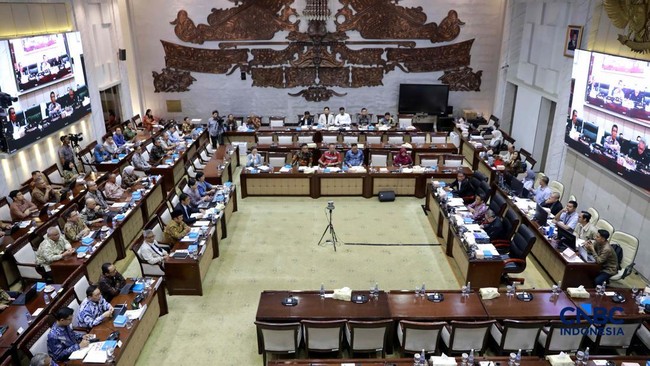
The Ministry of Finance’s plan to implement a new layer of tobacco excise (CHT) in June 2026 has yet to materialise. Finance Minister Purbaya Yudhi Sadewa has not provided an official explanation to House of Representatives (DPR) Commission XI regarding the implementation of the new CHT layer, which is specifically intended to draw illegal cigarette producers into the cigarette excise structure, thereby making their products legal. “So far, we have not received an official explanation from the Ministry of Finance regarding this proposed plan,” said Commission XI member from the Golkar faction, Putri Puteri Anetta Komarudin, via a written statement on Monday (22/6/2026). According to Puteri, the Ministry of Finance needs to thoroughly and deeply examine the proposal for the new cigarette excise layer, involving the participation of various stakeholders. This is particularly important because excise tariff policy must be formulated in a balanced manner between the interests of state revenue and controlling public consumption. “It is not solely about pursuing state revenue, but also needs to consider its impact on consumption, health, and workforce sustainability. Therefore, this proposal must maintain that balance,” she stressed. Moreover, she considers that this proposal could also add complexity to its supervision, so it is necessary to ascertain the technical readiness of the Directorate General of Customs and Excise (DJBC) to conduct supervision and enforcement. “Of course, this proposal must be designed carefully so that its impact on consumption control and state revenue can reach an optimal middle ground,” said Puteri. Meanwhile, Commission XI member from the PDI Perjuangan faction, Said Abdullah, argued that the implementation of a new cigarette layer by Purbaya is actually needed by the small and medium-scale manufacturers, by improving the structure of CHT group III through affirmative policies. As is known, in the current CHT structure, layers up to group III only exist for hand-rolled kretek cigarettes (SKT) and hand-rolled white cigarettes (SPT). Meanwhile, machine-made kretek cigarettes (SKM) and machine-made white cigarettes (SPM) only go up to group II. “If the excise tariff groups are too simple, especially in group III, it will make things difficult for small and medium-scale cigarette factory producers,” Said asserted. Said considers that group III excise tariffs should be made into an affirmative policy, especially to accommodate small and medium-scale cigarette manufacturers who also have the potential to contribute excise tariffs and employment. He said that in Madura, for example, the tobacco products industry is able to employ more than 186,000 direct workers, not including the number of indirect workers and the economic impact in the downstream region. “With such an affirmative policy, group III cigarette manufacturers with various product types and production volumes can be legally covered by excise tariffs. The prevalence of cigarettes with illegal excise is because they cannot meet the group III cigarette excise tariffs,” Said stressed. Said also assessed that the current group III tariff layer is still burdensome for new cigarette producers, whose average age is under 20 years and who do not yet have a strong market segment. For producers at that level, the group III excise tariff is still considered expensive and not commensurate with their business calculations. As a result, they instead choose to use fake excise stamps and collude with excise officers. “If they are given an affirmative excise tariff, for example, an excise tariff incentive of 300 rupiah specifically for manufacturers under 20 years, this policy will encourage them to be covered by legal excise, excise revenue will increase, and their business climate can operate without being chased by excise officers,” said Said. Based on input from that type of cigarette producer, Said said that if the group III excise tariff is given an affirmation policy, excise revenue from group III could actually increase drastically, because having many excise tariff layers will not necessarily reduce the performance of state CHT revenue. “If tobacco product production increases, excise revenue will automatically rise, and the number of cigarette producers will grow, because the excise tariff for group III with an affirmation policy will not burden them. They will choose to use legal excise. Supervision becomes easier, and law enforcement will also be increasingly minimal,” Said explained. For Said, the Ministry of Finance must be able to encourage cigarette manufacturers using fake excise stamps to willingly use official excise stamps through an affirmation policy in group III. He considers this policy not merely as an addition of a new layer in the CHT structure. “If they are given an affirmation policy as I have explained, of course the government can realise it. However, conversely, if the affirmation policy has been implemented but group III manufacturers under 20 years still use fake excise stamps, I agree they should be given severe legal sanctions and fines,” he said. “What is actually needed is not an additional layer but an affirmation policy for the group III excise tariff, as I explained above,” Said stressed. Previously, Finance Minister Purbaya Yudhi Sadewa confirmed that he has not yet implemented the new Tobacco Excise (CHT) layer tariff in June 2026. According to him, this policy needs to be discussed first with DPR Commission XI. “Not yet. I am still going to face the DPR first for discussion,” said Purbaya at the DPR Building on Thursday (4/6/2026). The excise policy was originally Purbaya’s method to draw domestic illegal cigarette producers into the legal system, thereby increasing state revenue. Informally, Purbaya has already discussed this policy with legislators. “We have spoken behind the scenes, but not officially yet. The official one hasn’t happened. But we have spoken behind the scenes already,” he said.