
New Catastrophe Threatens Human Life, Father of AI Issues Warning
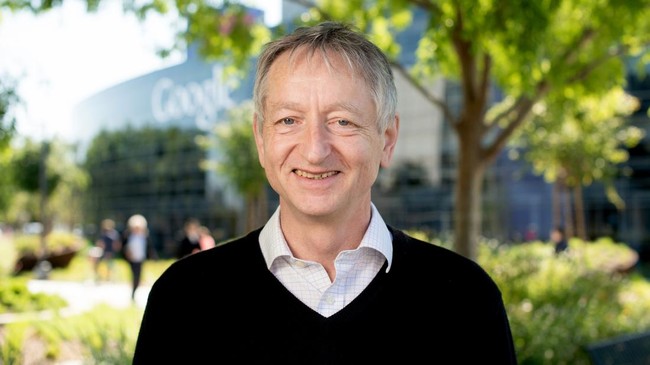
Jakarta, CNBC Indonesia - Nobel laureate and pioneer in artificial intelligence (AI) technology, Geoffrey Hinton, has once again issued a warning regarding the increasingly massive development of AI. Hinton, often called the ‘Father of AI’, emphasises the importance of robust regulations in the implementation of AI.
According to Hinton, AI is like a super-fast car without a steering wheel. Robust regulations must serve as the steering wheel, allowing AI to benefit society rather than bringing harm.
“If you go down a hill in a car without brakes, you’ll have big problems. Especially if there’s no steering wheel,” said Hinton, quoted from Eurasia Review on Thursday (23/4/2026).
This statement comes amid intensified efforts to formulate AI policies in several countries. Governments and UN panels are ramping up discussions on governance, inclusion, and risk management, as AI integration grows in the economic sector and daily life of global communities.
Only a Few Get a Slice of the AI Pie
According to the ‘Technology and Innovation 2025’ report released by the United Nations Conference on Trade and Development (UNCTAD), the AI market is projected to grow from US$189 billion in 2023 to US$4.8 trillion in 2033.
Nevertheless, the capacity to build and shape AI technology relies only on a few companies and countries, according to UNCTAD Deputy Secretary-General Pedro Manuel Moreno at the Commission on Science and Technology for Development (CSTD) this week.
The concentration of AI development risks increasing global inequalities. UN International Telecommunication Union Secretary-General Doreen Bogdan-Martin stated that the adoption of generative AI in advanced countries (Global North) is nearly twice as fast as in developing countries (Global South).
“This further widens the gap between countries that shape AI and those that only consume it,” said Bogdan-Martin.
Although the CSTD’s focus is on creating global-level digital policies, discussions at the AI for Social Development Conference underscore the need for transparent, accountable, and rights-based AI governance to address risks such as bias, opaque algorithms, and the concentration of vast amounts of data in the hands of a few privileged large companies.
Weakening Democracy
Ressa, a Nobel Peace Prize laureate and Filipino journalist, warns that increasingly sophisticated AI tools accelerate the weakening of democratic systems through “narrative warfare”.
Lies can be produced and amplified on a massive scale. Additionally, the weakening of institutions such as media and courts poses another risk. Ultimately, strategic corruption proliferates as accountability erodes.
The findings of this scientific panel will serve as material for discussion in other important UN initiatives on AI, such as the UN Global Dialogue on AI Governance, to be held in July in Geneva.
This global dialogue will bring together 193 UN member states, the private sector, civil society, academia, and the technology world to share best practices and build a common approach to AI governance.
“Policy discussions will be science- and evidence-based, with combined perspectives and multidisciplinary scientific lenses from around the world,” said UN Special Envoy for Digital Technology and Emerging Technologies, Amandeep Gill.
“This is how policy discussions should be, and the UN is proud to facilitate the first meeting between science and policy in this rapidly emerging new technology,” he added.