
New Cars to Be Required to Have Physical Buttons
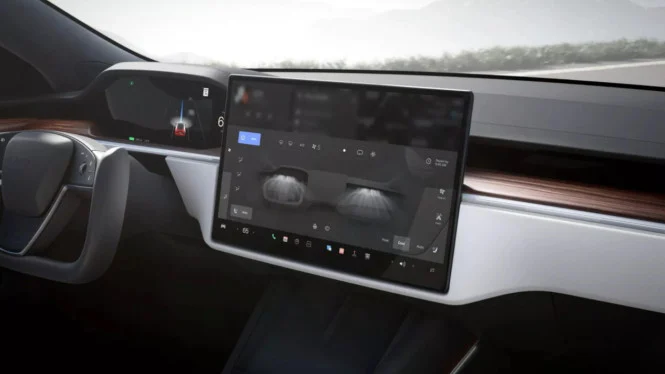
The Chinese government has begun reining in the trend of touchscreen-dominated cars. Through the Ministry of Industry and Information Technology (MIIT), the regulator plans to reinstate mandatory physical buttons for a number of critical functions in new vehicles from 1 July 2026.
The regulation is a revision of national standards relating to vehicle control components and indicators. The essence is clear: crucial functions must not be entirely dependent on the central screen. Drivers must still be able to operate important features without looking at the screen, in order to reduce distraction while driving.
In recent years, electric vehicles and new energy vehicles (NEVs) in China have become synonymous with minimalist cabin designs. Physical buttons have become increasingly rare as nearly all settings are centralised on large touchscreens. Some models have even added dedicated screens for front passengers. This approach has been widely adopted by brands such as BYD, Nio and Tesla.
However, the trend has also drawn criticism. A senior executive at Geely once remarked that China’s automotive industry was too quick to follow the trend of full-screen cockpit concepts without considering ergonomic aspects.
Through this regulatory revision, the Chinese government is mandating that several functions retain physical controls. These range from indicators, hazard lights and the horn, to gear selection for P, R, N and D, which will no longer be permitted to operate solely through a touchscreen. Additionally, buttons for activating advanced driver assistance systems (ADAS), wipers, defoggers, power windows, emergency call systems and electric vehicle power cut-off switches must also be available in physical form.
The regulator has also specified technical details. The minimum button area must be 10 mm by 10 mm, positioning must be fixed, buttons must be operable without looking, and they must provide tactile or audible feedback. Furthermore, these basic functions must continue to work even if the vehicle’s main system experiences a fault or loses power.
The revised standard has been in development since 2023 and involves various major manufacturers and automotive research institutions in China, including the China Automotive Technology and Research Center, FAW-Volkswagen and Great Wall Motor.