
New Bulk Process Feature Introduced in DJP's Coretax Application
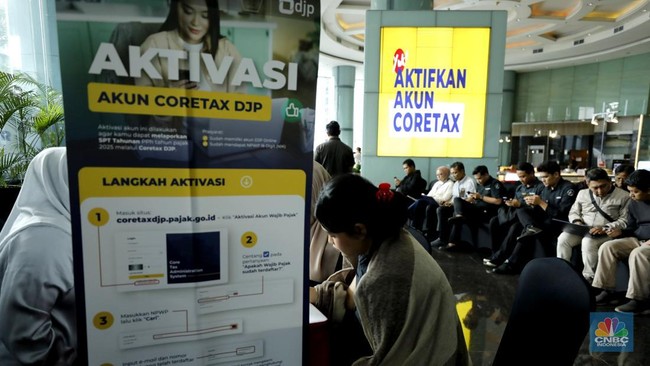
Jakarta — The Directorate General of Taxes (DJP) is progressively introducing various updates aimed at making it easier for taxpayers to fulfil their obligations, including filing tax returns, through the Coretax DJP application.
Recently, this update was evident in the bulk process feature for issuing tax withholding certificates within the Coretax application. What exactly is this bulk process feature?
DJP official Fikri Harris explained that those unfamiliar with handling large quantities of withholding certificates may view this as merely an ordinary feature addition. However, for company tax staff, consultants, or finance teams who must process hundreds to thousands of withholding certificates monthly, the arrival of this menu feels like welcome news arriving at precisely the right moment.
Fikri explained that previously, the process of issuing withholding certificates often encountered technical obstacles that consumed considerable time. The system only allowed issuance to be conducted per page, with a maximum capacity of approximately 500 data entries in a single process.
“In practice, this figure could not always be utilised optimally. Taxpayers frequently could only issue 50 to 100 withholding certificates in a single upload because the system experienced disruptions when processing large volumes of data,” he stated, as quoted from his article on the DJP website on Friday, 13 March 2026.
As a result, such situations made the administrative process less efficient. To complete hundreds or even thousands of withholding certificates, taxpayers often had to conduct issuance gradually and repeatedly.
Consequently, each time one page was completed, the issuance process needed to be repeated. This certainly increased workload, particularly when approaching the tax reporting deadline.
Therefore, when the bulk process feature arrived and allowed for mass data processing, previous problems were expected to be mitigated. At minimum, there was hope that time-consuming administrative work could be significantly reduced.
“This feature helps taxpayers to upload and process large volumes of data simultaneously in one stage rather than one by one, but collectively,” he explained.
How does one use this feature?
After entering the e-Bupot menu, taxpayers first select the type of withholding certificate they wish to issue. For example, for income tax (PPh) Article 21 purposes, taxpayers can select the monthly withholding certificate for permanent employees according to reporting needs.
In this display, on the right side, there is now a bulk process button. This is where the rather significant update lies. When this menu is opened, there are two main options available to taxpayers.
Issued by period
The first menu is issued by period. This feature allows withholding certificate issuance based on a specific tax period.
Users simply select the tax period and tax year they wish to process. After the period is determined, the system automatically issues all withholding certificates already stored in that period. There is no need to process one by one or divide into several small batches as before.
Download CSV by period
The second menu is download CSV by period. This option functions to download withholding certificate data in CSV format based on a specific tax period.
This feature assists taxpayers in conducting data verification or reconciliation more conveniently. By downloading data for an entire period, the internal control process becomes easier. Data can be reviewed before or after issuance and can be aligned with the company’s internal records.
It should be noted that besides the newly introduced bulk process feature, there are several other features available when issuing withholding certificates through Coretax DJP.
The first feature: if the number of withholding certificates to be issued is relatively small, taxpayers can use the create e-Bupot feature. Through this menu, issuance is conducted manually by filling in transaction details, recipient identity information, and applicable tax objects. This mechanism is quite effective for transactions that are not too numerous or are incidental in nature. The process is simpler and can be directly controlled one by one before issuance.
However, in practice, not all taxpayers are in situations with small transaction volumes. For companies with a fairly large number of withholding certificates, the system also provides the option to upload data in bulk through XML files.
The XML template can be downloaded through the official DJP website in the Coretax DJP reform section. By using the provided template, taxpayers can adjust data to match the system format before the upload process begins.
“To ensure whether the XML upload process is successful, there is a monitoring feature available. Through this menu, taxpayers can view the processing status of uploaded data,” said Fikri.
If errors occur, the system also displays error descriptions so users can identify the problem location, whether in format, identity data, or specific elements within the XML file.
Accordingly, Fikri explained that the correction process can be conducted more directly without having to guess the source of the error. Additionally, the system also provides an option to cancel data if an already-issued withholding certificate contains errors.