
Negotiations for the ART Agreement Deemed Rushed, Indonesia's Bargaining Position Potentially Weakened
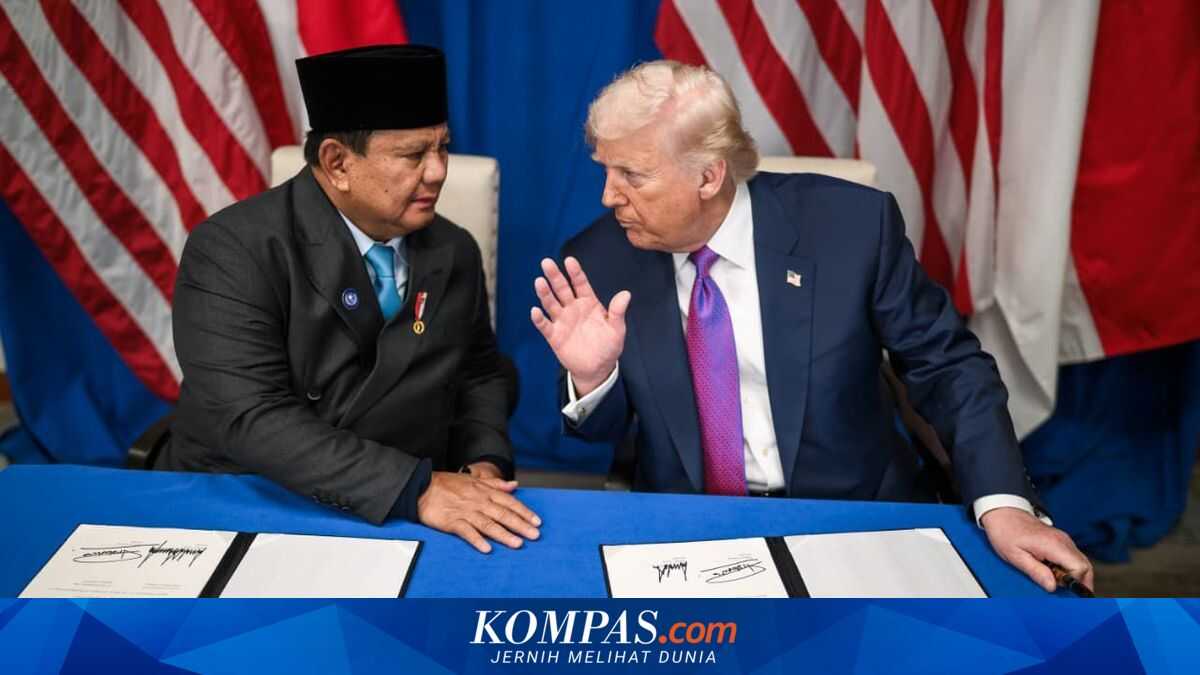
JAKARTA, KOMPAS.com - Economist and public policy expert from UPN Veteran Jakarta, Achmad Nur Hidayat, believes that the negotiations for the Agreement on Reciprocal Trade (ART) between Indonesia and the United States, as well as the extension of Freeport’s mining contract until 2061, were conducted in a rushed manner. This situation is considered to potentially weaken Indonesia’s bargaining position in long-term strategic economic agreements.
“The public is asking, why are we in such a hurry to sign an agreement that could still be negotiated?” said Achmad in a statement on Wednesday (25/2/2026).
According to Achmad, the signing of a trade agreement with a 19 per cent export tariff to the United States has become a point of concern, especially after the US government set a new global tariff of 15 per cent for various countries. This policy change is considered to place Indonesia in a less competitive position compared to other countries.
By waiting for clarity on global tariff policies, Indonesia is considered to have the opportunity to obtain more favourable terms, including the possibility of lower tariffs or maintaining zero-tariff facilities for certain commodities.
Achmad also highlighted the extension of Freeport’s contract until 2061, even though the previous contract was still valid until 2041. He believes that this decision was made too early. The government has ample time to conduct a thorough evaluation of potential state revenues, the fiscal regime, and strategies for downstreaming natural resources.
According to him, the additional investment of 20 billion US dollars and the increase in state ownership to 63 per cent do appear positive. Achmad emphasised that international negotiations require a well-thought-out strategy, including the ability to read the momentum and global dynamics. Decisions made too quickly risk reducing the scope for negotiation and limiting opportunities to obtain optimal benefits for national interests.
He also believes that the government’s plan to reopen negotiations indicates that the initial agreement still has room for improvement. Achmad reminded that every strategic economic agreement has long-term implications for the competitiveness of the national industry, state revenues, and the sustainability of natural resource management. Therefore, the government is expected to adopt a more cautious and strategically-based approach in every international negotiation.