
Negotiations for Pertamina Ships in Strait of Hormuz Prove Challenging; These Are the Obstacles Facing Indonesia
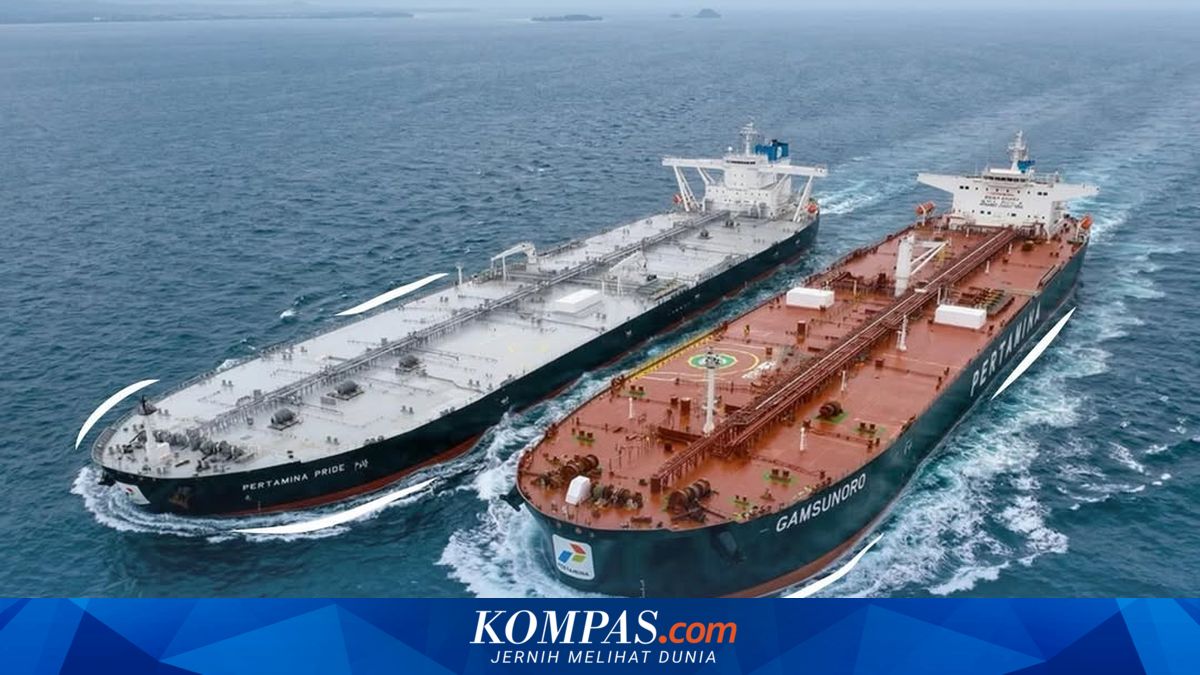
The Indonesian government is continuing efforts to negotiate the fate of two vessels owned by PT Pertamina International Shipping (PIS), which have yet to cross the Strait of Hormuz. The two ships, Pertamina Pride and Gamsunoro, remain held in the Arabian Gulf amid the security dynamics of this strategic shipping route. Foreign Minister Sugiono revealed that diplomatic processes are ongoing through the Indonesian Embassy in Tehran. “Of course, the Ministry of Foreign Affairs, through our Embassy in Tehran, is continuously engaging in discussions,” Sugiono stated at the KSP Office in Jakarta on Wednesday (22/4/2026). “The problem has become increasingly complex due to the internal situation in Iran itself, as policies from the top are not always immediately implemented on the ground. Additionally, there are further developments regarding the Hormuz blockade,” he added. Similar statements were made in another press conference, where he affirmed that the government is persistently working to ensure the Indonesian ships promptly receive transit permission. Sugiono also noted that discussions are not limited to ship transit permits but encompass the dynamics of the Strait of Hormuz blockade and ongoing negotiations over shipping requirements. Furthermore, there has been a proposal regarding the imposition of fees on ships passing through the Strait of Hormuz, though this has been rejected by several countries. “So, representing the President, I attended that meeting online. The main point was that the countries participating in the conference rejected any form of fee or toll collection on ships passing through Hormuz,” he explained. According to him, this relates to the principle of freedom of navigation, which forms the basis of international maritime law. “If compared to our energy needs, it is a relatively small requirement. So the comparison is roughly like that. To avoid missing the big picture—don’t see the speck across the ocean but ignore the elephant right under your nose,” Sugiono remarked. He stressed that successfully maintaining the national energy supply is far more significant than the impact of the delay of these two ships.