
Nearly 700,000 Passengers Projected to Use Yogyakarta Commuter Line During 2026 Eid Holiday Period
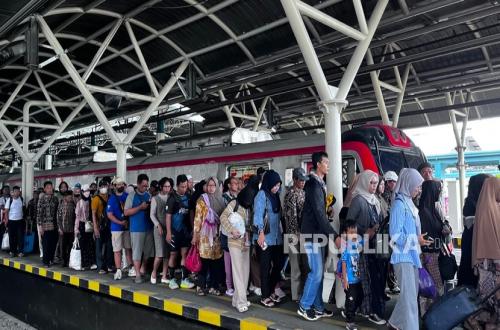
KAI Commuter projects a total of approximately 697,000 passengers on the Commuter Line in the Yogyakarta Region (Area VI) during the 2026 Eid holiday transport period. This figure represents a three per cent increase compared to the realised figure from last year’s Eid transport, which reached 658,000 passengers.
Karina Amanda, VP Corporate Secretary of KAI Commuter, stated that the increase in commuter rail users during the Eid holiday migration and return periods has become an annual trend. The upward trend in passenger numbers has already been visible since the beginning of the holiday transport period.
Over the past two days, the average number of Commuter Line users in the Yogyakarta region reached approximately 22,000 people per day, a figure higher than the same period last year, which stood at around 20,000 passengers per day.
“KAI Commuter projects the total passenger volume in Area VI will reach 678,576 people, an increase of three per cent compared to the previous year,” said Karina when interviewed at the KAI Commuter area of Yogyakarta Station on Sunday (15 March 2026).
To anticipate the surge in public mobility, KAI Commuter has increased the frequency of services on the Yogyakarta–Palur Commuter Line route. Whilst normal operations involve 27 trips per day, during the Eid transport period this has been increased to 31 trips per day on 20–21 March and 25–29 March 2026.
“With this increase in trips, the total combined daily transport capacity in Area VI is projected to reach 51,956 passengers during this year’s Eid transport period. The volume of Commuter Line users during the 2026 Eid Transport period (11–14 March 2026) is estimated at 74,420, consisting of 65,965 users on the Yogyakarta–Palur Commuter Line and 8,455 users on Prameks,” she said.
To support operations, KAI Commuter has prepared six train sets for the Yogyakarta–Palur service, with two serving as spares. Each trainset comprises eight carriages. The Prameks service is supported by two train sets, each consisting of five railway carriages.