
Nearly 500 MBG Kitchens Suspended in Sumatra, Here's Why
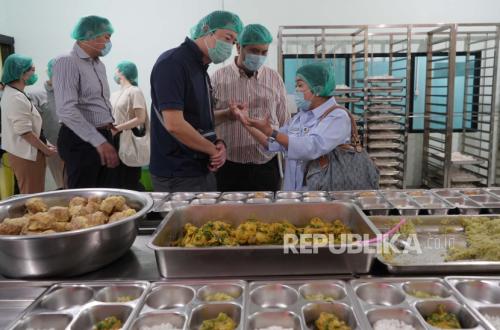
The National Nutrition Agency (BGN) temporarily closed 492 nutrition service units (SPPG) in Sumatra as of 9 March 2026. The move was made because hundreds of SPPG had not obtained the Hygiene and Sanitation Certification (SLHS), which is a prerequisite for the establishment of the Free Nutritious Meal Kitchens (MBG).
Director of Monitoring and Supervision for Region I, Harjito, said the decision was made as part of enforcing safety and suitability standards for kitchens under the MBG programme. After all, all SPPG that have operated are required to meet hygiene and sanitation standards, including registration and verification of SLHS with the local health department.
“Suspension is a corrective measure so that every operating kitchen truly meets health and food safety standards,” he said in a formal statement on Saturday, 7 March 2026.
Harjito said the regulation applies to kitchens that have been in operation for more than 30 days but have not registered for SLHS. He said they had given all SPPG the opportunity to complete administrative and sanitation standards obligations promptly.
“Once the registration and verification process is completed, operations can be reopened,” he said.
According to BGN data as of 7 March 2026 at 11:00 WIB, there were 492 SPPG in Sumatra that had not registered for SLHS. This figure is the accumulation of reports from the Regional Coordinator for Sumatra who has conducted on-site monitoring of MBG kitchen operations in each province.
The provinces with the highest number of SPPG not registered for SLHS were North Sumatra with 252 kitchens, followed by Lampung (77), Aceh (76), West Sumatra (69), Riau (9), Riau Islands (5), and Bengkulu (4). Meanwhile, Jambi, South Sumatra, and the Bangka Belitung Islands were recorded as having no kitchens not yet registered.
Harjito added that the policy is also part of efforts to strengthen monitoring of service quality in the MBG programme, which targets improving the nutrition of the public, particularly schoolchildren. “This programme concerns public health, so food safety standards must not be compromised,” he said.
Harjito urged all MBG SPPG managers affected to immediately coordinate with the local health department to speed up the SLHS registration process. He hoped operators would promptly complete the required requirements so that services could resume.