
National Vocational Training Programme Officially Launched
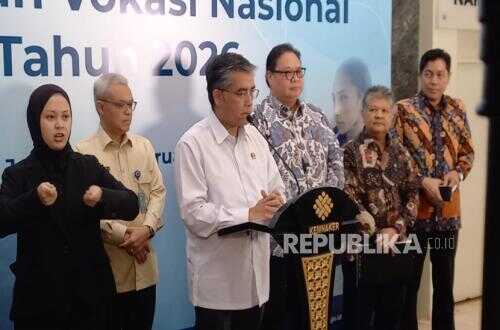
JAKARTA – The government has officially launched the National Vocational Training Programme on Friday, 27 February 2026. The programme aims to enhance the work competence of secondary school (SMA/SMK) graduates to align with the demands of the business and industrial sectors.
The Minister of Manpower, Yassierli, stated that the programme is specifically designed for secondary school alumni who graduated within the past three years. In the first batch, 20,000 participant quotas have been prepared.
“Batch 1 is now open, and you can find more details on the Ministry of Manpower website, which also lists the available facilities and more,” he said during a press conference at the Ministry of Manpower office on Friday afternoon, 27 February 2026.
Yassierli explained that the government has allocated State Budget (APBN) funding to manage the programme for 70,000 people. However, in the initial phase, the programme will target 20,000 participants first. Should the evaluation results indicate high enthusiasm, there is potential to increase participant numbers.
“Following the evaluation of batch 1 with 20,000 people, if enthusiasm is strong, we certainly hope that 70,000 people will not be sufficient. The 70,000-person allocation already has budget from the APBN,” he said.
He added that interested members of the public are urged to register promptly according to their skills and educational background. Subsequently, the Ministry of Manpower will conduct a selection process.
Participants will undergo training at vocational centres distributed across various regions of Indonesia. The Ministry of Manpower has also prepared dormitories for participants from outside their local areas and allocated transport allowances of Rp20,000 per day during the training period.
“For the training, we follow the Ministerial Decree, which sets the daily allowance at Rp20,000 per day. This is to assist those participating in the training,” he said.
Training duration varies depending on the type of programme undertaken, ranging from two weeks, one month, to three months.
“Our hope is certainly to optimise this programme. So in addition to the national internship programme for higher education graduates, we are also providing an alternative programme for secondary school graduates,” Yassierli said.