
National Vocational Training Programme 2026 Opens: How to Register
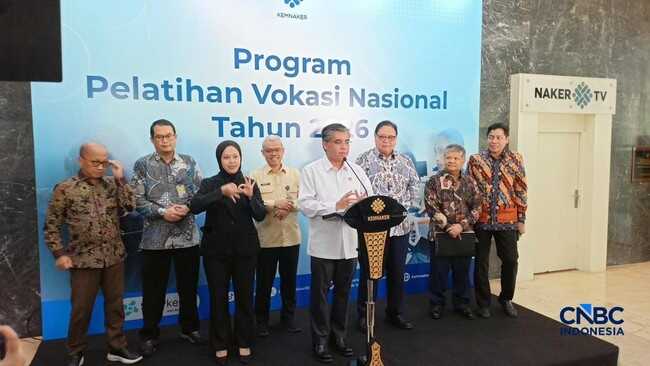
Jakarta — The government has officially launched the 2026 National Vocational Training Programme aimed at enhancing the skills of senior secondary and vocational school graduates. The programme is expected to narrow the gap between the education sector and industrial needs.
The training initiative has been developed by the Ministry of Manpower with government support through various vocational training centres distributed across Indonesia. The programme represents one of the government’s key strategies for improving the quality of the national workforce.
Manpower Minister Yassierli announced that the government has opened registration for the first batch of the programme. “This afternoon the Coordinating Minister attended our invitation regarding several programmes currently being prepared and launched by the Ministry of Manpower. One programme we extensively discussed and received guidance on concerns the National Vocational Training Programme,” Yassierli stated at the Ministry of Manpower on Friday (27 January 2026).
The programme targets senior secondary and vocational school graduates who completed their studies within the past three years. The government hopes this initiative will serve as an alternative pathway for secondary school graduates who have not yet pursued higher education or secured employment.
Yassierli explained that the initial phase of the training will accommodate tens of thousands of participants from across Indonesia. “The first batch will comprise 20,000 people, specifically for secondary and vocational school graduates from the past three years. Registration for batch one is now open, and further details are available on the Ministry of Manpower website, which also contains information on facilities and other relevant matters,” he said.
This programme complements various existing workforce development policies, including the national internship programme for tertiary graduates. The government recognises that many secondary education graduates require skills development pathways to better prepare for entry into the labour market.
“So alongside the national internship programme for university graduates, we are also providing an alternative programme for secondary and vocational school graduates,” Yassierli stated.
The training programme has been designed with an approach closely aligned to industrial requirements. The curriculum will be structured to ensure relevance to the competencies required in the workplace.