
National Traffic Police Chief Outlines Vision for Sustainable Road Safety
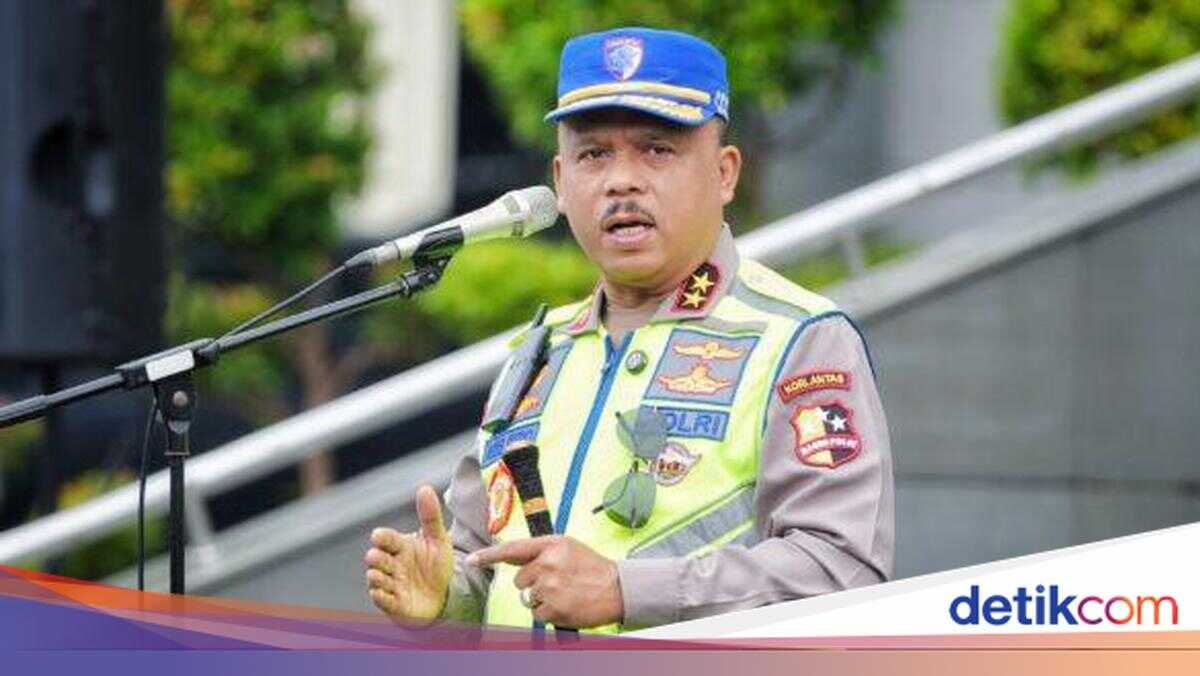
The National Police Traffic Corps (Korlantas Polri) has affirmed its commitment to moving beyond short-term policies and ad hoc programmes. Under the leadership of Korlantas chief Inspector General Agus Suryonugroho, the corps is now channelling all its efforts towards building a sustainable foundation for road safety.
Inspector General Agus emphasised that building road safety requires consistency, clear direction, and continuous interaction between officers and the public. He argued that safety must not be viewed merely as an operational target, but rather as a value that grows in the daily lives of all road users.
“Safety must be understood as a shared perspective. This process requires long-term investment, where greetings, dialogue, and service become the primary instruments for shaping better traffic behaviour,” said Inspector General Agus in a statement on Wednesday (18 February 2026).
One of the key pillars in building this sustainable safety culture is Inspector General Agus’s flagship programme, ‘Traffic Police Greet and Serve’ (Polantas Menyapa dan Melayani). The programme is not merely a communication strategy but part of a broader transformation of values.
Where success indicators have traditionally been measured through momentary traffic flow, Inspector General Agus is now broadening these parameters to emphasise collective behavioural change. Through a humanistic approach, field officers are expected to provide positive experiences to the public, which will ultimately strengthen public trust.
“When officers present themselves with professionalism and respect through the Traffic Police Greet and Serve programme, the public gains experiences that reinforce trust. These daily experiences become the foundation of a strong and organic safety culture,” he explained.
Public Trust: The Key Asset for Technological Innovation
Inspector General Agus also highlighted the close connection between social and technical dimensions. In his view, sophisticated technology such as the ETLE (Electronic Traffic Law Enforcement) system will not function effectively without social readiness and full public support.
A public that trusts in the credibility of institutions tends to be more open to innovation and new policies. Consequently, the humanistic interactions being built today are regarded as transformational capital for introducing technology-based system enhancements in the future.
“Technology and policy will not be effective without public support. The interactions we are building today through humane service are an investment so that every new policy in the future can be well received by the public,” added Inspector General Agus.
Beyond the external focus, Korlantas’s current performance direction also emphasises internal reflection. Personnel development is now centred on strengthening service ethics, communication skills, and proportional decision-making in the field.
Inspector General Agus expressed his hope that Korlantas’s performance will not only be remembered through statistical reductions in accidents, but also through the legacy of values left behind. A service identity that is consistent, firm, yet humane is expected to endure beyond any particular leadership period.
“Performance is not only measured by current achievements, but by the values we instil. We want to ensure that efforts to safeguard journeys today are part of shaping a brighter future for national safety,” he concluded.