
National Student Camping in Riau: Police and Students Unite Against Forest Fires and Drugs
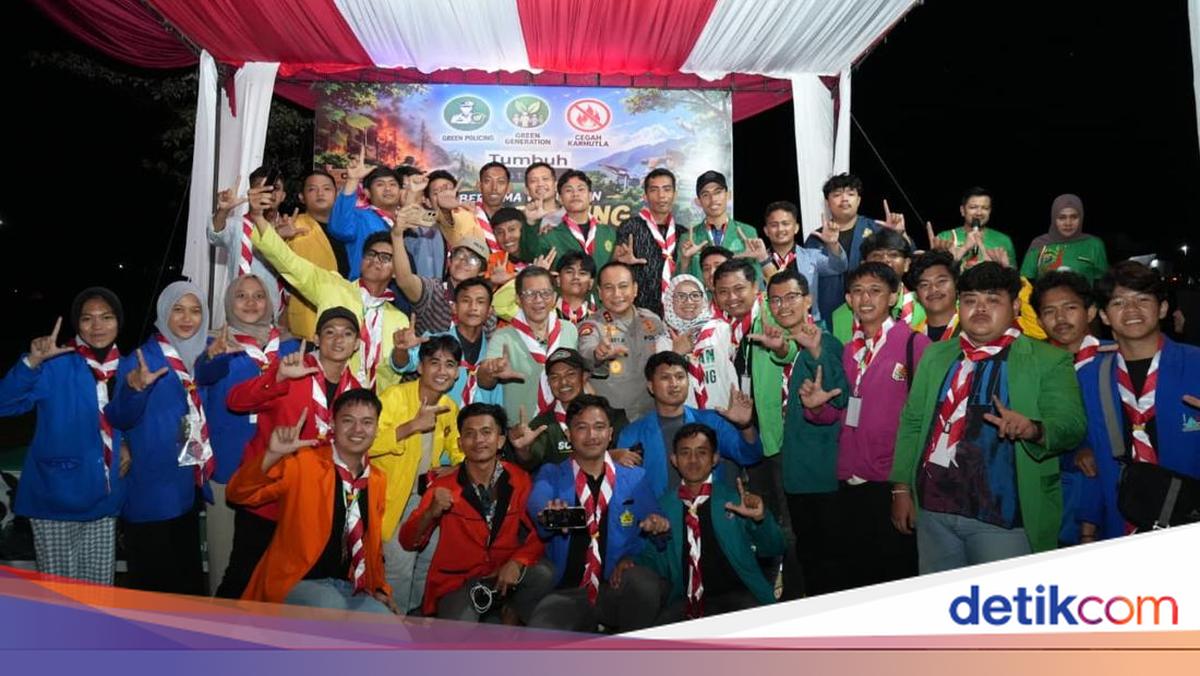
Riau Regional Police continue efforts to build collective awareness of threats from forest and land fires (karhutla) and drugs. Through the ‘National Student Camping in Riau’ activity, Polri united with students and academics to combat karhutla and drugs.
The event, initiated by the Tumbuh Institute, was held at Bukit Rimbang Baling, Kampar, on Saturday (25/4/2026). Attendees included Riau Police Chief Irjen Pol Herry Heryawan, Tumbuh Institute Founder Rocky Gerung, and human rights activist Hurriah.
In his speech, Police Chief Irjen Herry Heryawan stressed the importance of building collective awareness and changing mindsets to face the threats of karhutla and drugs. He reminded that Riau has the potential to face a major karhutla cycle, as occurred in 1997, thus requiring preparedness and involvement from all parties.
“Issues like karhutla and drugs cannot be resolved by the government or police alone. There must be collaboration, from upstream through education to downstream through law enforcement,” said Irjen Herry.
The Police Chief also affirmed a firm commitment to eradicating drugs, including zero tolerance for police involvement in such networks.
Meanwhile, Rocky Gerung placed the karhutla issue in a broader context, as part of a global ecological crisis threatening the future of civilisation. He emphasised that environmental problems can no longer be viewed partially but must be understood as part of an interconnected global system.
“We are not just talking about Riau or Indonesia, but the future of the Earth. This Earth is the only ‘ship’ we have, and all humans are its passengers,” he said.
According to him, students have an important role as an intellectual buffer in facing multidimensional crises, from economy and energy to ecology.
Karhutla as a Human Rights Issue
On the other hand, human rights activist Hurriah asserted that karhutla must be seen as a human rights issue, as it directly relates to people’s rights to a healthy living environment.
“Karhutla is not just a natural disaster, but a crisis that is continuously produced and eventually normalised. Yet it means our right to clean air is being revoked,” said Hurriah.
She also encouraged students to strengthen the movement’s base through research and policy advocacy, not just symbolic actions.
“Without data, movements can easily be dismantled. Students must be able to collect data, analyse it, and formulate policy recommendations,” she said.
Head of Tumbuh Foundation, Azairus Adlu, in his speech affirmed that this activity is designed as an honest and reflective dialogue forum.
“Karhutla is not just an environmental issue; it concerns health, economy, and public trust in state governance. Therefore, we want to provide a space where all parties can sit together, discuss, and build collective awareness,” he said.
He also highlighted that threats to Riau’s future do not only come from karhutla but also from drug issues that destroy the young generation.
“Drugs destroy humans, karhutla destroys human living space. Both stem from the same roots: greed and negligence. Thus, fighting drugs means protecting humans, and fighting karhutla means protecting the future,” said Azairus.
According to him, students hold a strategic position as agents of change because they possess critical thinking skills, social influence, and access to knowledge.