
National Rice Reserves Surpass 5 Million Tonnes, Seen as Indonesia Entering More Measurable Self-Sufficiency Phase
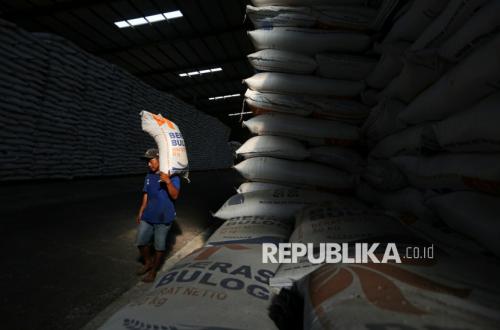
The achievement of national rice reserves now surpassing more than 5 million tonnes is seen as an important indicator that Indonesia is beginning to enter a new phase towards more real and measurable food self-sufficiency.
According to DPR RI member from the Gerindra Party faction, Azis Subekti, this achievement is not merely a statistical figure but reflects the state’s capability in building national food resilience based on domestic production.
“There was anxiety that often arose whenever this nation talked about rice,” he said in his statement in Jakarta on Sunday (10/5/2026).
Not because Indonesia lacks paddy fields or farmers do not work hard, but because the state often arrives too late in ensuring that harvest results truly benefit farmers.
He said that for years, the public has often heard the term “safe stock”, but that condition is not necessarily felt directly by the people, especially in maintaining price stability at the market level.
However, according to him, the current situation is starting to show more concrete changes. “For the first time in quite a long time, the phrase safe stock is beginning to find a more honest form. Not just numbers, but numbers that have meaning,” he stated.
Azis explained that the national rice reserves managed by Perum Bulog have now exceeded 5 million tonnes. Over the last two years, this amount has more than doubled.
At the same time, the absorption of domestic farmers’ paddy and rice up to April 2026 has reached around 2.3 million tonnes equivalent to rice. National production has also increased to around 34.69 million tonnes in 2025, or up more than 13 percent compared to the previous year.
“These figures are important, but what is more important is how to read them,” he cautioned.