
National Police Chief Reveals Government Strategy in Response to Global Conflict
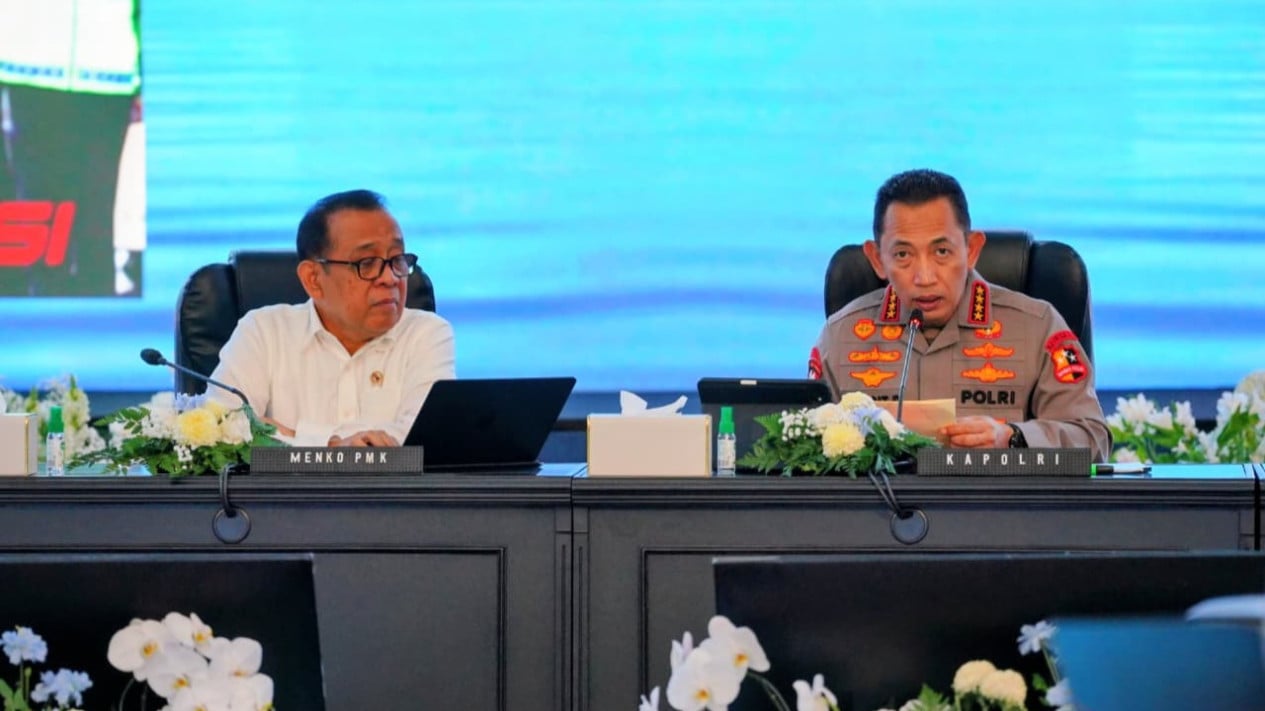
Jakarta — National Police Chief General Listyo Sigit Prabowo revealed the Indonesian government’s efforts to address global conflicts occurring in the Middle East.
President Prabowo Subianto, according to him, has convened government elites and key figures to communicate that Indonesia must actively implement a free and active non-aligned foreign policy to safeguard world peace.
“Certainly, the government is working hard to ensure that such incidents or conflicts can be ended promptly,” Sigit stated on Wednesday, 11 March 2026.
Sigit noted that Indonesia’s entry into the Board of Peace (BoP) represents one of the Indonesian government’s initiatives to help resolve the global conflict, despite questions raised by various parties about the decision.
According to him, given that major institutions previously tasked with maintaining peace have not been heeded by the United States, Indonesia’s membership in the Board of Peace provides an opportunity for President Prabowo to advocate for peace in the Middle East.
“Whether we like it or not, the President is attempting to join the BoP so that there remains an opportunity to discuss peace in the Middle East, and this is what he is currently pursuing,” he said.
Furthermore, he stated that President Prabowo is also endeavouring to protect Indonesia’s economy from the impact of global circumstances, such as President Trump’s tariff war, which has been reduced through diplomatic efforts conducted by the head of state.
“Alhamdulillah, thanks to the diplomatic efforts carried out by the President, the tariff rate of 32 per cent for Indonesian imports to America has been reduced to 19 per cent,” he said.
Additionally, he noted that the United States Supreme Court decided on a 15 per cent import rate for countries, though this decision remains contested between Trump and the American parliament.
Sigit emphasised that President Prabowo Subianto continues to conduct diplomacy in the trade sector. On one hand, Indonesia has been given zero per cent import tariffs for certain types of commodities and products such as footwear, furniture, textiles, and semiconductor chips.
“Thus, this certainly provides space for Indonesian industries to continue production,” Sigit stated.