
National One-Way System Implemented for Return Traffic, Here is Kakorlantas's Advice to Travellers
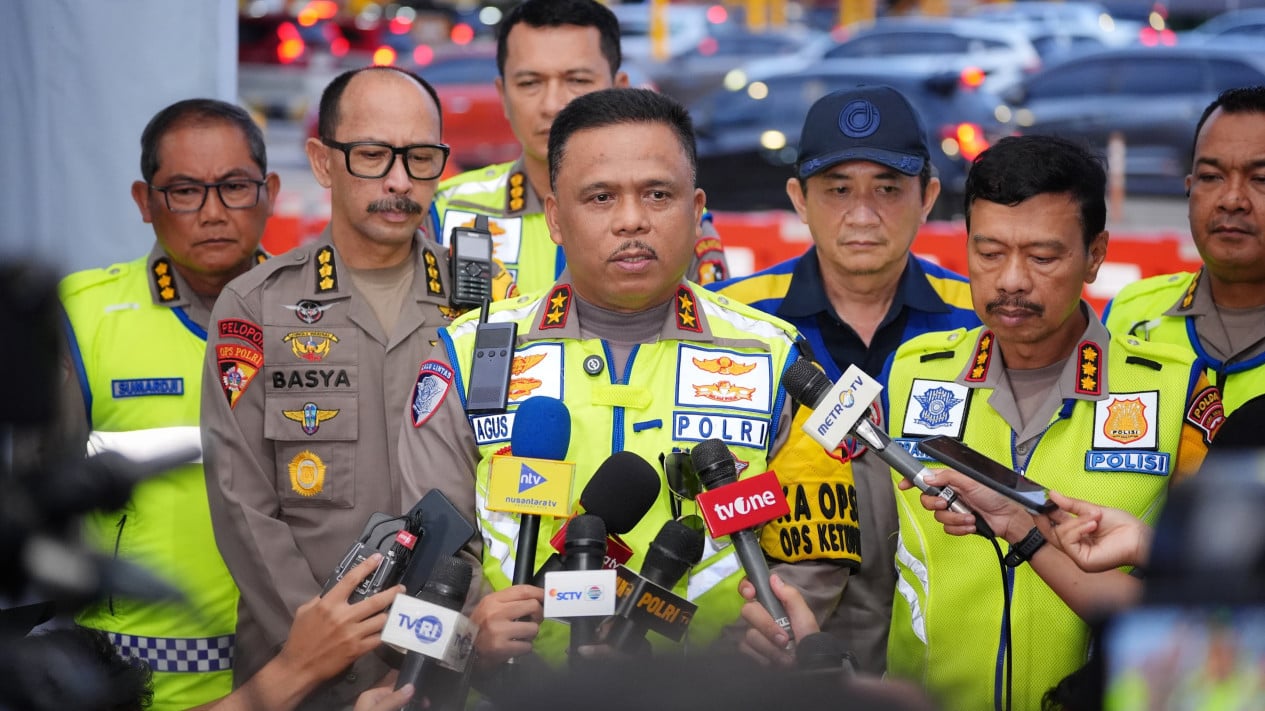
Jakarta, VIVA – The Indonesian National Police Traffic Corps (Korlantas) Polri is implementing a national one-way traffic engineering scheme for return traffic starting Tuesday, 24 March 2026.
This policy will be applied from KM 414 Kalikangkung to KM 70 Cikampek Utama and will be officially launched by Police Chief General Listyo Sigit Prabowo along with relevant ministers.
The implementation of the national one-way system is a strategic step to anticipate the high surge in return traffic, in line with the high mobility of the public during the peak of the homecoming exodus.
Korlantas Polri’s Chief, Irjen Agus Suryonugroho, emphasised that all traffic policies this year are executed based on data and real-time field monitoring.
“The national one-way system is a measured step based on data. We see the potential for very high traffic generation, so it must be managed from the start to avoid build-up,” said Agus on Tuesday, 24 March 2026.
Based on Korlantas Polri’s analysis, the previous peak homecoming traffic reached 270,000 vehicles per day, while currently only about 43% of vehicles have returned to Jakarta. This indicates the potential for a significant surge in the coming days.
“This means the return traffic will continue to move. Therefore, we prepare traffic engineering scenarios that are gradual and flexible,” he stated.
Korlantas also emphasised that the one-way policy is not rigid but will be adjusted dynamically based on field conditions.
“If the traffic is still high, we can extend the one-way. But if it has eased, we will normalise it. Everything is based on real-time conditions,” he explained.
Utilisation of WFA Policy
In addition to toll road arrangements, Irjen Agus reminded the public to take advantage of the government’s work-from-anywhere (WFA) policy for civil servants (ASN) and similar appeals for the private sector. By working remotely from their hometowns, it is hoped that homecomers can delay their return after the peak return traffic, allowing the density on main routes to disperse more effectively.
“Utilise this WFA policy wisely. The public does not need to rush home all at once at the peak of return traffic. By staggering return times, the journey will be much more comfortable and avoid long congestion,” he said.