
National Nutrition Agency: Rp 6 Million Daily Incentive for Nutrition Services Not Development Funding from State Budget
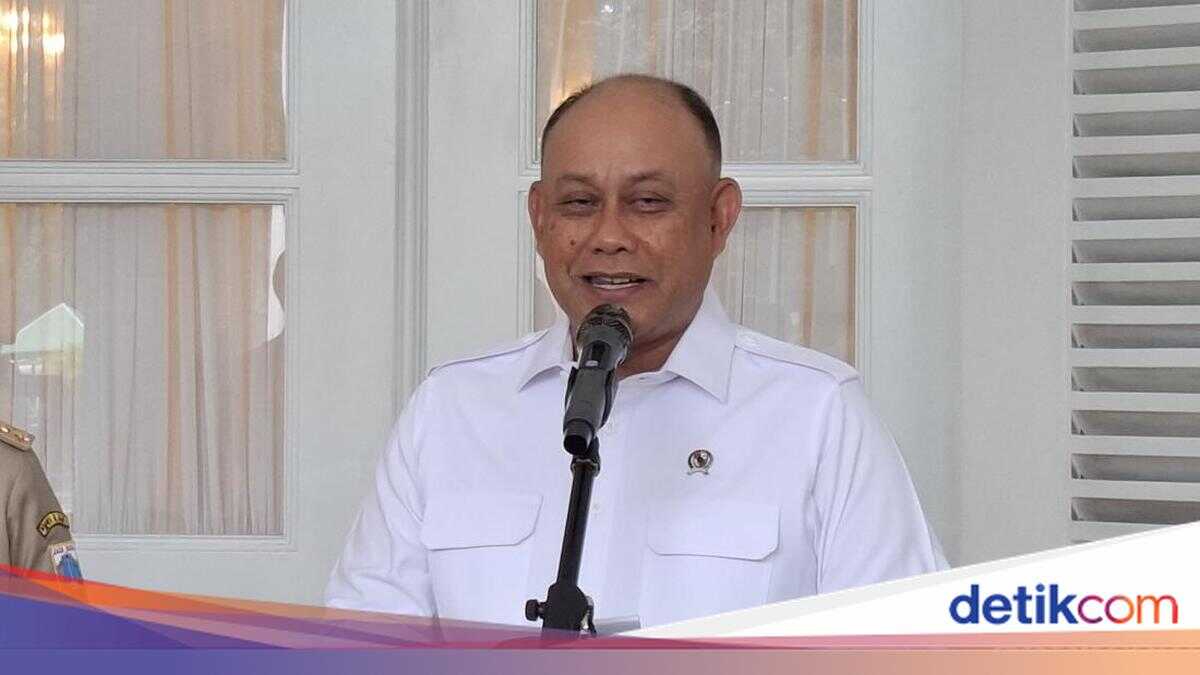
The head of the National Nutrition Agency (BGN), Dadan Hindayana, clarified the Rp 6 million daily incentive provided to nutrition service delivery units (SPPG). Dadan stated that this incentive is not development funding from the state budget, but rather part of an operational payment mechanism for SPPG services that has already been running.
“Firstly, the Rp 6 million per day is not development funding from the state budget, but rather part of the payment mechanism for SPPG services that have been operating. All physical development processes are undertaken using independent investment by partners,” Dadan said in a press statement on Friday (27 February 2026).
Dadan explained that all risks are borne entirely by partners, ranging from construction risks, operational implementation, evaluation, to natural disaster risks. He cited an example of one SPPG in Aceh that was affected by flooding and suffered damage, with all losses becoming the partner’s responsibility and not BGN’s.
“As happened in Aceh when the SPPG was swept away by floods, the losses fell on the partner, not BGN. They had to rebuild it themselves. So we transfer all risks to the partner, which is why I say the 6 million is very efficient because BGN does not spend a single rupiah on maintenance, repairs, and so forth,” Dadan said.
Dadan also emphasised that partner-led development was guaranteed to be more efficient because the scheme prevented any markup. He stated that partners would construct facilities as optimally as possible according to service requirements.
“I saw the SPPG built by the Persatuan Islam Islamic Boarding School (Persis) yesterday and it is absolutely excellent. It was built with Rp 3 billion in funding. I am confident that if it were built using BGN’s state budget funding, it would cost Rp 6 billion, so we have already achieved over 50 per cent efficiency,” Dadan noted.
According to Dadan, this partnership scheme was most strategic in terms of time efficiency. He stated that many partners completed SPPG construction on schedule and built more luxurious facilities compared to SPPG constructed using BGN’s state budget.
“Buildings as luxurious as those of Persis, the Police, or other upmarket locations can be constructed within two months and completed. How about the state budget route? First, a consultant must be appointed. How many months for planning consultation? Two months. Then correspondence is sent to local government to request land use, how many months? One month. Then once the land is obtained, upon survey it turns out to be unsuitable, what is done? It must be relocated. When it is relocated, what happens? Permission must be sought from the Ministry of Finance to shift the location, another month. Once everything is complete, what happens? Tender. How long for tender? Forty-five days. Meanwhile, partners who construct it, within 45 days it is already complete,” Dadan said.
Currently, BGN has 24,122 SPPG units, all constructed through the partnership scheme and operational. Average construction reaches 50 SPPG per day. This achievement demonstrates that the partnership approach can deliver significant acceleration whilst maintaining budget efficiency and accountability.