
National Nutrition Agency Closes 715 Nutrition Delivery Units in Eastern Indonesia, Including NTB
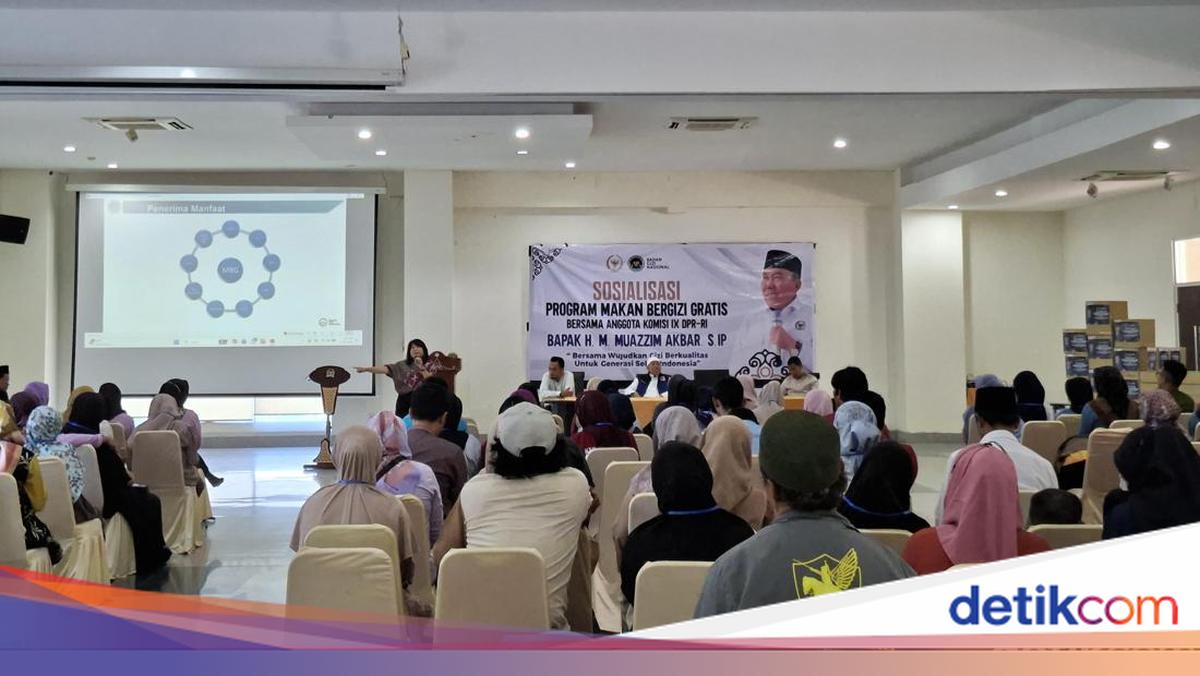
Indonesia’s National Nutrition Agency (BGN) has closed 715 Nutrition Service Delivery Units (SPPG) or kitchens distributing the Free Nutritious Food (MBG) programme across eastern Indonesia, including West Nusa Tenggara (NTB), citing various reasons for the closures.
Dian Fatwa, BGN’s spokesperson, stated that the MBG kitchens were closed following government evaluation. Several closures resulted from issues including land disputes, food poisoning incidents and other management problems.
“There are various reasons, but we continue to evaluate to ensure that nutrition standards for programme beneficiaries are properly implemented,” Fatwa said during an MBG socialisation event with Member of Parliament Muazzim Akbar, representing NTB Electoral District II, in Mataram on Saturday, 14 March 2025.
Fatwa explained that in line with central government instructions, each SPPG kitchen must engage at least two food suppliers. This policy aims to prevent monopolistic practices by a single supplier whilst stimulating local economic activity around MBG kitchens.
However, evaluation findings revealed that some MBG kitchen partners still depend on only one food supplier.
“We found that some MBG kitchen partners still rely on only one food supplier,” Fatwa emphasised.
According to Fatwa, this condition risks enabling dominance or monopoly within the MBG programme’s supply chain. Consequently, BGN will issue warning letters to kitchen partners not meeting these requirements.
“We will issue warning letters to partners using only one supplier. There cannot be dominance or monopoly from a single supplier,” Fatwa stated.
Fatwa described the policy as part of the government’s effort to ensure the MBG programme not only provides nutritional benefits to the public but also stimulates local economic circulation.
BGN encourages MBG kitchens to collaborate with various stakeholders, including cooperatives, small business operators and micro, small and medium enterprises (MSMEs) in their operational areas.
“We want to stimulate local economies around the kitchens. Therefore, they must work with cooperatives, small entrepreneurs, including MSMEs,” Fatwa said.
Fatwa added that BGN also encourages women-led small business operators to participate as food suppliers for MBG kitchens. Communities are urged to report kitchens that refuse to work with MSME operators to BGN.
“We ask women MSME operators to become kitchen suppliers. If any kitchen refuses, report it to us,” Fatwa stated.
Fatwa explained that the policy also relates to President Prabowo Subianto’s decision designating educational foundations as eligible partners or managers of MBG kitchens.
This ensures that benefits from kitchen management are not limited to large corporations but also strengthen the sustainability of educational institutions run by foundations.