
National Human Rights Commission proposes specialist police unit to address agrarian conflicts
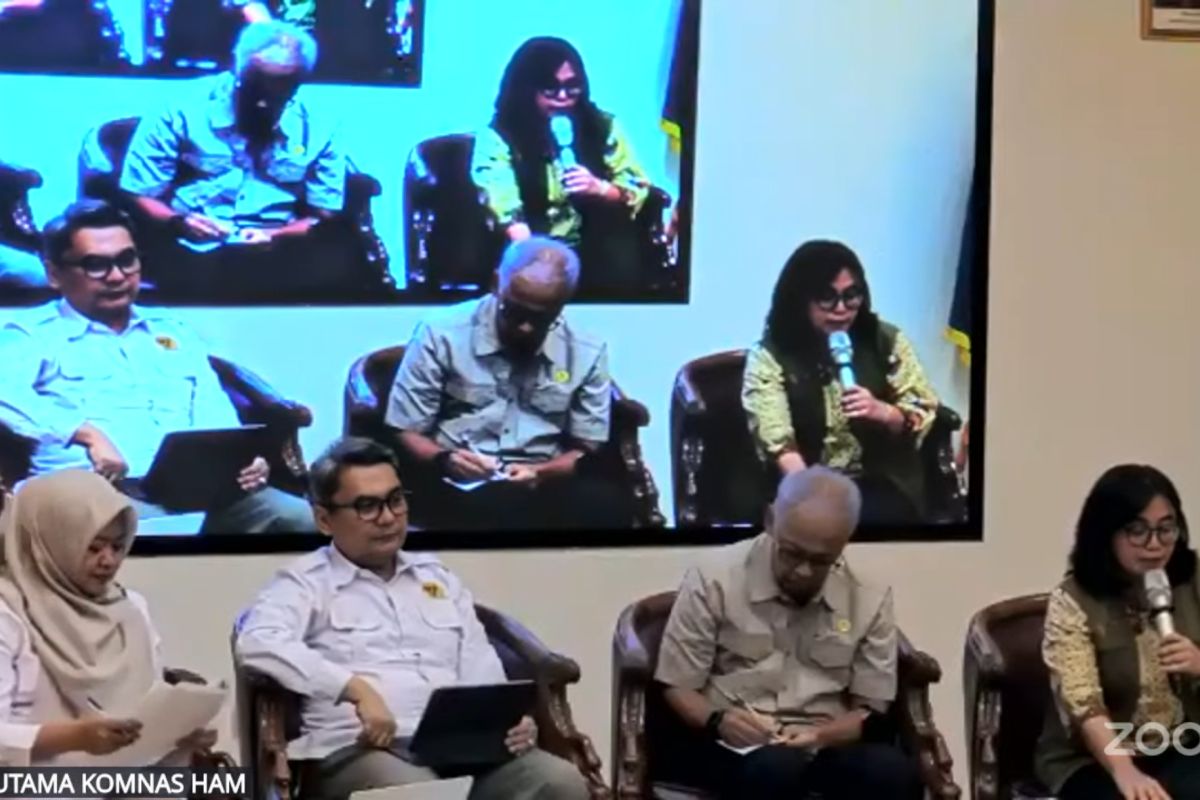
The National Human Rights Commission (Komnas HAM) has proposed the establishment of a specialised unit for handling agrarian conflicts and natural resource disputes within the police force to strengthen conflict mapping and prevent the criminalisation of communities in land disputes.
Uli Parulian Sihombing, Commissioner for Assessment and Research at Komnas HAM, stated that the proposal was one of the recommendations from the commission’s study regarding police involvement in agrarian conflicts during the period 2020–2024.
“There is a need to develop a directorate or specialised unit for handling agrarian and natural resource conflicts with a mandate for mapping, coordination, and preventing criminalisation,” Uli said during a public discussion and launch of the study on police handling of agrarian and natural resource conflicts held online in Jakarta on Monday.
According to him, the police force currently possesses several internal instruments that support the handling of land conflicts. These instruments include the Anti-Land Mafia Task Force, the implementation of restorative justice, and internal regulations concerning the use of force and human rights standards.
“The police force already has significant normative instruments such as police regulations on human rights, police regulations on the use of force, restorative justice mechanisms, the anti-land mafia task force, and a human rights division,” he said.
However, the implementation of these policies in the field has not yet been entirely consistent in addressing complex agrarian conflicts.
The study emerged from an increase in public complaints involving police personnel in natural resource conflicts. Komnas HAM recorded approximately 600 complaints during the 2023–2025 period that placed the police as the respondent party. Of this total, approximately 160 complaints specifically concerned agrarian conflicts or natural resource disputes involving police between 2020–2024.
According to him, the majority of cases occurred in the land sector with 133 complaints, followed by conflicts in the plantation, forestry, and national strategic project sectors.
Uli explained that in agrarian conflicts, the police often find themselves in a dilemma, as they perform security maintenance and law enforcement functions, yet simultaneously find themselves caught in structural conflicts between communities and corporations or the government.
In several cases, he noted, repressive approaches have been found in the field, including allegations of excessive use of force, intimidation practices, and involvement in forced evictions.
“Criminalisation often occurs through the misuse of criminal law instruments to address disputes that are actually within the civil realm or related to agrarian conflicts,” he said.
Komnas HAM also noted that overall there were 3,264 agrarian conflict complaints received by the institution throughout 2020–2025. Conflicts most frequently occurred in the land sector and were triggered by overlapping permits, unequal land control, and clashes between formal legality and communities’ hereditary land occupation.
Based on the study, Komnas HAM recommended strengthening the institutional capacity of the police through the establishment of a specialised unit for agrarian conflicts, updating human rights-based operational standards for conflict management, and positioning criminal law as the ultimum remedium or final recourse in land dispute resolution.