
National Haji Commission: Government Must Exercise Caution in Deciding on 2026 Hajj Operations Amid Middle East Conflict
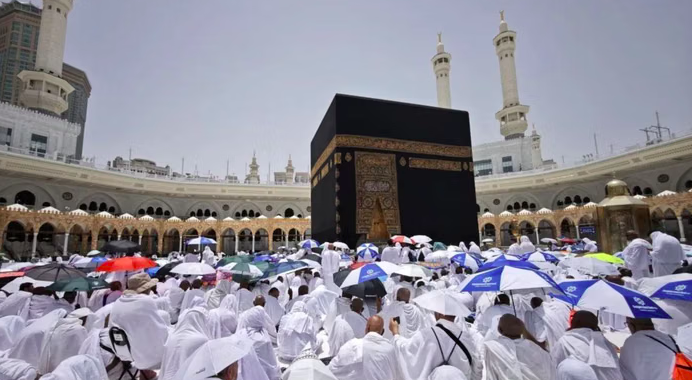
As the departure of the first contingent for the 2026 hajj pilgrimage approaches, with less than two months remaining, Indonesia’s hajj operations face serious challenges due to ongoing conflict in the Middle East involving Iran, the United States, and Israel. This situation threatens both regional security and flight routes to Saudi Arabia.
This concern is particularly significant given Indonesia’s position as the world’s largest sender of hajj pilgrims, with a quota of 221,000 participants. Additionally, this year’s hajj operations mark a transitional period as management shifts from the Ministry of Religious Affairs to the newly established Ministry of Hajj and Umrah (Kemenhaj).
Mustolih Siradj, chairman of Indonesia’s National Haji Commission (Komnas Haji), has characterised the government as facing a genuine dilemma between safeguarding pilgrim security and ensuring hajj operations continue.
“If the government unilaterally cancels pilgrim departures, it will trigger massive domino effects resulting in enormous backlogs of hajj queues. Beyond that, the trillions of rupiah in hajj costs already paid for flights, hotels, meals, transport, and Masyair fees become complicated if cancellation occurs, especially given that these contracts are with private parties (syarikah),” Mustolih stated on Friday, 13 March.
He emphasised that the Ministry of Hajj and Umrah must exercise extreme caution in determining its course of action—whether to proceed with scheduled pilgrim departures, postpone them, or adjust travel arrangements.
According to Siradj, comprehensive assessment is required involving multiple stakeholders, including parliament, the Foreign Ministry, the military, intelligence agencies, and Indonesian diplomatic representatives abroad. Additionally, the government should consider the positions of predominantly Muslim nations that send large numbers of hajj pilgrims, including Malaysia, Pakistan, Turkey, Yemen, and other Asian countries.
Siradj also emphasised that Saudi Arabia’s policy as the host nation represents the most critical determining factor in this year’s hajj operations.
“The most fundamental and crucial basis must be how the Kingdom of Saudi Arabia, as host, formulates its policy regarding this year’s hajj operations. Whether it will proceed without restrictions, employ limited schemes as during the COVID-19 pandemic, or implement special protocols if the conflict situation persists and potentially escalates,” he said.
He noted that the Middle East conflict remains highly dynamic and difficult to predict. However, the Saudi Arabian government continues to declare full readiness to conduct this year’s hajj operations.
Accordingly, Siradj believes the Indonesian government must seek clear security guarantees from Saudi Arabian authorities, given Indonesia’s status as the world’s largest hajj pilgrim sender.
“To date, the Saudi Arabian government continues to declare its full readiness to conduct hajj operations. The Ministry of Hajj and Umrah must be bold in requesting security guarantees for the hundreds of thousands of pilgrims who will worship in the holy land from the Saudi Arabian government,” he said.
He also recalled that historically, Indonesia has continued sending hajj pilgrims despite global conflicts, including during the independence struggle, world wars, and the Gulf War.
However, he stressed that the dynamics of modern warfare in the current context must remain a serious consideration in determining policy for this year’s hajj operations.
Meanwhile, members of parliament’s Commission VIII have raised concerns about potential changes to flight routes affecting 2026 hajj costs, as Middle Eastern airspace is disrupted by the Iran-Israel conflict. The Ministry of Hajj and Umrah has assured that umrah pilgrims in Mecca and Medina remain safe despite escalating Middle East tensions. The government is preparing multiple scenarios for conducting this year’s hajj operations to ensure the safety of Indonesian pilgrims amidst evolving Middle East dynamics.