
National Forum of MPR-DPR Leadership 1999–2024 Officially Established
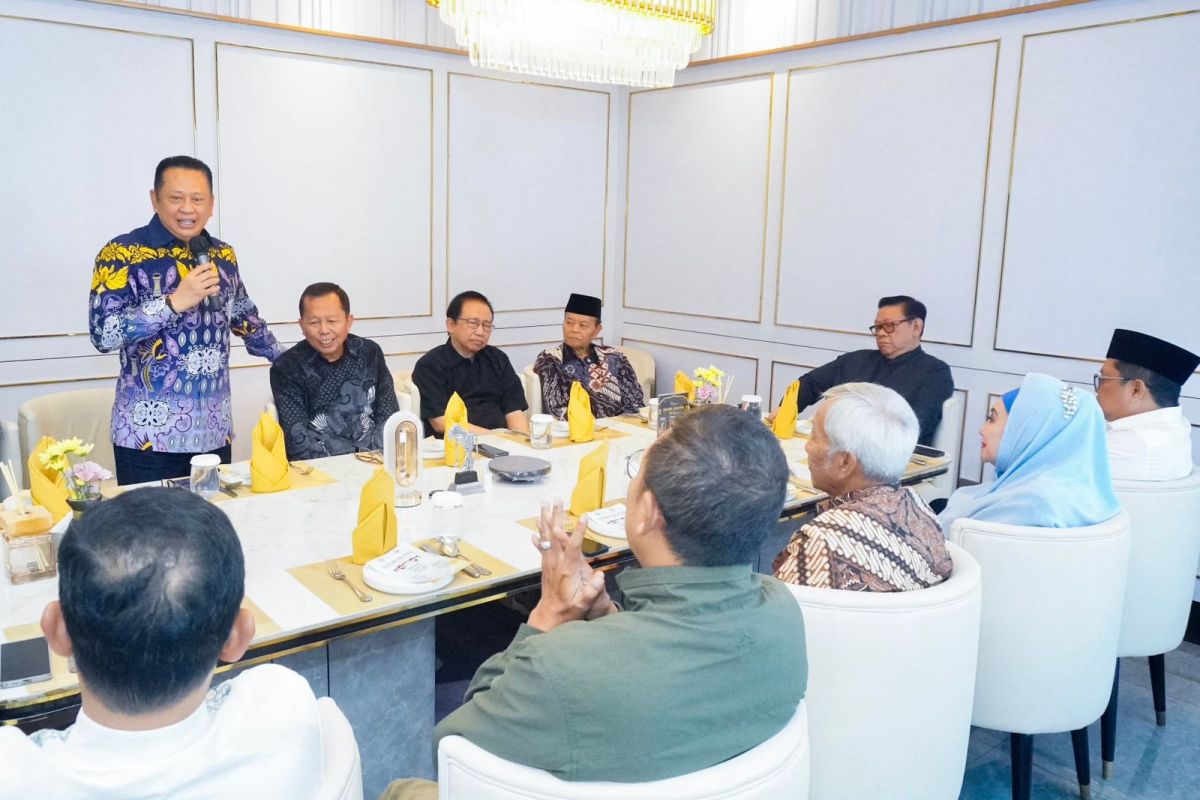
Jakarta – The National Forum of the Leadership of the People’s Consultative Assembly and House of Representatives 1999–2024 has been officially established as a strategic networking space for MPR and DPR leaders across generations to respond to increasingly complex national challenges.
DPR member Bambang Soesatyo, the forum’s initiator, explained that the forum was designed as a platform for national communication bringing together the experience, perspectives, and thinking of figures who have served in parliamentary positions.
“Through this forum we want to gather strategic views to strengthen the direction of national policy whilst providing intellectual contributions to state administrators,” said Soesatyo, known as Bamsoet, as stated in a statement received in Jakarta on Monday.
The initiative emerged amid global geopolitical dynamics, international economic pressures, and changes in the democratic landscape that are considered to require the presence of clear and balanced statesman voices.
The National Forum of MPR-DPR Leadership 1999–2024 brings together figures who have led these two supreme state institutions since the reform era.
According to him, since 1999, the MPR and DPR have played an important role in Indonesia’s democratic transformation, ranging from amendments to the 1945 Constitution, strengthening of the presidential system, to various state institutional reforms.
He is confident that the alumni of these institutions’ leadership have direct experience in facing various national crises, from the post-reform economic crisis, political conflict, to the dynamics of democratic consolidation.
“The experience of former state institution leaders is a great asset for the nation. We want to gather these strategic views so they can provide a broader perspective in responding to various national challenges,” he said.
The 15th Chair of the MPR and 20th Chair of the DPR added that the role of senior figures in maintaining democratic balance is very important, particularly amid rapid social and technological change.
The social media era, for example, has drastically changed the pattern of political communication. Information moves very quickly, whilst public discussion space is often filled with emotional and polarised narratives.
In such situations, according to him, the presence of senior figures with long experience in managing political conflict can become a calming balancing force.
“This national gathering is expected to produce tangible contributions in the form of strategic ideas that can be conveyed to state administrators, including the president. This is a form of our moral responsibility in keeping the political temperature conducive for the future of the nation,” he said.
He cited such practices being common in various countries, such as the United States, where former senior government officials are often involved in policy forums or think tanks that provide strategic input to the government.
In Japan and South Korea, he continued, former parliamentary leaders are also often involved in consultative forums to discuss strategic issues such as national security and long-term economic policy.
“If former state institution leaders can unite in contributing their thinking constructively, I am confident that such contributions will enrich the government’s perspective in formulating strategic policies for the nation and state,” said Bamsoet.
The gathering of MPR and DPR leaders from the 1999–2024 period was held together with a joint breaking of fast in Jakarta on Sunday evening (8 March).
Those who attended included former DPR Chair Agung Laksono and Marzuki Ali, former MPR Chair Hidayat Nur Wahid and Sidarto Danusubroto.
Also present were former DPR and MPR Deputy Chairs Mahyudin, Melani Leimena Suharli, Agus Hermanto, Lukman Hakim Saifuddin, Amir Uskara, Ahmad Basarah, Priyo Budi Santoso, Arsul Sani, and Rachmat Gobel, as well as DPR member Robert Kardinal.